
Why does Albanian society in Kosovo, despite support from the USA and the EU, exhibit anti-Western characteristics?
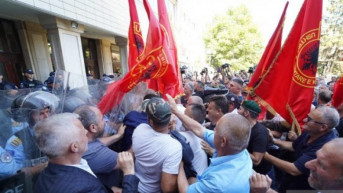
"Homogenized around the primary national goal of Albanian unification and the broader expansion of influence in the Balkans, which was previously associated with the influence and assistance of the Western political powers, Albanian society in Kosovo exhibits clear anti-Western characteristics and has also opened up to many non-Western influences, primarily from Islamic countries, sometimes even with a significant degree of radicalism.
Edited by: Milos Garic
Representatives of the current authorities in Kosovo, led by Albin Kurti, like their predecessors since the summer of 1999, almost daily emphasize their close ties with the Western collective and talk about how Kosovo's society is organized in accordance with the most advanced Western achievements, even though many indicators on the ground tell the opposite story. The aspiration for an ethnically pure space, aggression and intolerance towards minorities, radical nationalism, ideological affinity of the ruling Self-Determination party with the policies of former Albanian communist leader Enver Hoxha, abuse of institutions, religious fanaticism, clan-based division of society, all of these are characteristics of today's Kosovo that do not fit the officially proclaimed image of the state of affairs, according to those in the know.
Where does Albanian society in Kosovo find itself today, as the most numerous and dominant in every aspect, when it comes to the values of modern Western society, and how much does the answer to this question explain the current crisis in relations between the Albanians and the Serbs?
The transition from relative isolation that Albanian society experienced during almost the entire 20th century to what globalization brought in the last 20 years is an ongoing process, and it remains to be seen how it will end, the interlocutors of Kosovo Online believe, Aleksandar Mitic, a Research Associate at the Institute of International Politics and Economics, and diplomat Zoran Milivojevic. They point out that today in Kosovo, despite different official messages, there are many indicators of being anti-Western.
"The Albanian community in Kosovo and Metohija is a part of a broader movement for the unification of the Albanians around (Greater) Albania and, as such, sees itself as a permanent combatant, a stronger and more belligerent actor in relation to political Tirana. Albania itself has gone through periods of isolation or self-isolation not only in relation to neighbors in the Balkans but also in relation to the world as a whole, which has also caused a significant dose of caution and intolerance. This has certainly influenced Albanian communities in the surrounding areas, including Kosovo and Metohija", Mitic says.
Influence of radical Islam
At the same time, he emphasizes, pan-Albanian nationalism has become tied to the political West as its main patron and it has agreed to be its geopolitical instrument in the Balkans, especially after the end of the Cold War.
"This brought enormous Western political support, and even military support, especially in Kosovo and Metohija. However, the transition from conservative national semi-isolation to fanatical pro-Western globalization has left its mark on Albanian society. It is indeed homogenized around the basic national goal of Albanian unification and the general expansion of influence in the Balkans. However, it remains divided along traditional, somewhat less religious, but still along the lines of division between the older conservative society - which sees itself as the creator of demographic growth - and the younger, somewhat more liberal, who have been raised on a pro-Western narrative", Mitic explains.
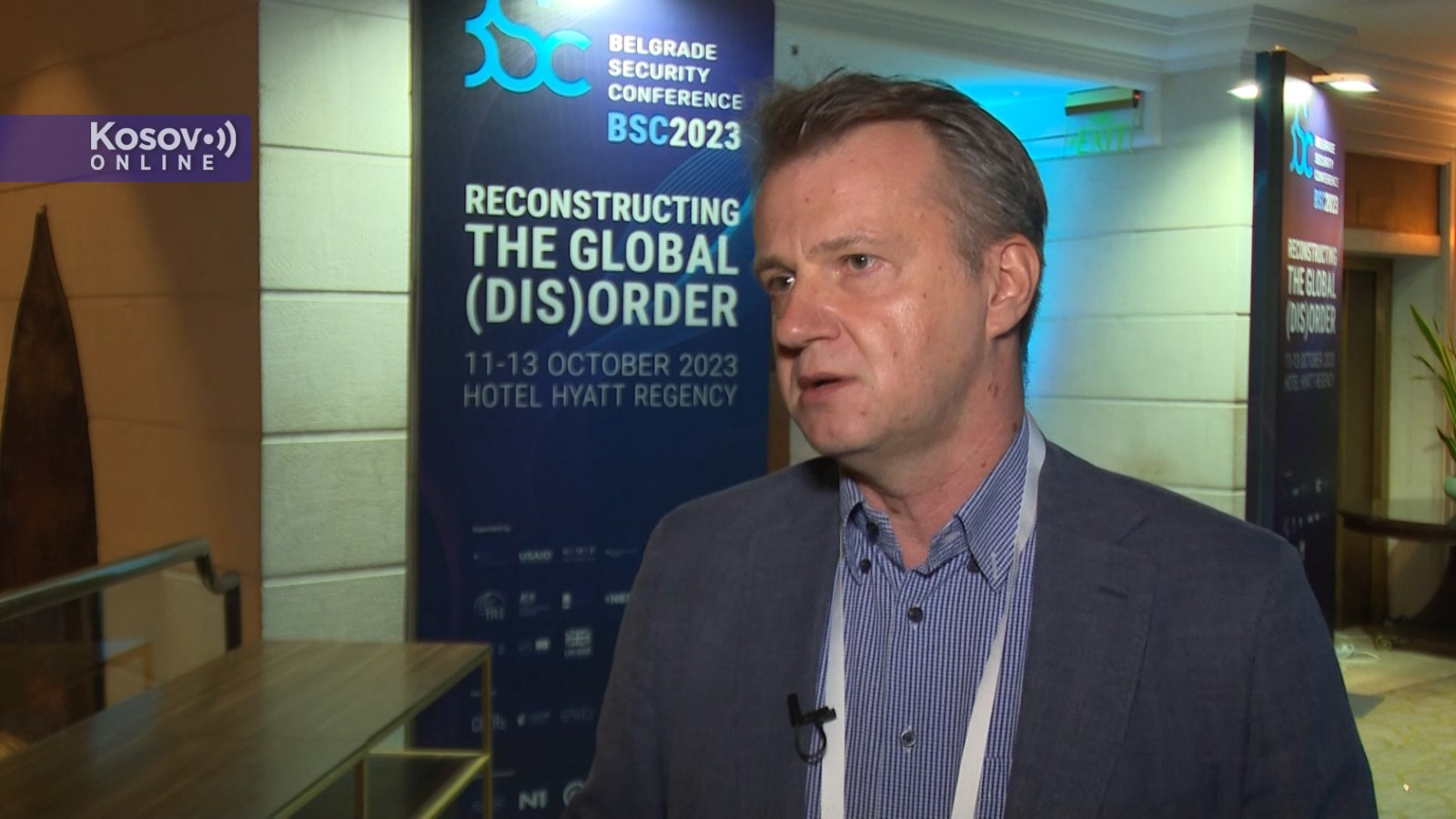
According to him, Albanian society in Kosovo and Metohija has also opened itself to many non-Western influences, especially from Islamic countries, sometimes with a significant dose of radicalism.
"This more radical Islamic influence is intertwined with the frustrations of the population in Kosovo due to a very difficult economic and social situation, and the lack of prospects. Accusations are also made against the authorities, or the political class in general, but they seem to be able to shift the focus of responsibility to the actors who, in their view, prevent Kosovo from becoming an 'independent, sovereign state'. So, to Serbia and the Serbs, of course. But also to many in the West who, in their view, are not doing enough to achieve the Albanian national goal, namely 'self-determination' or 'full independence'. The Albanians are used to influencing the Western factor through the instrumentalization of violent threats, putting pressure on Belgrade. This certainly helped in the 1990s, but especially after March 17, 2004. Since then, especially during the Vienna negotiations on the status under the mediation of Martti Ahtisaari, the Albanians have used the argument that they will radicalize, even 'go wild' if they don't get what they want", Aleksandar Mitic adds.
As he emphasizes, Albin Kurti skillfully uses the tactic of "threatening radicalization" today.
Mitic recalls that Kurti inherited the mix of left-wing ideas about "self-determination" from his mentor Adem Demaci, but infused with pan-Albanian ultra-nationalism and radical action.
"By the values that the liberal West nominally advocates for, this tactic is deeply 'anti-Western' as it is accompanied by religious and ethnic discrimination and violence, endangering all kinds of freedoms. In the West, this is tolerated solely for geopolitical reasons because it is obvious that Western geopolitical interests are more important than 'Western values'. Kurti does not see any sense or value in compromise. He believes he has sufficient Western geopolitical backing and sees no need to lower his maximalist position, even if his views and actions are contrary to all the values advocated by Western countries. Therefore, he constantly instrumentalizes his controlled radicalization tactic. For him, the Community of Serb-majority Municipalities, or the creation of any entity he cannot fully control, is a direct threat to his core national and political goal and limits full Albanian 'self-determination'", Mitic concluded.
Vassalage of Kosovo and the misunderstanding of politicians
Among the intellectual elite in Pristina, there is a certain number of those who openly point out the dangers Kosovo faces due to the wrong policy pursued by a portion of the Albanian elite.
"The avalanche from Belgrade, but also from the West, carries the danger of damaging not only Kurti but also Kosovo. This avalanche has been prepared for a long time. It is an avalanche toward the hypocritical, abusive, and incompetent elite, but it also appears to be directed toward the state that does not want to become a state. In the latter case, Kurti legitimately represents that majority, which, through civic action, does not prove its love for Kosovo as a state. We must also be clear; the US, or NATO, can keep Kosovo under control and in their own sphere even without a partnership with the governments of Kosovo. This is absolutely enabled by the Military-Technical Agreement of June 9, 1999, and the United Nations Security Council Resolution 1244 of June 10 of that year, which have no time limits and practically no restrictions on imposing their will on authorities. Unfortunately, our politicians throughout all these years have not clearly understood Kosovo's vassal status, which is more of a security problem than a democratic one. Many of them, including Albin Kurti, have tried to behave as if they were sovereign politicians, even disloyal to the US, and our state is de jure and de facto a client state, not sovereign", University Professor Milazim Krasniqi wrote in a recent op-ed for Pristina media.
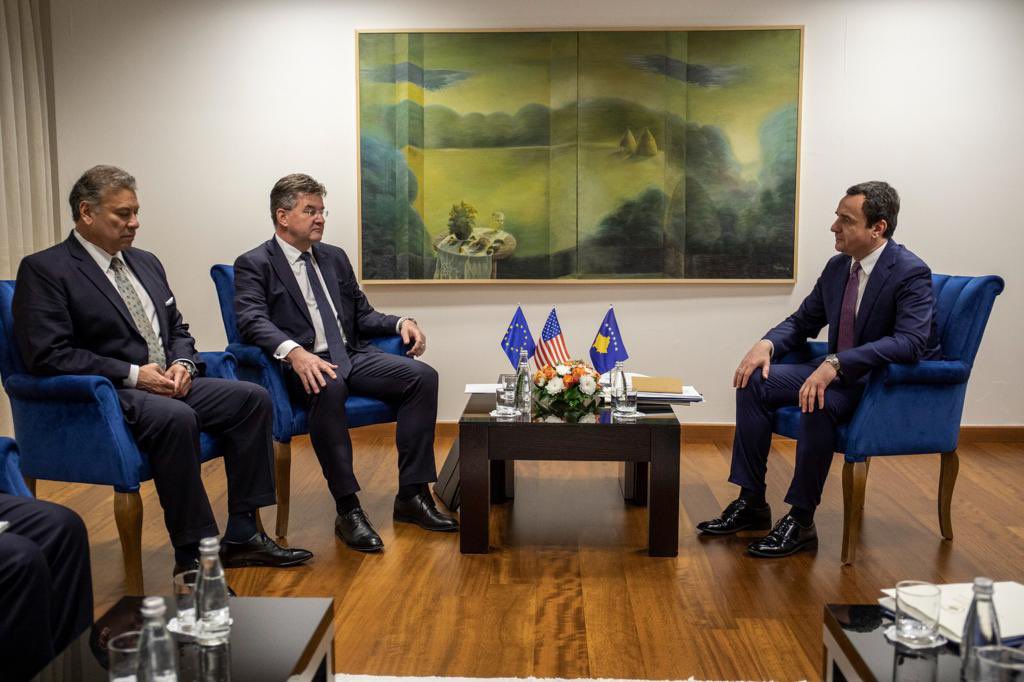
However, based on all current indicators, despite the numerous flaws that the Kosovo statehood project exhibits, key Western countries continue to provide it with strong and open support.
Career diplomat Zoran Milivojevic says for Kosovo Online that the pressure on Serbia to confirm the statehood of "Kosovo" has reached its peak these days with the principle of "now or never".
"The Western coalition of Washington and Brussels appears with a clear geopolitical interest in the context of aggravated global trends that are unfavorable to them, further in a politically delicate timeframe ahead of crucial elections in both centers. The coalition's approach is based on a European plan shaped along the lines of the German model of two independent states, as verified in Ohrid ('Ohrid Agreement'). It implies de facto recognition of 'Kosovo', which guarantees the international legal subjectivity of the 'Kosovo' state in a politically clear and legally indisputable manner. The temporary Kosovo institutions in Pristina, under the leadership of Self-Determination and their leader, Mr. Albin Kurti, are trying to change the factual situation in Serb-majority areas by force, repression, and to unlawfully create an environment for a political and legal situation and solution based on the principle of 'fait accompli'. In this endeavor, they have the tacit and logistical support of the Western coalition", Milivojevic emphasized.
"Enverism" still holds strong influence
As the main reason for this culmination of pressure, he states that the "independent Kosovo is now an obviously failed project of the Western coalition".
"Of course, the key factor in this is the determination and vitality of Serbia to resist this by not accepting self-sacrifice with indisputable arguments and principles of international law, which have broad global support with a tendency to strengthen, foreign policy and diplomatic actions, non-recognition, and principled stances in other cases, such as Ukraine, etc. However, the internal Kosovo societal and ideological-political context on which the basic socio-political system is based, with values and capacity for a relevant form of state-building action, also plays an important role in the failure of the project of 'independent Kosovo'. In other words, 'independent Kosovo' has failed, not only on an external level but also internally, significantly contributing to the overall failure of the project", Milivojevic emphasized.
According to him, sponsors of 'independent Kosovo' have tried to forcefully impose the state through unnatural means, starting from the unlawful NATO military aggression, then the self-proclaimed independence and its recognition, and subsequently through political pressure to verify it in line with the prevailing international legal order as a unique (sui generis) case.
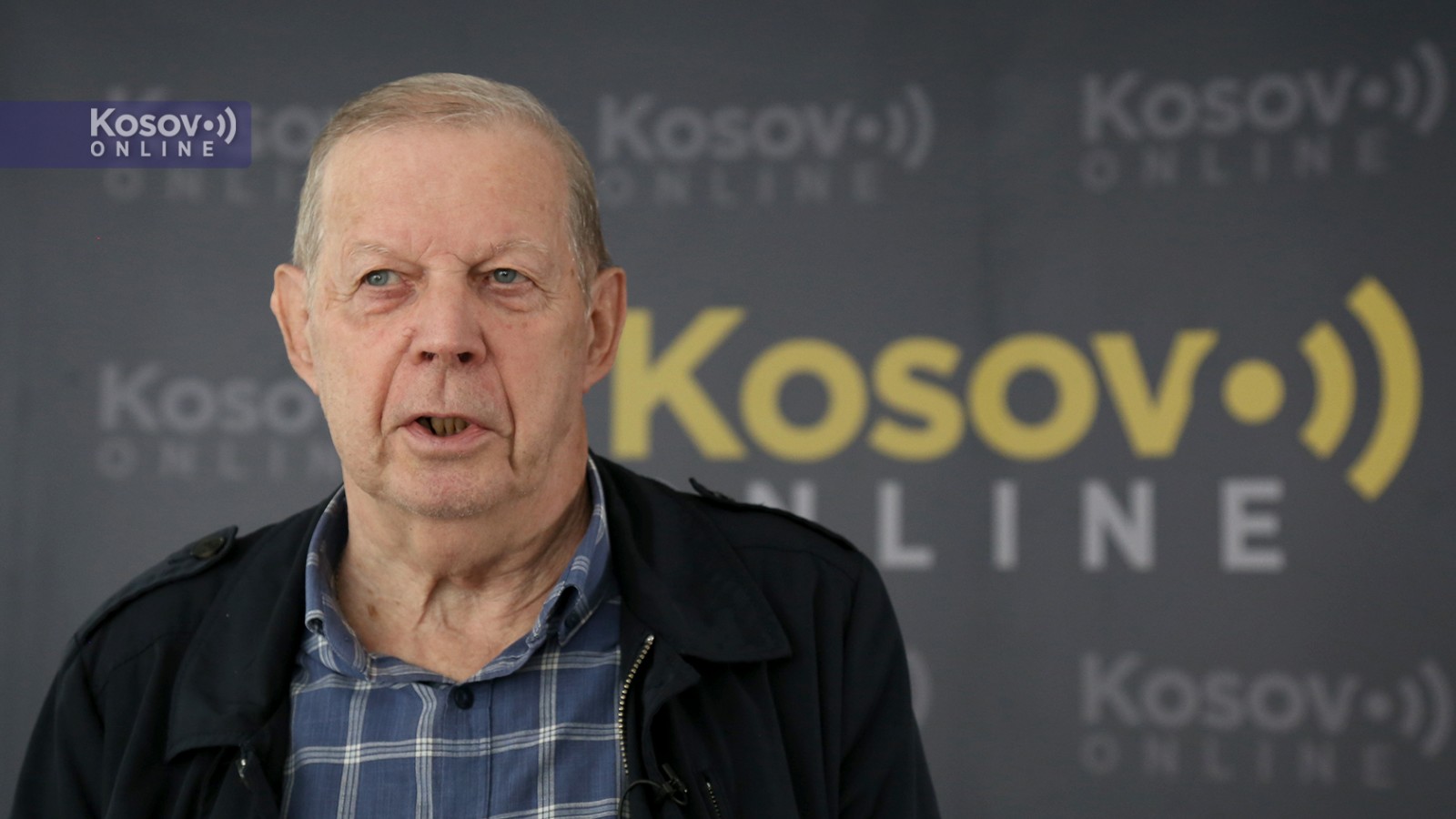
"In this operation, internal political system verification was also supposed to play an important role. However, it requires an appropriate political elite for leadership, a level of societal awareness, and political emancipation for support and basic development, which is currently lacking in Kosovo society. The main Albanian elite with which 'independent Kosovo' is built today has three sources, each of which, in its own way, has problems with contemporary and dominant socio-political movements in Europe and this region. The first is rooted in the communist ideology of 'Enverist' Albania, which persisted until the late 1980s. Significant resources of the current Albanian elite in Kosovo and Metohija are followers of this ideology, which had its foundation in the regime of Enver Hoxha and found support in the diaspora during those years through the 'Red Front' organization. The second source is Yugoslav, with ties to a pan-Albanian national sense, primarily the Prizren League, but above all to separatism, starting from 1974 and the constitution of the SFRY, which established confederal elements in the state organization, then through the 1981 uprising in Kosovo and finally open separatism in the 1990s. This source also has significant footholds and followers in the current elite, based on the former 'Movement for the Kosovo Republic', which operated both in the country and in the diaspora", Milivojevic states.
As the third source, he cites the 1990s separatism led by the KLA, whose followers continue to be the backbone of the ruling elite in Pristina today.
"Enverist and Yugoslav sources are ideologically and politically outdated in competition with what is currently dominant in the region and the broader global context, while the KLA is problematic due to the fact that some elite leaders are subject to international judicial treatment (The Hague), as well as its pan-Albanian nature and militant approach to achieving political goals. From such ideological and political sources, in the conditions of strong tribal and religious (Islamic) sociological influence and extreme national fervor on a pan-Albanian platform, a social environment suitable for a political and social system in line with current socio-political trends in the surroundings could not have emerged. The best illustration is the current ruling elite in Pristina, led by Self-Determination, whose ideological-political platform is extreme left-wing nationalism closest to the 'Enverist' source and the project of national Albanian unification throughout the Balkan region (Greater Albania)", diplomat Milivojevic says.
Discrepancy with the West, but the goal is the same
According to him, this is even in conflict with the goals of the direct supporters of 'independent Kosovo', as it calls into question their entire geopolitical concept for the region, programmed on the basis of the NATO intervention in 1999 and the self-proclamation in 2008, especially now in view of the war in Ukraine and the Middle East and the new redistribution of power on a global scale.
"The discrepancy in the Pristina - Western sponsors relationship is directly manifested by Pristina's refusal to correct its firm, politically maximalist approach - the Albanian state of 'Kosovo' at all costs, and then to act along the lines of Western interests in an attempt to create conditions (CSM) to thaw the Serbian stance in the normalization process. An important reason why this discrepancy is not penalized by Western sponsors lies in the common goal - confirming the 'independent Kosovo'. Support for the problematic internal socio-political system in Pristina is subordinated to this goal so that the argument about indisputable statehood in practice is not called into question. Simply put, the tacit support for the hard maximalist stance, only about recognition and the problematic ideological-political pan-Albanian concept of Pristina with measures taken for its realization (repression, legal violence), stems from the compatibility of the key goal of both sides - confirming the 'independent Kosovo'“, Milivojevic concludes.



0 comments