
Xi's arrival in Belgrade is a good occasion for the West to reassess its actions towards Serbia
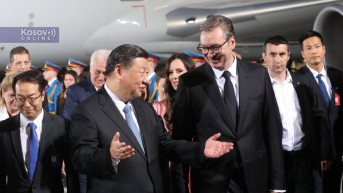
"At a time when new threats and blackmail are coming from the West regarding Kosovo and Republic of Srpska, while Germany and the USA are preparing to admit Pristina to the Council of Europe and stigmatize Serbs with false accusations of genocide, Chinese President Xi Jinping, as the most influential leader currently in the world, in Belgrade shows the greatest friendship with Aleksandar Vucic and the Serbian people."
Compiled by: Milos Garic
Rarely has a visit by a foreign statesman to Serbia caused such attention and resonance as the current arrival in Belgrade of President Xi Jinping of China. And with good reason.
The visit of President Xi is of historical significance for Serbia and represents the pinnacle of successful policies led by Serbia under President Aleksandar Vucic, agree many analysts, not only in Serbia.
Serbia is one of only three European countries that the head of the world superpower, the People's Republic of China, decided to visit after five years. This fact alone speaks volumes, especially considering that the other two countries are France and Hungary.
The economic significance of Serbia's strategic partnership with China is enormous; that will be discussed later. However, the arrival of the Chinese president primarily represents a valuable encouragement for Serbia and provides it with maneuvering space to persist in its sovereign policies. It is also a message to many in the West that China's role is becoming increasingly significant in the Balkans.
President Xi's stay in Belgrade, his second since assuming leadership of China, comes at a sensitive time when Serbia is facing multiple attacks from Western countries on its national interests, both regarding Kosovo and the UN resolution on Srebrenica.
The sincere and emotional friendly statements of President Xi and Vucic, the announcement of further strengthening of the strategic partnership between China and Serbia, as well as the spectacular reception of the numerous Chinese delegation in Belgrade, in front of thousands of gathered citizens of the Serbian capital, it is clear, will not be very pleasing to some political centers in the West and the region.
Serbia has an alternative
China is a sincere fighter against the world order based on the rule of force advocated by the West, which violates international law wherever it suits it, with the Serbian people being its biggest victim.
What messages does the arrival of the Chinese president in Belgrade send in this regard, here in the Balkans, but also towards the EU and the USA?
Political analyst Ognjen Gogic believes that Xi's visit to Belgrade is a good occasion for the West to reconsider its policy and treatment towards Serbia.
"China is still not on the radar for many regarding Serbia because it is considered that Russia is Serbia's main ally, especially in blocking the recognition of Kosovo's independence and statehood. However, China is also very consistent in this regard. The support of official Beijing to Serbia is very significant in the United Nations, where there is now an attempt with a resolution on genocide, but it also has an impact in the Council of Europe, in the attempts of some countries to admit Pristina. President Xi's visit to Belgrade is not directly related to current events in the Council of Europe, but it can be significant in that regard. It is a message of support to Belgrade, a message to Western countries, for which China is a very important partner," explains Gogic for Kontekst.
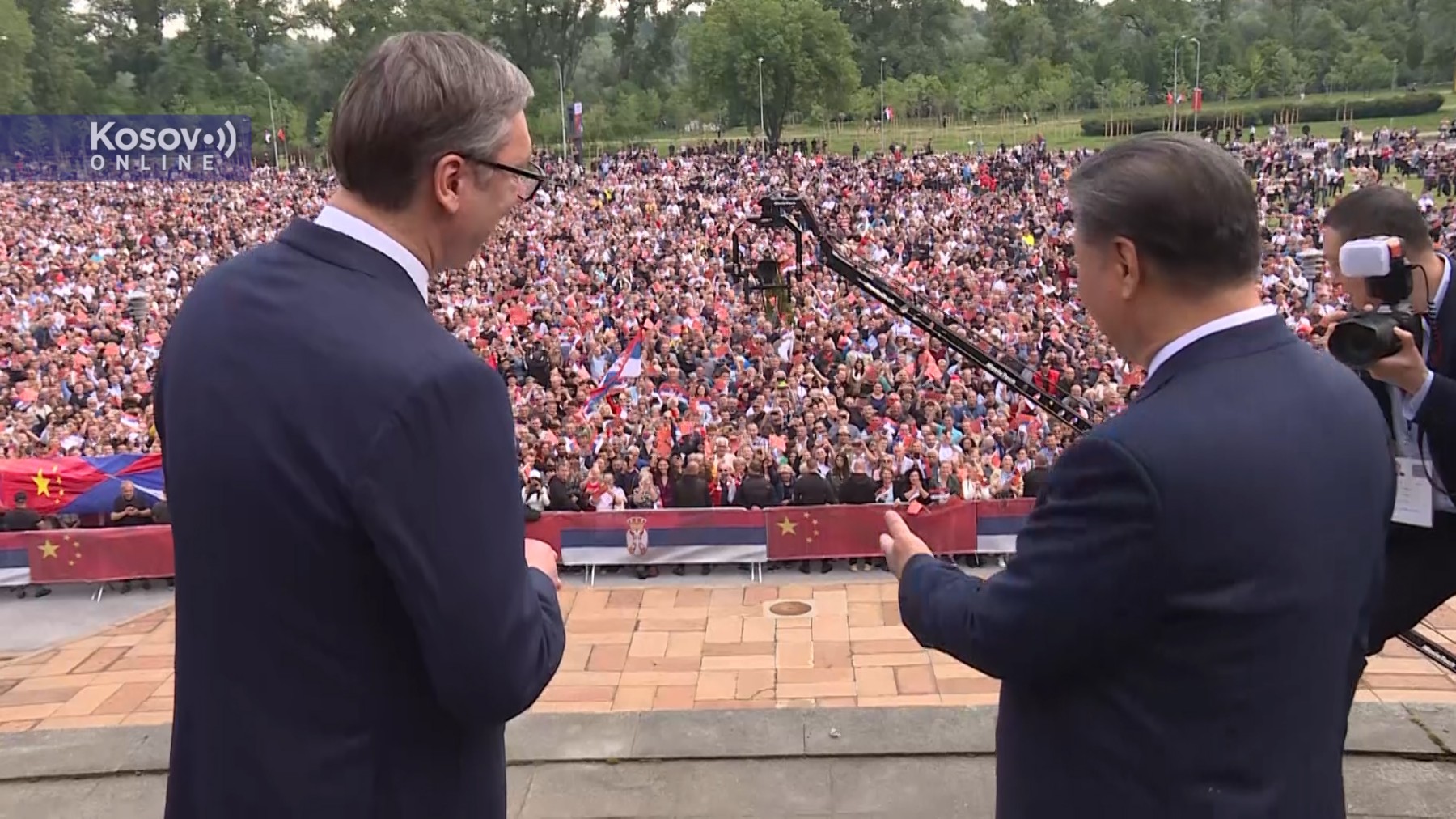
President Xi Jinping's visit to Belgrade, he adds, can signal to influential Western countries that Serbia has an alternative.
"This means that if Western countries continue to push Serbia away, if they continue with current moves, Serbia can turn to other partners who welcome it with open arms. In that sense, this visit of the Chinese president to Serbia, as one of only three countries President Xi visits in Europe, will have the role of prompting certain Western countries to consider what is more beneficial for them. Does Kosovo's membership in the Council of Europe bring them more harm or benefit? Who is a more important partner in the Balkans, Belgrade or Pristina? If they insist on Kosovo's membership in the Council of Europe, they can push Serbia even further away, which will then turn more strongly to Russia and China, and that doesn't benefit the West. That's why this visit of the Chinese president is of great importance for Serbia's international position," emphasizes Gogic.
Historian and political analyst Ognjen Karanovic emphasizes that Chinese President Xi Jinping is coming to Serbia at a complex geopolitical moment and that his stay in Belgrade is of immense significance.
"First and foremost, because China represents a global player, it is a global superpower and from that position represents a guardian of Serbia's territorial integrity and sovereignty. On the other hand, official Belgrade, with the statesmanship abilities of President Vucic, who is today one of the most respected world leaders, can be a link between those cold, complex, poisoned relations of Europe, the political West, and the People's Republic of China. If nothing else, then at least in an economic sense," points out Karanovic for Kontekst.
He adds that this visit represents another seal of friendship between President Vucic and President Xi, as well as between Serbia and China as a whole.
"President Xi is President Vucic’s guest for two days, among other things, on the occasion of marking the 25th anniversary of the heinous bombing of the Chinese Embassy during the NATO aggression against Serbia. On the other hand, the People's Republic of China represents a huge support in the epic, titanic struggle of President Aleksandar Vucic on the diplomatic-political level, especially in the United Nations, regarding Aleksandar Vucic's efforts to protect the southern Serbian province and Republic of Srpska, as well as the entire Serbian people, from the attempts of the political West to finish, let's say, their business in Kosovo and Metohija, which they started with the criminal NATO aggression in 1999. On the other hand, in order to complete their dishonorable task, their monstrous task, they consider it politically opportune to label the entire Serbian people as genocidal now. And of course, in that regard, the support of the People's Republic of China has its immense weight, its immense significance," notes Karanovic.
Kosovo and Taiwan
Serbia and China, he adds, jointly protect the territorial integrity of both countries, when it comes to Kosovo and the island of Taiwan, which is an integral part of the People's Republic of China.
"On the other hand, this visit will be a, let's say, great boost to fruitful economic cooperation between two truly friendly and partner countries. Last year, the total amount of trade between the two countries exceeded six billion euros. This year it will be one billion more. Companies with Chinese capital in Serbia, three of them, are the largest Serbian exporters, and thus the biggest support to the Serbian budget and public finances. Let's remember that President Vucic's congratulations on the Chinese Lunar New Year were broadcast on Chinese state television in prime time. The broadcast of the congratulatory message was watched by 100 million people, which represents a great gesture of honor and gratitude from the Chinese state to Vucic and Serbia. Relations between Serbia and China are at a historical peak, as confirmed by the recently signed Free Trade Agreement, which is a rare privilege that Chinese grant to some smaller countries in the world," emphasized Karanovic.
He emphasizes that geographical distance is not a barrier to the closest ties between Serbia and China.
"Serbia is a link between China and Europe, which was also confirmed at last year's meeting between President Vucic and Xi Jinping within the framework of the third Belt and Road Forum in Beijing. And indeed, as much as Europe is far from China, Serbia is close to China and China to Serbia. That's why we can understand this panic in regional media, in the Federation of Bosnia and Herzegovina, Kosovo, Croatia, and even in the political West, which now points fingers at President Vucic's sovereignist policy. On the other hand, they also want to develop economic cooperation with China. Europe wants that too, but insincerely, because they are bothered by the fact that China benefits from it," concludes Karanovic.
0 comments