
Stanic: The unified labor market of the Open Balkan starts functioning today - for further development and new investments
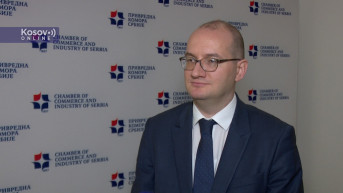
The unified labor market within the Open Balkan officially begins operating today, Bojan Stanic, Assistant Director of the Sector for Strategic Analysis, Services, and Internationalization at the Serbian Chamber of Commerce stated. He emphasized that this was one of the significant outcomes of this initiative, which would provide Serbia, Albania, and North Macedonia with the opportunity to address the issue of labor shortage and make them more attractive to foreign investors, additionally, it would contribute to the balanced regional development of these three countries.
Stanic recalled that the unified labor market had been created thanks to an agreement previously signed by officials from Serbia, North Macedonia, and Albania.
"Today marks the beginning of the functioning of the unified labor market for the member countries of the Open Balkan Initiative. Therefore, this is one of the most significant tangible results of this initiative recently. Certainly, it should contribute, from the perspective of relocating available workforce to these three countries, making the area more attractive for investors coming from outside, and what is third, and particularly important, contribute to a more balanced regional development of these three countries," Stanic said for Kosovo Online.
He explains that if, for example, the southern part of Serbia is considered a part of the unified labor market within the Open Balkan, which is possible as of today, it can be assumed that some of the local residents there will daily commute to North Macedonia for work, and vice versa, people from North Macedonia will come to southern Serbia in search of job opportunities.
He notes that thanks to the unified labor market and the small geographical distance between the signatories of the Open Balkan, it is now feasible for someone to be present four or five days in the country where they work, and spend the rest of the time at home.
"This is now feasible without much physical effort, considering that these are relatively short distances. From Skopje to Nis, it's about 120 kilometers," Stanic stated.
He also points out that the joint labor market will attract capital investors who will not view the three countries individually but as a unified market potential.
"Investors who view the space of these three countries as a unified labor market no longer see 6.5 million inhabitants or consumers in Serbia, or two million in North Macedonia, or 2.8 million in Albania, but will observe around 11 million consumers who certainly have greater purchasing power for certain companies that have not had an interest in investing here," the expert said.
It is expected, as he emphasizes, that certain sectors will benefit from the outset of this project. When it comes to Serbia, he highlights that the construction sector will reap the greatest benefits from the unified labor market, as the country prepares for hosting the World Expo 2027.
"What is important when we talk about Serbia, is primarily the construction sector. Considering the current concentration of the construction industry on building Expo 2027, we have about two to three years to prepare everything for this purpose. When you have the obligation to meet the standards prescribed by the World Expo in such a relatively short period, you absolutely have to adapt and find additional companies, additional producers of construction materials, and additional workers," Stanic noted.
He points out that when a country has a shortage of workers and a growing need for labor, it must raise the wage rate, which, as he emphasizes, can become attractive to people coming from North Macedonia and Albania.
This, he adds, in the next medium-term period, can provide them with the opportunity to find a well-paid job compared to the European average.
Regarding Albania and North Macedonia, Stanic assesses that the unified labor market will bring benefits to the hospitality sector.
"A lot of people from Serbia and North Macedonia go temporarily to work on the Croatian coast. Due to the higher demand on the Albanian coast or somewhere in the Ohrid Lake area, there is a possibility that wages will increase, then certainly our people would opt to replace the Croatian coast with tourist destinations in these other two countries that are the backbone of the initiative," Stanic pointed out.
Stanic explains that the speed of obtaining permits depends primarily on the citizens of the three countries and their openness to new opportunities.
"It is certainly expected that interest will gradually increase. Of course, it also depends on the administrations of the states how successfully and efficiently they will handle the administration of all these requests, and there must be opportunities that are well-paid and promising," he emphasized.
He observes that it is important for the countries of the Open Balkan to attract quality workforce and reduce dependence on imported labor.
"What is important is that the unified labor market is a step that should contribute to us being less dependent on imported labor," Stanic concluded.
The Agreement on Conditions for Free Access to the Labor Market in the Western Balkans allows any citizen of the three Open Balkan countries to have the same access to the labor market in any of the countries as a local citizen.
Citizens, individuals who hold citizenship of one of the signatory parties, have the right to move, stay, and work freely within the territories of the signatory parties or within all Open Balkan countries.
"Free access to the labor market aims to prevent further brain drain from the region by offering employment opportunities within the region, but also to meet the increasing demands for quality workforce from both local and international companies operating in the region. Workers have the opportunity to find better-paying jobs and improve their living situations when their movements are less restricted," the Serbian Chamber of Commerce states.
In accordance with the protocols signed in Skopje on January 21, 2024, the procedure for free access to the labor market involves a citizen of one of the Open Balkan Initiative members who wants to be employed in one of the Initiative's members or has already found an employer to obtain an Open Balkan Identification Number, obtained from local authorities through the eGovernment electronic platform.
Interested parties need to fill out a form on the eGovernment platform and attach a valid biometric document. Based on the provided data, local authorities, through the eGovernment platform, generate a unique Open Balkan Identification Number.
After that, the interested party can access the eGovernment portal of the destination country and submit a request for free access to the labor market. The destination country either grants or denies free access to the labor market to the interested party based on checks.
"After obtaining approval, the interested party can be employed under the same conditions as a local citizen of the country for up to two years, and after this period expires, the period of stay or work permit can be extended," the statement said.


comments