
The European Union has realized that the Western Balkans has had enough of a hypocritical policy
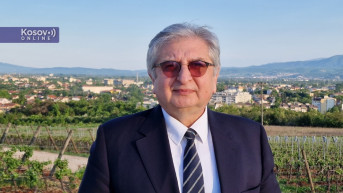
Writing for Kosovo Online: Zeljko Sain, Politika's special correspondent from Skopje
It is considered that Richard Milhous Nixon, among all US Presidents, except for Theodore Roosevelt, had the best knowledge of international politics. Unlike Winston Churchill and Charles de Gaulle, who deeply studied history, Nixon was particularly interested in the past of certain countries, but only to the extent he deemed necessary. Through this approach, Nixon also formulated the well-known doctrine of foreign policy, explaining its essence with the premise that peace has only been maintained thanks to the balance of power.
"We must remember that in world history, longer periods of peace have existed only when there was a balance of power. The danger of war arises when one country becomes incomparably stronger than its potential rival. That is why I believe in a world where the United States is powerful. I think the world will be safer and better if there are strong, healthy United States, along with Europe, the Soviet Union, China, and Japan, and if all these countries balance each other," Nixon stated in an interview for the US magazine "Time" in 1972.
This 37th President of the United States knew how to use the rhetoric of one of his predecessors, Woodrow Wilson, who had a special respect for Mihajlo Pupin, an inventor from Serbia who had significantly contributed to the US with his scientific work and whose work at the Versailles Conference preserved the territorial integrity and sovereignty of the Kingdom of Yugoslavia. It is important to note that Nixon was the first US President to visit Yugoslavia in 1970. Nixon often referred to Wilson's rhetoric, which explained that the USA should offer the world something more than other countries.
So, while Wilson advocated for spiritual leadership and idealism, which is not achieved through any physical strength and force, and for the League of Nations, from which the United Nations Organization emerged, and Nixon ended US involvement in the Vietnam War in 1973 and stopped the mobilization, established diplomatic relations between the US and China, and initiated the Anti-Ballistic Missile Treaty with the Soviet Union, today the US does not hesitate to use various means to create a new world order according to its own standards. It disregards UN principles and only optionally respects the UN Charter. Instead of finding solutions through the UN Security Council, the US turns to NATO to handle situations, as Yugoslavia acutely experienced with the NATO attack involving 19 member states, including a country that shouldn't have done so by any principle, historical, ethical, or legal - Germany.
To what extent US-NATO relations are in line with US criteria for engagement in the world, as announced by Nixon in November 1969 and further explained in his first presidential report on foreign policy in February 1970, was analyzed by Henry Kissinger in his book "Diplomacy". This innovation, as Kissinger notes, was reflected in the following three points: 1) The US will respect its contractual obligations; 2) The US will provide a shield if a nuclear power threatens the freedom of an allied country or a country whose survival the US deems crucial to its future; 3) The US expects the directly affected country to provide its troops for defense.
The Nixon Doctrine was established during the Cold War, which ended with the fall of the Berlin Wall. However, if we look at the essence of today's peace, we will see that this doctrine still operates in Ukraine, Serbia, and Israel. The world is facing immeasurable tragedies, and the news coming from Ukraine and Israel is horrifying, just like the news we heard about our own country and its bombing. Today, we are anxious about the situation in Kosovo and Metohija.
After the Cold War, the "Wilsonization" supported by Nixon is slowly taking shape, but concrete multinational political boundaries are still missing. The regional initiative "Open Balkan" has shown its strength not only in solidifying economic prospects but also in maintaining peace in the region. The Brussels Agreement on the normalization of relations between Belgrade and Pristina is gaining importance in terms of implementation, the Berlin Process has been revived in Tirana, and the Western Balkan countries are expecting constructive talks with the President of the European Commission, Ursula von der Leyen. Furthermore, at the Third International Forum on the Belt and Road Initiative in Beijing, Serbia signed significant agreements with China, including a Free Trade Agreement. Beijing has also provided substantial financial support for projects in Serbia, particularly for infrastructure projects connecting European Union countries. The EU has never taken such a step, and it is trying to rectify its mistake through the Berlin Process. The EU has kept North Macedonia and all Western Balkan countries, including Serbia, in the waiting room for thirty years. Unlike the other surrounding countries, which are members of NATO, with the United States and Turkey as the strongest leaders, Serbia is the only one pursuing a neutral military policy.
The European Union has clearly sobered up, realizing how its own steps can weaken its influence in the Western Balkans. The region has had enough of hypocritical politics and is quite capable of leaning toward the East. Moreover, the Minsk Agreements pragmatically indicate that any unsuccessful implementation that turns into war is, in fact, a territorial loss for the West. Kissinger pointed out that Ukraine would have to face territorial losses. The question remains regarding Kosovo, as well as how and to what extent the West and NATO will accept Palestine, which is a UN observer state.
After all these warnings to the EU, Ursula von der Leyen is visiting the Western Balkan countries starting today. Through constructive discussions with the leadership of North Macedonia, the quasi-state Kosovo, Montenegro, Serbia, and Bosnia and Herzegovina, she aims to advance the integrative reception of Western Balkan states. The goal is to help these states finally meet the EU's requirements and avoid a scenario where they turn towards the East.
0 comments