
Is there any dialogue after the disappearance of dialogue?
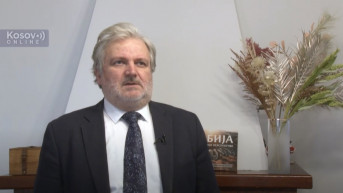
Writes for Kosovo Online: Dragan Bisenic, a journalist
There is not a person in the international community, in the EU and the US, who hasn't called for the resumption of dialogue between Belgrade and Pristina after September 24. However, on the Pristina side, it seems there is no will or readiness to continue the dialogue. During this week's visit by the Senate delegation to Pristina, the President of the Provisional Institutions of Kosovo, Albin Kurti, announced that "the dialogue led by the EU cannot continue, as if almost nothing has happened, we cannot work further with this status quo".
Kurti stated that Serbia had been involved in the incident in Banjska "at least on four levels" and reiterated that the attack in the north had been a part of Serbia's broader scenario for the annexation of northern Kosovo, and Pristina shared evidence of this with international partners. Kurti called for "Serbia to be held accountable" and that "now the attempts by Serbia to destabilize must stop". Senator Jeanne Shaheen, the sponsor of the Western Balkans Peaceful Transition Act, responded differently, saying that for long-term stability and peace in Kosovo, a solution for "sustainable peaceful coexistence with Serbia" should be found.
However, this does not completely change the perspectives of the current deadlock the dialogue in Brussels has reached. It is clear that everyone will have to make an effort to save the dialogue, but this is not an easy task because months of aggressive moves that began with the Kosovo Police's incursion into municipal buildings in May have left deep marks and undermined trust and agreed-upon solutions.
Furthermore, the relationship with the US and the EU, as well as the relationship between them, has not been significantly improved to raise the capacity for dialogue, but it seems that this is not convincing for the Pristina side, nor for Prime Minister Kurti to show readiness for cooperation, even at the cost of renewed confrontation with the US.
Traces of distrust in the actions and positions of the Americans are still strong. No one in the region, nor in Europe, is indifferent to how the US will shape its views and where its political judgment on the Kosovo and Metohija crisis will go.
Michael Roth, the President of the Committee on Foreign Affairs of the German Bundestag, wrote about Serbia's deployment of troops along the administrative line with Kosovo, saying that Serbia, by deciding to withdraw its troops that had been near the administrative crossing with Kosovo, had shown that it "reacts exclusively to the pressure of the United States" and "by its behavior humiliates the European Union".
Serbian President Aleksandar Vucic stated on September 30 that he had no intention of ordering the military to cross the administrative crossings with Kosovo and Metohija. He added that he would withdraw Serbian forces from the area because, as he stated, the escalation of the conflict would be counterproductive to Serbia's desire to become a member of the European Union. In response to this statement, Michael Roth, former German Minister for Europe and President of the Committee on Foreign Affairs of the Bundestag, commented, "The President of Serbia is responding exclusively to US pressure and playing with the EU. Another low point for the EU's foreign policy position and a disgrace for Serbia, which claims to want to become a member. Europe is daydreaming".
In addition to considering "Russian imperialism" and "Serbian nationalism" as leading factors in regional destabilization, the German politician has a noticeably reserved attitude towards US foreign policy in Europe. He strongly supports the concept of European strategic autonomy, which, despite French and German insistence, has not managed to develop and move forward. In line with this, he had previously argued that Europe must free itself from political and military dependence on the United States. He stated, "We can no longer rely on the US; we must do something on our own".
He warned that Europe must take action and do more to defend and protect liberal democracy, regardless of who had the majority in the US Congress or who was in charge at the White House. In his view, Europe senses that the US must care about other issues in addition to the security of the old continent. He believes that the situation in the United States is "extremely problematic" because, he states, "without the US, we could not defend Germany or Europe". In Pristina, there is a perception that the US is being too "soft" on Serbia, which was a topic of discussion with the US Ambassador during the recent media encounter. Following Prime Minister Kurti's accusations, the US Ambassador emphasized that Kosovo officials must be cautious when accusing Serbia of the events in Banjska. He stated, "I have heard many officials in the Kosovo Government say that Serbia is to blame. We want to be very cautious before we make final decisions on what we call attribution to ensure that we do it correctly,“ Hovenier added.
In response to the observation that the United States is "gentle" toward Serbia and "harsh" toward Kosovo, Hovenier noted that the circumstances could not be equated. He reminded that the United States did not forget past events or previous commitments, especially when it became apparent that the United States had been right, as had been the case in May of this year. "The United States Government decided to take some actions after the Kosovo Prime Minister, contrary to our advice, took actions that, from our perspective, involved unnecessary force to secure access to municipal buildings, contributing to the destabilization of the north. We were clear that this was a problem. We did not take the same measures as the European Union, but the United States Government did some things, making it clear that we expect the Government of Kosovo to work with us to enhance stability and security in the north. We have similar expectations for Serbia. And I will say again that when we come to our conclusions about ultimate responsibility or what we call attribution for these acts, we will hold those responsible accountable. But in the meantime, we expect the Government of Kosovo to work with us to create conditions for greater stability and reduced tensions," Hovenier emphasized.
Criticism also comes from strong supporters of Kosovo's independence, such as Shlomo Ben Ari, a professor of Middle Eastern studies at New York University. He calls on "President of Serbia, Aleksandar Vucic, to understand that the final recognition of Kosovo's independence cannot be negotiated, neither now nor at any time in the future. However much he procrastinates on this issue, it is only a matter of time before he or his eventual successor comes to this conclusion". He urges the President of Serbia to "stop publicly stating that Serbia will never recognize Kosovo", because "mutual recognition" is not "one of the options", but "the only option". However, even he has rejected numerous claims made by officials in Pristina, such as the "Banjska case" being an indication of a large-scale Serbian attack, that Serbia is preparing a military incursion into Kosovo and Metohija, that European representatives are biased, or the rejection of the formation of the Community of Serb-majority Municipalities.
Ben Ari sees the solution in both sides reducing tensions in the north and demonstrating readiness to resume negotiations. This would require four steps. The first is new elections in northern Kosovo, which are possible soon. The second is changing the public narrative, "which otherwise only deepens their mutual mistrust and disdain, poisons the political and social atmosphere, and compels both sides to take extreme positions to protect their interests, further complicating their conflict". The third is respecting EU recommendations, "as the EU is the only institution that can help resolve their conflicts and promote integration that both Serbia and Kosovo seek as they embark on the reconciliation process". The third is strengthening the "credibility of negotiators", and the fourth is that Kosovo Prime Minister Kurti should accept "that municipalities with a Serb majority in the north have the right to live in accordance with their culture, faith, and tradition," Ben Ari stated.
At this delicate moment, the US State Department has gained a new figure responsible for Europe, a decades-long connoisseur of regional events, James O'Brian. In regional responses, the question has arisen about what this would mean for regional relations and regional policy, emphasizing his knowledge of the region and the long experience gained in a very turbulent period of Balkan history. What has somehow remained out of sight is O'Brian's activity in creating the "mini Schengen" project and later the "Open Balkan" during the Trump administration.
Although it seems that the Biden administration will show much more trust in its European partners, this may not be the case with O'Brian. "Mini Schengen" and "Open Balkan" were met with open hostility by representatives of the European Union, from parliamentary representatives for the Balkans to the President of the European Commission. Now, when it seems that this initiative has been completely stifled, almost compelling Albanian President Edi Rama to give it up, in order to host the "Berlin Process" Summit and define Albanian ambitions towards the European Union more clearly, as there are increasingly, albeit still undefined, hints that the entire Western Balkans could be integrated into the European Union.
In confirming his appointment to the Senate Foreign Relations Committee on July 26th of this year, O'Brian defined the space between the Arctic, Atlantic, Adriatic, Black Sea, and the steppes of Central Asia as the area that affects everyday US security and prosperity. He hinted at significant changes in this area, suggesting that the next year (2024) "could set the template for a deeper, stronger community of freedom based on rules across this region".
In a brief speech, he highlighted the Western Balkans as an area of special US interest. "The six Western Balkan states should receive new clear requirements and incentives for reform as they move toward the European Union... US engagement will define the elections before each country," O'Brien stated.
These American-European dilemmas will be a part of a broader discussion at the US-EU Summit, which takes place on October 20 in Washington. This is the first such summit since 2006 when it was held in Vienna. Max Bergmann from the Center for Strategic Studies in Washington acknowledged that there was "one big hindrance regarding security policy or the kind of bureaucratic rivalry between the EU-NATO and the US, with opposition to the EU becoming a defense actor in some way, remaining a kind of constant fundamental tension in relations". Considering NATO's role and KFOR in Kosovo, it follows that this meeting, indirectly if not directly, will deal with the events in the southern Serbian province. On the day before the summit, the European Parliament is scheduled to adopt a resolution on Kosovo. The Albanian Parliament has already passed such a resolution, with 101 out of 106 present MPs voting in favor. All of this is happening ahead of the UN Security Council meeting on October 23, preceded by the arrival of representatives of the "quint" in Belgrade. As announced by the President of Serbia, Aleksandar Vucic, new things were expected from it.
The delegation will first visit Pristina and then Belgrade. The delegation will consist of the EU Envoy for dialogue between Belgrade and Pristina, Miroslav Lajcak, as well as envoys of the President of the United States, France, Germany, and the Prime Minister of Italy, Gabriel Eskobar, Emmanuel Bonne, Jens Plotner, and Francesco Talo.
According to Brussels officials, the goal of this visit is to advance the implementation of the agreement on the path to normalizing relations. Diplomatic sources suggest that saving the agreement will require even greater and more visible commitment from the United States, Germany, and France. Given that during the last visit, in January of this year, just before the adoption of the Ohrid Agreement, the "quint's" approach was "take it or leave it", with the threat of sanctions on both sides if they did not cooperate, something similar is likely to be in their bags this time. However, the circumstances are now entirely different, and the obstacles are more complex, so what seemed to work in January may not work in October.
0 comments