
FEUILLETON: Kosovo - Memories of the last American ambassador to Yugoslavia (IV)
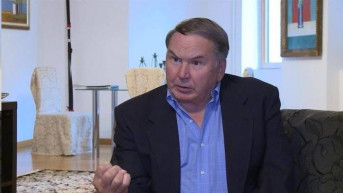
Kosovo Online, with the consent of the publisher "Club Plus", publishes excerpts from the book of former diplomat William Montgomery "When the cheers die down - Memories of the last American ambassador to Yugoslavia" (2016), chapter 12 entitled "Kosovo". William Montgomery was the ambassador of the United States of America in Belgrade from December 2001 to February 2004.
STANDARDS BEFORE STATUS
In early 2003, the Deputy Assistant Secretary of State for European Affairs (Janet Bogue), the head of our mission in Kosovo, and I held a meeting on the sidelines of the conference in Vienna. The topic was what to do next in Kosovo. In contrast to the period 2000-2001, Kosovo Albanians demanded that the transitional government that was formed be given greater powers. It was getting harder and harder to just say "not yet."
I continued to argue that our stated goal was to create a fully functional multi-ethnic society in Kosovo. Until we achieve that, I explained, we should not consider next steps. And I warned again that it could take a long time. There were significant differences in our opinion about the progress made along the way.
The end result was an agreement on a policy called "Standards Before Status". It was envisaged that a group of experts would come up with a detailed list of standards in all domains of democratic transition. Only after an impartial review and a conclusion that sufficient progress has been made in the domain of standards, the question of status would begin to be considered.
To my permanent regret, I convinced Covic to take the process seriously. I pointed out that if the standards were very specific and contained verifiable numerical facts, the process would be fair. It could even encourage progress in areas of concern to Kosovo Serbs, such as the return of refugees. Covic dutifully ordered his staff to start preparing proposals on standards.
The events that followed still pain me when I remember them. First, the Serbs found that it would be difficult to meet with the British Carne Ross, the coordinator of the working groups for the development of standards for Kosovo at UNMIK. When Ross finally arrived in Belgrade, he openly told the Serbs that they were not involved in the process at all. Kosovar Albanians, he said, would be strongly opposed if information leaked that the standards were designed in any kind of cooperation with Belgrade. Second, the Serbs were told that in any case the process was almost over. Ross reluctantly agreed to accept the list of Serbian proposals but made it clear that he would pay little attention to them.
After that, it became impossible to get even the final version of the draft standard. When we finally succeeded, the blueprint was already concreted. The standards it contained were far from specific. In fact, they were the complete opposite. When I brought it to my attention, first to that British man, the head of the negotiating team, and then to my own government, I got the same response. Absolutely correct, they are not specific, and that will allow the international community to decide whatever we want when checking. In other words, the decision will be purely political and will not be based on an objective assessment of the achieved progress towards the establishment of a functional multi-ethnic society.
When the list of final standards was published, it turned out that none of the Serbs' ideas were accepted. I immediately understood what that meant. The independence of Kosovo will be declared in the near future, and the exercise called "Standards before status" was an illusion. The fears of the Serbs were completely dismissed. It also meant that the promises I had received at a high level that my concerns would be taken into account were not fulfilled. Ultimately, this meant that I became powerless to further influence US policy towards Kosovo. They thought that I was showing too much sympathy for the Serbian side.
CONCLUSION
(...)
Finally, there is the issue of Kosovo. The international community is now beginning to understand how important Kosovo is to the Serbs. But it has invested so much to declare and support an independent Kosovo that it is impossible to make a complete U-turn. The United States and the European Union are now trying to run two parallel programs, desperately hoping that at some future point, the two things can be merged. One is building a government and improving the process of democratic transition in Kosovo. The second is the effort to avoid the "K" word in dealings with Serbia in order to improve its democratic transition. This means the hope that membership in the European Union and time will allow this frozen conflict to gradually lose its significance. They hope that the two parallel programs will merge peacefully and gradually one day in the future. I think they are empty dreams whose purpose is to avoid the necessity of facing difficult decisions.
My solution for Kosovo was and remains a division. That probably won't happen for many reasons, both good and bad. However, I am very afraid that Kosovo and Serbia are linked in a fatal dance and that the result is that their progress, their democratic transition, and their stability are very uncertain. This will certainly be the case for the next ten years.
All in all, the process of externally induced or induced social change is far more difficult than any of us believed. The bar for even attempting to do so should be much higher than it has been so far.
(The end)
0 comments