
Feuilleton: Kosovo - Memories of the last American ambassador to Yugoslavia (I)
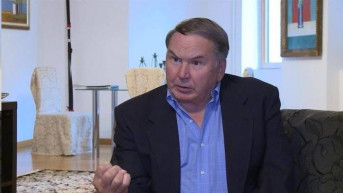
Kosovo Online, with the consent of the publisher "Club Plus", publishes excerpts from the book of former diplomat William Montgomery "When the applause dies down - Memories of the last American ambassador to Yugoslavia" (2016), chapter 12 entitled "Kosovo". William Montgomery was the ambassador of the United States of America to Belgrade from December 2001 to February 2004.
There are about 200 people in Washington in charge of foreign policy who have a great interest and knowledge of events in the Balkans. Among them there are several congressmen and senators, and many more of their staff; representatives of non-governmental organizations in organizations such as the International Crisis Group; former high-ranking government officials who remain influential; a handful of media representatives; a significant number of mid-level government officials in the State Department, the National Security Council, the Pentagon (uniformed and civilians), and some other high-ranking officials in the administration. For example, as I write, the latter group undoubtedly includes Vice President Biden, Deputy Secretary of State Steiberg, and Richard Holbrooke (creator of the Dayton Accords and current Special Envoy for Afghanistan).
The combined weight of those 200 people determines our policy in the Balkans. Almost all of them came of age during the violent breakup of the former Yugoslavia or that event marked their lives. For most of them, it was a defining moment in their professional career. That region evokes passionate feelings in them and they remain connected to it through a network of contacts that mostly operates informally and unofficially. There is remarkably little difference in their views and even less chance that it will ever change them.
These individuals share two important beliefs on which our policy towards the region has been based for more than two decades, despite changes in administration. The first is that the perpetrators of the violence that followed the breakup of the former Yugoslavia were the Serbs led by Slobodan Milosevic. According to their opinion, Bosniaks (Bosnian Muslims) were victims of the terrible aggression committed by the Serbs, which can be seen in the example of the massacre in Srebrenica, the shelling of Sarajevo and the ethnic cleansing that took place in all parts of that country. Even today, more than 14 years after the end of the conflict, that group looks at Bosnia through such a prism. They tend to be suspicious of the Bosnian Serbs and support the idea of strengthening the central government of Bosnia by reducing the powers that the two entities (the Republic of Srpska and the Federation) received in the Dayton Agreement. Under no circumstances would they consider the idea of dividing Bosnia. For them, it would represent a reward for earlier aggression.
Another issue on which everyone agrees is that the only possible solution for Kosovo is independence within its existing borders. It's always been like that. Historians will undoubtedly argue about when the tipping point occurred where the current outcome became inevitable. For the 200 selected people who shape US foreign policy, it was almost certainly the dramatic television footage of tens of thousands of Kosovo Albanian refugees crossing the border into Macedonia and other countries in March 1999. Interviews with these refugees, without documents or personal belongings, who often did not know where they were, where other members of their families were located and whose future was uncertain, they made the United States of America realize that the recognition of Kosovo within its existing borders is inevitable. The only question was when it would happen.
I knew that those two positions were fully supported by those in charge of foreign policy in Washington even before I took office in Budapest. It wasn't a secret. Literally all other options were simply written off as impractical, ineffective, destabilizing, or given some other negative adjective. No debate was initiated, nor were objective studies conducted.
Only a small number of those 200 people truly understood how divided the two most important ethnic groups in Kosovo, the Serbs and the Albanians, have always been and remained. Unlike Bosnia, where for decades there was relatively peaceful interaction between ethnic groups and where mixed marriages occurred, this was never the case in Kosovo. The two ethnic groups sometimes lived side by side, but never really mixed. Over the centuries, one or the other dominated, depending on the strength of external forces, such as the Ottoman Empire, the Nazis in World War II, and others, depending on the political situation in a certain period. This meant that the key task of creating a truly multi-ethnic society in Kosovo was almost impossible to achieve either in the short or medium term. This represented a difference in relation to Bosnia, where the challenge was how to preserve a multi-ethnic society. In Kosovo, the challenge is about creating something that never existed at a time when the early and terrible memories of the previous decade were still fresh. I give a simple example: in Bosnia, before the outbreak of wars in the 1990s, more than 20 percent of the population came from mixed marriages (between two ethnic groups). In Kosovo, there was almost no such case.
Even today, 99 percent of Serbs firmly believe that the world has completely misunderstood the situation in Kosovo, that the vile, treacherous, cunning Kosovo Albanians deliberately misled the West into the (false) opinion that they were victims of persecution; that, in fact, the Serbian population was threatened and forced to flee to Serbia proper after the NATO bombing. Serbs believe that the actions of the Serbian police and army in Kosovo were a direct response to the campaign of violence and terror by the Kosovo Liberation Army, directed not only against the armed forces, but also against all Serbs in Kosovo. Therefore, the Serbs continue to reject the basic argument that the West uses to justify Kosovo's independence: that Serbia lost its right to that area due to the persecution of the Kosovo Albanians.
The West, and especially the United States of America, intellectually knew that Kosovo was important to the Serbian people, but persistently underestimated the depth of emotions among Serbs regarding the potential loss of Kosovo. The West got the wrong idea based on polls that asked the question: "What issues do you consider most important?" Since nothing significant was happening in Kosovo at the time, the answer was always that it was jobs and lack of money. But, deep in their souls, Serbs feel that Kosovo belongs to them and that it was taken from them in an unfair and brutal way. That feeling was - and remains - persistently underestimated and dismissed. That is why the West persistently expects the various convocations of the Serbian government to "recognize" Kosovo and move on.
One of the oldest sayings in our diplomatic service is: "You are where you sit". In other words, your physical location unconsciously but undoubtedly influences your attitudes about a certain situation. Our Embassy in Sarajevo communicates far more with Bosniaks every day than with anyone else, which, at least during my work in the diplomatic service, was reflected in the way the situation in Bosnia was reported. It is similar in Pristina, where the reports of the American mission reflected an obvious pro-Albanian and anti-Serb attitude. During my visit to Pristina, I was surprised at how openly such an attitude is expressed, even at the highest level of the Mission. The problem was reflected in the fact that the Mission, in accordance with the policy of the US government, was trying to gradually start a normal, functional structure in the country, and the Serbs did not want to cooperate for all the reasons I mentioned. As a result, the Mission in Kosovo continuously saw the Serbs as the main problem. They did not accept our program.
I know that critics will certainly make the same accusations against me and the attitudes of our Embassy officials. Especially if you consider that we were not constantly present in Kosovo and did not have a constant reminder of how ethnic Albanians perceive the situation. Although we did not submit regular reports on Kosovo (it was not our competence and definitely would not be appreciated), we had frequent contacts with ordinary Serbs and Serbian officials in charge of the Serbian community in Kosovo and their picture of the situation in Kosovo was far less rosy than of the report of the Mission in Pristina.
One of the essential goals of the efforts undertaken in Kosovo was the creation of a functional multi-ethnic society. At least in the period between 2000 and 2003, the achievement of significant progress in that domain was considered the main prerequisite for considering advanced steps. From the point of view of our Embassy in Belgrade, our Mission in Kosovo (as well as UNMIK) persistently downplayed the problems in achieving that goal and exaggerated the successes. Washington was getting the wrong idea about the first situation. But the cynic in me believes that Washington was happy to accept that misconception. It seemed that only the Embassy in Belgrade (and the Serbs) were concerned about it.
The first important event that challenged such a notion of progress were the riots that broke out in at least 33 places across Kosovo on March 17 and 18, 2003, following false news that a group of Serbs had attacked three Albanian boys who sought refuge in the river where they drowned. Although the rumor was eventually disproved, in the meantime 19 Serbs were killed, at least 550 houses and 27 Orthodox churches and monasteries were set on fire, and 4,100 Serbs were left homeless.
(To be continued...)


0 comments