
FEUILLETON: Kosovo - Memories of the last American ambassador to Yugoslavia (III)
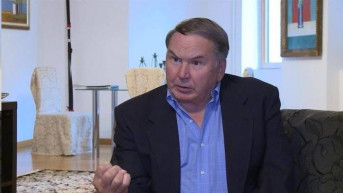
Kosovo online, with the consent of the publisher "Club Plus", publishes excerpts from the book of former diplomat William Montgomery "When the cheers die down - Memories of the last American ambassador to Yugoslavia" (2016), chapter 12 entitled "Kosovo". William Montgomery was the ambassador of the United States of America in Belgrade from December 2001 to February 2004.
Covic Comes
When the new DOS government took office, it found a chaotic situation in parts of Kosovo where the Serbs were dominant. Milosevic's government, in line with its narrative, that the "occupation" of Kosovo was only temporary, continued to pay wages to a large number of the Serbs who were employed in Kosovo before the bombing. It had advantages and disadvantages. When it comes to the good sides, without such a payment even more Serbs would leave Kosovo forever. And that would include critically important administrators, teachers, doctors, and other professionals. When it comes to the bad sides, such payment strengthened a kind of parallel government that drove the Kosovo Albanians and the international community in Kosovo to madness. They saw it as a continuation of unacceptable interference in the affairs of Kosovo, proof that the new DOS government, in their eyes, is no different from Milosevic's that preceded it.
There was another factor. Among those who continued to receive funds were members of the police, staff of the Ministry of the Interior, and intelligence officers. They continued to give and receive instructions from Belgrade. Moreover, especially in the northern part of Kosovska Mitrovica, local Serbian extremists continued to act unilaterally against both UNMIK and Kosovo Albanians, without fear of prosecution. The organization called "Bridge Guardians" was founded to protect the bridge that separates the northern from the southern part of Kosovska Mitrovica, where Albanians live. If an Albanian (or sometimes even UNMIK officials) tried to cross the bridge, they would be met at the same moment by a crowd of armed Serbs, at least with stones, and ready to fight.
Nebojsa Covic received great praise from the international community for his work in southern Serbia. It seemed to me that he was the perfect candidate to take over the responsibilities within the Serbian government regarding Kosovo issues. I believed that his pragmatism and activist nature would enable him to re-establish some sort of order in Serbia's relations with the international community in Kosovo, as well as rein in Serbian extremists. Therefore, I strongly encouraged him to take office and lobby within the Serbian government to make this happen. As it turns out, I did him no favors. Far from it.
From the beginning of his mandate, Kosovo Albanians were unreservedly hostile towards him. They were happy that a ten-meter-high wall was built in order to completely separate Serbia from Kosovo. They felt that any influence from Belgrade was unacceptable, partly due to fear of renewed Serbian aggression, and partly due to simple hatred. Kosovo Albanians believed (somewhat justified) that as long as Kosovo Serbs turn to Belgrade for help and support, they will not accept the new reality in Kosovo. They condemned Covic's activities daily and over time their views began to be understood by the international community.
Covic represented a special challenge for the international community in Kosovo. On the one hand, he quickly showed that he can - when he wants to - moderate the behavior of extremist Kosovo Serbs. After difficult negotiations and balancing on the edge of the possible with Daniel Everst, head of the OSCE Kosovo election observation mission, and UN High Representative Hans Haekkerup, the Serbian government agreed to encourage Kosovo Serbs to vote in parliamentary elections scheduled for November 2001. This led to the acceptable response of Kosovo Serbs and the creation of a fairly large block of Serbian deputies in the new Kosovo parliament. The international community emphasized such an outcome as a concrete sign of progress towards a multi-ethnic state. But the Kosovo Serbs soon realized that they had no influence in the parliament; that no Albanian party would cooperate with them; and that no one respected their proposals. They felt that they were just "decor" designed to show that Kosovo was progressing towards a multi-ethnic society. To this day, that experience affects their attitudes about participation in the parliament.
In exchange for receiving aid, Haekkerup signed a document with the Serbian government outlining a wide range of domains of cooperation between UNMIK and Serbia in Kosovo itself. These included areas such as transport links, finding missing persons, and environmental issues. On the one hand, it was very reasonable and would improve the general situation in the province. But the flaw was reflected in the fact that accepting help from Covic and the Serbian government could be perceived (and was experienced by the Kosovo Albanians) as giving him and Serbia a de facto role in the affairs of Kosovo. This, of course, was exactly what the Serbian government and Kosovo Serbs wanted. Covic negotiated very well.
When High UN Representative Haekkerup suddenly resigned in early January 2002, he was replaced by Michael Steiner. I welcomed his appointment since I personally worked with Michael from 1996 to 1997 when I was the Special Representative of the Secretary of State and the President for the implementation of the Bosnian agreement, and he was the deputy High Representative in Bosnia. He was an activist and worked closely with us in many domains.
From the point of view of the Serbs, the appointment of Steiner became a real disaster. From the very beginning of his mandate, he refused to establish any kind of business cooperation with Covic. He unilaterally canceled the agreement reached by Covic and Haekkerup, which encouraged the Serbian government to encourage Kosovo Serbs to vote in the 2001 elections. Kosovo, but at the same time enabled Belgrade to play a role. This, of course, made Covic and the Serbs reluctant to cooperate with Steiner.
Soon after, he did the worst thing from the Serbs' point of view (and mine). Belgrade kept around 150 Kosovar Albanians in prisons in Serbia. One of the goals of the international community has always been either the release of those Albanians or at least their transfer to prisons in Kosovo itself. Detailed negotiations were conducted on how this would be achieved. UNMIK sent a special group of experts to study each file and divide them into three groups. Certain cases were purely political or were not serious enough, and an agreement was reached to release those prisoners immediately. Some were clear, serious crimes and it was foreseen that these individuals would be transferred to prisons in Kosovo and serve their sentences there. The third category required new trials. When such an inspection was done, Covic used his influence and convinced the Serbian government to release all the prisoners and hand them over to UNMIK, which will transfer them to Kosovo and carry out further action in accordance with the agreement reached. The prisoners were collected, placed in buses, and sent to Kosovo under the supervision of UNMIK. About five minutes after arriving in Pristina, in front of television cameras and a large crowd of enthusiastic Kosovar Albanians, Steiner immediately and unconditionally released all the prisoners. In one step, he became something of a hero for Kosovo Albanians and completely destroyed the relationship with Covic and his ability to influence Belgrade. Steiner dismissed the work of his own commission as mere recommendations that he did not want to follow.
Covic began his Kosovo mission expecting to be able to cooperate with the international community in the same way as in the case of the rebellion in southern Serbia. He was shocked to realize that this was far from the truth. The Kosovar Albanians hated him, and the representatives of the international community - to say the least - did not trust him. In addition, he had to compete with different centers of power in his government. Given that Djindjic and Kostunica knew how important the Kosovo issue was for their political future, they did not want to leave it completely to Covic. Both of them maintained their own contacts in Kosovo and in the international community and often sent vague messages about Serbia's positions. For example, from the beginning, Steiner established a personal relationship directly with Djindjic (probably based on Djindjic's stay in Germany and connections with other German political leaders). When Steiner wanted something done, he would simply call Djindjic and make a unilateral agreement without any consultation. Such actions represented deliberate undermining of Covic, which both Djindjic and Steiner knew very well.
Because of that pressure and negative energy, Covic did not show his best qualities. He led a political fight with others in the coalition, he was always aggressive, especially when he was criticized or when he felt that he was not respected. He began to reciprocate in kind. Just as he was able to help and soften the behavior of the Kosovo Serbs, he could also do the opposite. And that he feels pleasure in doing so. The consequence of this was a further reduction in the effectiveness of his office and a further deterioration of his international reputation. The opinion of Kosovo Albanians that he represents an uncompromising nationalist began to be accepted by more and more representatives of the international community. At the same time, there was an increasing reluctance to accept Belgrade as any kind of partner or player in the Kosovo process.
(To be continued...)
comments