
FEUILLETON: Kosovo - Memories of the last American ambassador to Yugoslavia (II)
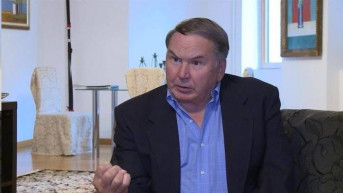
Kosovo Online, with the consent of the publisher "Club Plus", publishes excerpts from the book of former diplomat William Montgomery "When the cheers die down - Memories of the last American ambassador to Yugoslavia" (2016), chapter 12 entitled "Kosovo". William Montgomery was the ambassador of the United States of America in Belgrade from December 2001 to February 2004.
DIFFERENCES IN RELATION TO BOSNIA
The international community had to deal with serious violent conflicts in two nearby areas at about the same time - Bosnia and Kosovo. The fact that such different approaches were used shows how uncertain we were about which way would be the best solution. A Peace Implementation Council (PIC) was established in Bosnia, composed of the main international players (including Turkey, Russia, the US, and the most important EU countries), which appointed a High Representative to monitor and implement the Dayton Agreement and the peaceful transition. The PIC organized (and still does) monthly meetings where progress is analyzed and new initiatives are launched. During the period when I was a member of the PIC, in the capacity of Special Representative of the President and Secretary of State for the Implementation of the Bosnian Peace Agreement (from 1996 to 1997), we had a very active role in providing guidance and interacting with the High Representative.
Kosovo was placed under the overall control of the UN, which in a way meant that no one was in control. Reviews in the UN Security Council were performed for the sake of form. In Bosnia, the OSCE carried out and delivered numerous copies of voter lists free of charge for public inspection as one of the confidence-building measures. The same OSCE in Kosovo strictly hid them from the public. This was done because UNMIK feared that the lists would be contested by the Serbs in Kosovo, as well as by the Serb authorities in southern Serbia who were concerned about the possible double voting of Albanians in the area. A direct request from the Serbian government to provide copies was rejected.
In Bosnia, the return of refugees to areas where they were a minority and full freedom of movement were the two most important principles for the international community. Many sticks and carrots were used to make this happen. In Kosovo, the urgent return of Albanian refugees was the main priority, but only hypothetical support was given for the return of Serbian refugees. To this day, more than ten years after the end of the conflict, very few of them have returned and there is still no degree of comfort for the Serbs that would mean that there is full freedom of movement. More Serbs have left Kosovo since 2000 than have returned.
THE ATTITUDE OF THE KOSOVO SERBS
The hostile attitude of the international community in Kosovo towards the Serbs can mostly be explained by the fact that foreigners came to the country with a wave of Albanian returnees who suffered a lot. They found a devastated country where there was a palpable feeling that the dangerous enemy (Serbian army and police) was slowly being forced to retreat. They identified with the Albanian returnees and saw the scope of the task that awaited them. Re-establishing a functioning government was a major task since too few Albanians had experience or management responsibilities during the Milosevic regime. The international community, led by UNMIK, established an office in Pristina, where Kosovo Albanians received almost all jobs intended for the local population.
Their first encounters with the Serbs were not pleasant and set the tone for the following years. The Serbs felt anger because of the damage done to their property; because of the NATO bombing; and due to a twist of fate, overnight they became a threatened minority by the dominant force in Kosovo. They also suffered brutality and mistreatment in the vacuum between the withdrawal of the Serbian army and the arrival of KFOR and its assumption of full control. The Kosovar Albanians were cruel to the Serbs, who did not flee, for what they experienced under the domination of the Serbs.
In other words, the main reasons why the Kosovo Serbs felt antagonism and did not want to cooperate were precisely those I have already stated: The Serbs as a whole believed that Kosovo was their possession and that the Kosovo Albanians had deceived the international community in order to allow them to take it over. From the first day, they have been faithful to those principles, as have the Serbs in Serbia.
Since the international community never fully understood the depth of those feelings, it believed that the Serbs should accept the new situation, and when they did not do so, it began to feel more and more angry. It blamed the Serbian government for encouraging hardline views, not realizing that it would be politically impossible for any Serbian politician to do the opposite. The prejudices of the Kosovo Serbs were strengthened due to insufficient attention to issues that were of great importance to them (the return of the Serbian refugees, the punishment of the Kosovo Albanians for the war crimes they committed against the Serbs, the finding of more than 1,000 Serbs who have been missing since the last days of the NATO bombing campaign and the identification of bodies discovered in mass graves).
MY STRATEGY
I realized that it would be counterproductive to engage in any debates in Serbia about the pros and cons of NATO bombing during my mandate. The feelings about it were so strong and grounded that it would do no good to raise the issue in our relationship. Therefore, my usual practice has been to refuse to be drawn into public debates about NATO bombing. I was simply saying that it represents the past - my interests and mandate concern the present and the future. Both the United States and Serbia could benefit from the establishment of closer relations, which would imply the improvement of cooperation, and I have the task of making sure that this happens. At the same time, I did more than was asked of me to establish a good relationship with the organizations established to find Serbian missing citizens in various conflicts after the breakup of the former Yugoslavia, as I had previously done in Croatia and Bosnia.
I also made an effort to establish close ties with the Commissioner for Refugees in the Serbian government, Sanda Raskovic-Ivic, and support her efforts to help them. I visited refugee camps, not only in the area of Belgrade and Novi Sad but also in Medvedja in the south of Serbia. In the past 18 years, I have met thousands of refugees from all ethnic groups. They all had something in common - they all lost almost everything they had and experienced fear and terror, unlike me who was lucky.
However, the sad fact about Serbian refugees during my time in Serbia from 2000 to 2004 was that many of them resigned themselves to a life of quiet desperation on the social margins.
My government had a clear position regarding Kosovo. I knew that tackling the issue directly would be counterproductive and harmful. Therefore, from time to time, I have insisted on two specific topics:
1. Achieving the goal of creating a multi-ethnic society is the main prerequisite for considering the final status of Kosovo. That goal is much further than reported. There are significant problems in Kosovo, some of which have been slightly swept under the carpet. We have to admit that it will be difficult to overcome them. It will take a long time.
2. We should not rule out any option regarding the future status of Kosovo. There is no need to make any decisions at this time. Who knows how things will turn out? Excluding options could make it more difficult to meet our overall goals.
In the period from 2001 to the end of 2003, I achieved some success in both domains. This can be partly explained by the fact that most people have realized that it would take a long time to normalize the government administration in Kosovo, which is why there is no pressure to find a solution immediately. But Secretary of State Colin Powell also accepted my suggestion that no option be ruled out. All of our administration's official announcements made during my mandate have stated that our options remained open. That was very important for me because I already knew then that the real solution for Kosovo could be some form of partition.
(To be continued…)
0 comments