
Hypocritical policy of the EU
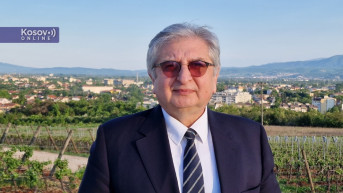
Writing for Kosovo Online: Zeljko Sain, Politika's special correspondent from North Macedonia
As many as seventy-two initiatives have been registered for the prosperity of the Western Balkans, among which two stand out: the Berlin Process and the "Open Balkan". The Berlin Process is an intergovernmental initiative whose goal is to connect the countries of the Western Balkans and the European Union on their way to EU membership and help build mutual ties on the foundations of European values and standards in accordance with the EU acquis.
"Open Balkan" is a regional initiative of the countries of the Western Balkans whose goal is a mutual connection and economic strengthening, which will facilitate their entry into the European family.
However, no initiative has so far succeeded in achieving its goals, the Western Balkans is still in the waiting room in front of the European Union. A visa to enter the EU once again implies "another piece of paper". A message is being sent to the Western Balkans that they could hope for membership in 2030 or 2033, as Greek Prime Minister Mitsotakis said.
On the one hand, the West offers promises to the countries of the Western Balkans through political speeches, however, when it comes to the realization of those same promises, the situation is quite inert, as if the EU does not want, cannot or will not take a pragmatic step, slowing down the acceptance of these countries by various political games, the rules of which it writes and changes. On the other hand, it is certain that the EU is afraid that the Balkan countries will lean towards the East and, together with the Russian Federation, create a new geopolitical picture of the world based on political interests.
When the Berlin Initiative was formed in 2014 under the administration of the former German Chancellor Angela Merkel, Juncker immediately stopped its development, saying that the enlargement of the EU would be postponed for five years, which was later confirmed by Macron, allegedly due to internal problems in the EU and the need for its reorganization. Actually, after the statement of Angela Merkel and the former President of France that the Minsk agreements were signed in order to prepare Ukraine for war with Russia, it was clear why the process of accepting the Western Balkans into the EU was really stopped. The money and organization of the EU and NATO were directed against Russia.
Let us remind you that for admission to the North Atlantic Alliance and the EU, Macedonia had to change the Constitution and the name of the country, as requested by the EU member and its neighbor Greece. Theresa May, the British Prime Minister at the time, after the EU Summit in Sofia "Western Balkans 2018", in Skopje promised the Macedonian people in front of Zoran Zaev, the Prime Minister at the time, the full support of Britain in resolving the name dispute with Greece and added that a quick solution was more than necessary. "Conflicts from the past can sometimes be difficult and intractable, but we have to face them once and for all. With goodwill, we can all make progress," Theresa May said at the time.
The Prespa Agreement with Greece was signed, and Macedonia changed its Constitution and became the Republic of North Macedonia. However, the promises to enter the European embrace with that procedure were not fulfilled. Instead of talking about the benefits that North Macedonia would achieve with the Prespa agreement, Theresa May strongly demanded unification against Russia.
"Russia is trying to influence European and Western Balkan countries by misusing information, cyber-attacks, and propaganda. It is important to unite against Russia, and the support of Macedonia and other countries is of great importance to us," she said in Skopje.
And Angela Merkel acted similarly. Namely, on the eve of the referendum in Macedonia regarding the agreement with Greece, during her visit to Skopje, she suggested to Macedonian citizens that the agreement with Greece opens the door to Euro-Atlantic integration, of course, without giving any guarantees, "A lot of work is still needed, but the condition is a successful referendum. I don't want to interfere in your decision, but I want to say that this is a historic opportunity. Don't stay at home on this historic day; use this opportunity to say what you want for the future of your country."
However, the referendum failed. Merkel gave her support to Zaev. As well as Stoltenberg. In the end, the Prespa Agreement was signed, and after a year, North Macedonia was accepted into NATO. Probably, that reception would have been more difficult if Russia had not commented that the referendum did not succeed because Bulgaria wanted to prevent joining NATO there as well. Today, North Macedonia is the 30th member of NATO, but its other neighbor, Bulgaria, which enjoys the support of Germany and France, is questioning the achievement of its primary strategic goal - joining the EU.
Macedonia fulfilled everything that was asked of Zaev, but Europe behaves as if the Macedonians did not change the Constitution for the sake of the EU, but for themselves. Now, we know, it is time to change the Constitution of the Republic of North Macedonia in order to include Bulgarians as a constituent element in the highest state act, with the same promises that the EU did not fulfill with the first change to the Constitution. Ministers of Foreign Affairs of Slovakia, Poland, the Czech Republic, Germany, France, etc. not only use the same rhetoric to convince the citizens of North Macedonia but emphasize the isolation of their country from the international community if the highest state act is not changed.
Therefore, European politics not only presented its hypocrisy, latently prepared Ukraine for war with Russia, but also showed a lack of conscience towards the identity of the Macedonians and their state. Yugoslavia also felt it with the bombing by 17 NATO members, without the consent of the UN Security Council, i.e. Serbia recognized Kosovo as an independent state, which tested Russia's patience. The Brussels agreement for the normalization of relations between Belgrade and Pristina was signed in 2013, but Russia did not succumb to provocations. Since the provocation of the Kosovo issue did not get the desired epilogue, everything turned towards Ukraine.
The "Open Balkan" initiative was created on the stage of these tensions. Although it has not yet succeeded in bringing member countries into the EU, its strength in preserving peace in these regions is undeniable. By reconciling the historical disagreements between Serbia and Albania, and by strengthening even stronger good-neighborly relations between Serbia and North Macedonia, a pillar of prosperity was built for the citizens of these three countries. The stumbling block to rapid progress lies in the neighborhood, in Kosovo, whose "Prime Minister" is trying to derail this initiative by inflaming the tense situation in this territory, for which he enjoys the silent support of the EU. In fact, it is a hypocritical policy of all EU members except those that did not recognize Kosovo, and European policy, which boasts so much about its values, failed the test once again. This is increasingly clear, which is why both Scholz and Macron are on a slippery slope.
In the new global division of the world, the EU will have to face the consequences of its actions, and probably give up certain political appetites that it is not up to. Britain and the USA, through NATO, will dominate the Old Continent, and Russia will have allies in the world's strongest economic power - China, the second most populous country - India, and Pakistan, Brazil, and South African countries, where the USA has also been politically defeated.
After all the efforts and futile attempts to join the Western Balkans to Europe, it is expected that the former Yugoslav republics, together with Albania, will indicate to Europe in October that they are fed up with the hypocritical European policy, with which they are not only delaying the promised admission of the Western Balkan countries to the EU, but also promoting hatred across the Balkan territory.


0 comments