
If Belgrade and Pristina keep promises made in Ohrid, they will continue their path to the EU
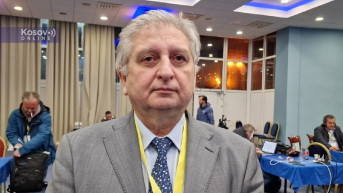
Writing for Kosovo Online: Zeljko Sajn, a publicist
After the Second World War, the most severe epicenter of war events in Europe, which shakes the entire world from Ukraine, threatens to spread throughout the globe. This time, the scene is a battle between great powers for economic supremacy. As in previous world wars, our soil was not spared from fear or anxiety. Kosovo is now a powder keg, with sparks multiplying by the day when humanity is threatened by the use of the most modern weapons, especially nuclear weapons, which destroy everything that nature has created. The only guarantee that gives us hope that this will not happen is secret, silent diplomatic negotiations, away from the spotlight and the eyes of the common man.
The sooner the relationship between the US and the Russian Federation is balanced, the sooner humanity will see the light of peace. While the world powers seek their place under the sun with daily appeals for peace from China and India, NATO and the Russian Federation are talking with guns on Ukrainian soil until then. The result of such a conversation is a daily human sacrifice.
With such a picture in mind, the state leadership of Serbia accepted the principles under which the Brussels Agreement on the normalization of relations between Belgrade and Pristina will be implemented in Ohrid on March 18, under the auspices of the EU and the US as observers. Although the agreement was reached after changes to the content of the text and only after marathon negotiations, delaying the implementation of the agreement from Ohrid is not excluded, primarily by Pristina, which met the agreement with the aggressive behavior of political parties registered in Pristina.
Borrell, the head of EU diplomacy, categorically informed the journalists in Ohrid that if Belgrade and Pristina do not fulfill their obligations from the Annex to the agreement's implementation, political and economic sanctions will be imposed. Politically, the EU accession process will be halted, and economically, all forms of financing for the side that does not adhere to the agreement will be cut off.
The first and basic step that was agreed upon in Ohrid and that stems from the Brussels Agreement on the normalization of relations between Belgrade and Pristina is the formation of the CSM by Pristina, as the representatives of the EU and the US emphasized. It is difficult to say how much Kurti and his associates understood the importance of this agreement.
What all parties, from the hosts to world statesmen, will remember from this negotiation summit in Ohrid is that the Brussels Agreement was revived and that the Annex was verbally confirmed to continue the implementation of the Brussels Agreement, which was signed in 2013. One of the most important principles is the implementation of the agreement on the CSM formation.
No matter how much international public law is ignored today, it is very important that this very principle was not given tacit status by nodding, even though Serbia is not required to do so by the European document. In Professor Milenko Kreca's book "International Public Law", in the section Forms and Names of International Agreements, the following is emphasized: "International law does not provide for a special form of concluding an agreement. As in international law, the main emphasis is placed on the intention of the party without prescribing a specific form, and the parties are free to choose the form they want, provided that their will clearly follows from the specific form."
In other words, the contract can be concluded in written, verbal, or even tacit form.
"In modern conditions, the written form predominates. Article 2 of the Convention on Contracts and Law expressly requires the written form. This ruling was adopted in the interest of clarity and not to challenge the legal force of the verbal agreement. A verbal agreement can be reached through appropriate statements from competent authorities," Kreca writes.
So, a step forward in the normalization of relations between Belgrade and Pristina was made in Ohrid. Certainly, the President of Serbia did not allow himself to fall into the trap and tacitly agree to the recognition of Kosovo. Therefore, he emphasized once again in front of the journalists: "I am not for Kosovo in the UN, I will never recognize an independent Kosovo, and I will not do anything in their favor."
Together with the most powerful in the world, the US and the EU, he fought to preserve peace, which is the most important thing at this moment, arguing that even a concluded agreement would not mean the recognition of Kosovo.
Therefore, if Belgrade and Pristina keep the promises made in Ohrid, establishing normalization of relations, they will continue their path toward the EU. Otherwise, as Borrell stressed, they can expect political and economic sanctions. The first and most basic step is certainly the formation of the CSM by Pristina. The first signs of compliance with the agreement by Pristina will arrive from Brussels today.
0 comments