
Indiscriminate bombing as a general principle
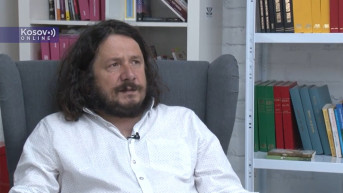
Writing for Kosovo Online: Muharem Bazdulj, writer and journalist
The Twitter message sent by the ambassador of the United States of America in Belgrade, Christopher Hill, about the twenty-fourth anniversary of the bombing of FR Yugoslavia, is the closest thing to an apology that has been heard so far from an official of the American authorities. America is a serious country, with continuity of foreign policy regardless of who is currently in power, but again everything sounded even more authentic and sincere if we consider that Hill was by no means an insignificant part of the very Clinton administration that carried out the bombing. The next anniversary of the bombing will be the twenty-fifth, a jubilee, as they say (by the way, the concept of a jubilee anniversary is so popular in modern culture and usually associated with anniversaries divisible by the number ten originally referred to anniversaries divisible by the number twenty-five), so this could look like a prelude to some kind of official historical "American-Serbian reconciliation".
But there is always trouble; if it is now more realistic to imagine the convergence of the official American and official Serbian narratives about the bombing, in Serbia, there are apparently still rather bitter divisions among the public regarding some important segments of that bombing. This was shown by the recent heated polemic between the editors of the daily newspaper "Danas" and the collegium of RTS, i.e. the columnist (and film critic) of "Danas" Pavle Simjanovic and the editor of the RTS news program, Nenad Lj. Stefanovic. In short, Simjanovic declared RTS a "legitimate military goal" of the NATO alliance. Stefanovic asserted that such thinking was "the path to inhumanity". Simjanovic defended his claims and his impression with his own moral indignation due to the fact that Tatjana Lenard told NATO leaders in her diary: "Shoot, we are waiting for you," and then, she was not in the RTS building when it was hit. Those who share Simjanovic's opinion often refer to the fact that Dragoljub Milanovic was sentenced to ten years in prison for "violating public security".
I read that and think that I do not dispute Simjanovic's indignation, as I also understand those who emphasize the verdict against Milanovic, but it is not clear to me why this leads them to the conclusion that RTS was a legitimate military objective. And while I'm thinking about it, I'm constantly aware of how it all incredibly reminds me of something; how there is some similar historical moment or situation, but I can't remember which, although all the time, as people say, it is on the tip of my tongue.
Another anniversary helped me to finally remember; the anniversary that is on the same day, the anniversary of the Nazi bombing of Belgrade in 1941. Eighty-two years later, when talking about this bombing, there is much less mention of the human victims and much more of the burned-down building of the National Library and its priceless collection of books. However, comments are often heard in the local public that, well, the Germans are not to blame, but, apparently, "we are to blame" since the library did not catch fire immediately, but only on the eve of April 6th, and the authorities did not react in time to locate the fire in the start and keep it under control. Another variant of the same school of thought is blaming the "competent" for not evacuating the library materials somewhere outside of Belgrade on time.
However, if nothing else, it was not one of its employees who was convicted for the bombing of the National Library, but (at least) one of those who carried out the bombing, Field Marshal Alexander Lehr. In the famous biography of Hitler written by Ian Kershaw, it is precisely described how Hitler simultaneously planned and ordered the attacks on Yugoslavia and Greece. As far as Greece is concerned, he regrets that he has to get into that conflict at all, and they explicitly forbid the bombing of Athens. He does not want to destroy the Greek cultural heritage. When it comes to the attack on Belgrade, Hitler orders that the bombing be as thorough and indiscriminate as possible, to be carried out "without mercy" (in the original "Ohne Gnade"). There was no force that would be excessive against the "Serbian criminal clique", so he told his subordinates.
Hitler's phraseology about the "Serbian criminal clique" is strangely similar to the rhetoric of certain apologists for the NATO bombing in 1999. The policy of indiscriminate targeting in Belgrade is also similar. The sins of the local political leaders and the incompetence of the heads of the institutions are one thing, but the blame for the bombing of cultural assets and media houses is borne by someone else. However, under the influence of a kind of "Stockholm syndrome", individuals obsessively search for local or Serbian guilt. And in the process, they verbally shoot - indiscriminately.



0 comments