
Juggling the priorities of achieved agreements
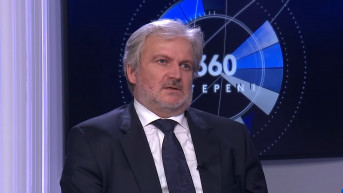
Writes for Kosovo Online: Dragan Bisenic, a journalist
Kosovo is again at the top of the agenda of world forums, from the European Parliament, the European Political Community Summit, the Council of Europe, yesterday's NATO session, the upcoming meeting of the Berlin Initiative on October 16th in Tirana, to the upcoming meeting of the UN Security Council on October 23rd.
During this period, representatives of the 'Quint' are expected to appear, bringing with them a package of new threats and incentives for continuing the dialogue, with more threats for Serbia, as assumed.
All these meetings come with various concepts for breaking out of the spiral of escalation in Kosovo, which practically began with the legitimization of illegitimate elections for local authorities in northern Kosovo. Immediately after that, the crisis followed, involving the violent intrusion of the Pristina Police into the municipal assembly buildings and the forced installation of leadership with negligible voter support.
Neither this crisis is over; it was exacerbated by the unsuccessful dialogue in Brussels on September 14th, followed by sharp accusations by the Kosovo Prime Minister against European mediators and even Josep Borrell himself.
At the center of it all is Pristina's refusal to adhere to the sequence and chronology of the achieved agreements and to engage in their implementation. Instead, confusion and an 'identity swap' of priorities are resorted to, where later agreements are declared a priority, while the original ones are labeled as unimportant and secondary.
In such an atmosphere, even a part of the international community has not maintained a firm and unified approach but has succumbed to an atmosphere that renders the dialogue entirely irrational and useless for the Serbian side. Serbia, it can now be quite apparent, finds no purpose in repeating the same mistakes or succumbing to pressures to continue the dialogue, to give up on the international dispute over Kosovo's self-proclaimed independence and recognize its 'de facto' independence while failing to reach agreements on the Community of Serb-majority Municipalities.
Meanwhile, somewhat more concrete offers for Western Balkan countries to join the European Union have emerged. Although not binding, there is juggling with the year 2030, and the President of the European Commission, Ursula von der Leyen, extensively discussed EU expansion to '30+' countries in her statement on the state of the EU, although this topic was only third among her priorities.
A Franco-German paper has emerged proposing that Western Balkan countries become a part of a reformed EU accession process by being "step by step" included in EU structures before formal accession to the Union. These "steps" include regular participation in the work of the European Council and selected compositions of the Council of EU Ministers, closer cooperation with candidate countries in key areas of security, energy, and infrastructure, increased pre-accession (financial) assistance to significantly support membership efforts, and the strengthening of the role of pro-European civil society.
The paper also states that EU member states should support candidates by providing a majority in the Council of Ministers to open formal membership negotiations and to open and close individual negotiating chapters.
In all these "steps", it is clear that Western Balkan countries will have no right to decide but will have to implement all decisions adopted by countries with the right to vote. All of this closely resembles concepts of political segregation seen earlier in history, so Western Balkan countries, along with Ukraine and Moldova, would be the first participants in such a modern-day 21st-century project.
Such ideas, therefore, do not have the necessary seriousness or moral substance to be considered with due care and seriousness. Additionally, calculations have been published that including nine new countries in EU membership would cost an additional 260 billion euros. This is a discouraging sum for current EU members to take a more robust approach to expansion, and it seems they are not willing to invest in it.
Because of all this, the European Union appears to be entering a new cycle of the Kosovo vortex without strong will and firm intentions. If it were different, it would be difficult to find interlocutors in Europe, such as in the German Bundestag, where, as regional media reported, a high-ranking official from the Pristina administration stated that the "political process is now in the background", and that there is no consideration of the Community of Serb-majority Municipalities. According to what has been reported from these meetings, there don't seem to be any reactions to such positions.
The position, as clarified by the German Ambassador in Pristina on several occasions, meant that the continuation of the dialogue meant the beginning of the implementation of the Community of Serb-majority Municipalities for Kosovo and "de facto recognition in a few steps" for Serbia.
According to the interpretation of the statement by the German Ambassador regarding the role of KFOR, it reacts "only upon Kosovo's request", which is a significant deviation from its mandate based on the UN Resolution. However, it testifies to the increasing entropy in the response of international actors to the current escalation in Kosovo.
US expert Daniel Serwer stated that, given the recent statements by the EU spokesperson regarding the events in Banjska on September 24, "the EU is becoming an opponent of Kosovo's sovereignty and territorial integrity" and that "it wants to limit the deployment of police in northern Kosovo".
"The EU has become a de facto opponent of Kosovo's sovereignty and territorial integrity. It aims to limit the deployment of police in response to a clear and present threat and to create a special management structure for the Serbs, at least in the north. The US supports the EU and both objectives, but "denies that it will allow the achievement of the second goal".
US Ambassador to Pristina, Jeffrey Hovenier, reiterated that the creation of the CSM was an "urgent task," and he had previously announced that the US was ready to assist in drafting the Statute of the CSM, which would not represent a "new level of authority". At the same time, Hovenier believes that Radoicic's behavior does not disqualify the entire Serb List. He reminded that the US had imposed sanctions on Radoicic two years ago, but the US continued to cooperate with the Serb List, concluding that his behavior "does not disqualify the entire political party".
The first opportunity for all these approaches to be harmonized and to reject unnecessary extremist rhetoric will be the Summit of the Berlin Process in Tirana. It is announced that French President Emmanuel Macron will attend the summit. This will simultaneously be the first visit of a French President to Albania. This summit will undoubtedly have Kosovo and Metohija as the central theme of regional discussions.
The event is expected to serve as a grand reconciliation between Albanian Prime Minister Rama, Greek Prime Minister Mitsotakis, and Kosovar Prime Minister Albin Kurti. The debate with Greek Prime Minister Mitsotakis due to election results in one city had unpleasant tones on both sides, but it was not nearly as intense as the conflict with Albin Kurti.
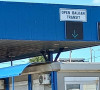
Albanian Prime Minister Edi Rama made a sharp turn towards EU policy during the summer when he left the "Open Balkan" initiative. After an unpleasant experience with the Kosovar Prime Minister, who refused to receive him in Pristina, it seems that Rama was trying to distance himself from the Kosovo issue as much as possible while connecting his view of national priorities more with Kosovo. For this reason, after the incident in Banjska, he requested an urgent repositioning of KFOR in northern Kosovo, mentioning the possibility that it could become a "KFOR Republic". He also called for an international conference on Kosovo, for which he was again strongly criticized by officials and supporters of Prime Minister Kurti.
Albanian commentator Habjon Hasani recently provided a very creative geopolitical analysis of events in Kosovo. He refuses to see any similarity between the events in Ukraine and Northern Kosovo. He considers Ukraine as a US invasion because they "came to Putin's doorstep", and the only comparable situation to Ukraine is the missile crisis in Cuba, where Khrushchev "placed missiles" in front of the Americans' house.
He argues that Serbia is "by no means a regional superpower" and concludes that "any example and analogy with Ukraine can only be made by people who romantically assess situations related to power and geopolitics".
In his analysis, neither Rama nor Kurti received high praise. "The ability of Rama and Albin Kurti to impose their policies and desires is directly proportional and/or equal to the sum of their fiery power, which is equal to their ability to militarily dictate events". This military power is ZERO for both Kurti and Edi Rama, so any concentration of debate on this issue is idiocy. It's like judging supermarket committee meetings based on the arguments of two managers working for a salary at two different supermarket locations.
Hasani points out that Kurti is absolutely dependent on the US and in the active and antagonistic role assigned to him because "if he were a true antagonist, he would be removed from power within 24 hours by protests or a coup d'état within his party by people with US visas".
Edi Rama knows the same thing as Albin Kurti – that the future belongs to integration into common markets with Serbia and all of Europe. And when after 50 years neither Rama nor Kurti nor Vucic will be around, the market will still exist while generations in Belgrade, Pristina, and Tirana will look at what is happening today as distant memories.
So, critics provide colossal help to Rama and paradoxically, while blindly attacking him for Kosovo, they strengthen him in Tirana. This contradiction and the differences between Rama and Kurti among Albanian commentators are presented as a combination of a "good" and a "bad" cop, providing flexibility to the Albanian factor and the possibility to always have one hand free, while the other can show determination and suffer some consequences. This "wise coordination" serves the "great game" where each side provides some results.
The assumed result, one might say, certainly involves maximizing benefits for both sides, European integration for Albania and independence for Kosovo. However, it should also include an awareness that not all goals are equally achievable, and some are not achievable at all.
0 comments