
Kosovo is again on the global radar of the UN and NATO
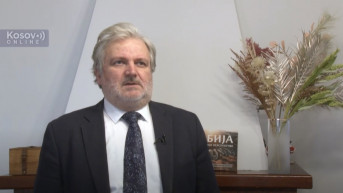
Writing for Kosovo Online: Dragan Bisenic, journalist
After the two-month crisis in the north, Kosovo has once again found itself on the agendas of major world forums. This week, NATO set aside time to verify its positions at the Summit in Vilnius, and Serbia's request to discuss Kosovo at a special session of the United Nations Security Council is on its way. The return of Kosovo to the global stage and major world radars shows that this issue, even after almost a quarter of a century, is still far from an acceptable, principled, and sustainable solution that will be based on respect for international law.
The President of Serbia, Aleksandar Vucic, announced on July 6 that he would request a conversation with the head of NATO, Jens Stoltenberg, after the summit in Vilnius, but also that Serbia would request an urgent session of the Security Council on Kosovo. President Vucic pointed out that he believed that it was necessary to hold a special session of the United Nations Security Council so that the entire world public learned about the tensions in Kosovo and Metohija and the difficult situation of the Serbs there.
Minister of Foreign Affairs, Ivica Dacic, announced that the President of Serbia, Aleksandar Vucic, would participate in the session if it took place. "It is a topic that is the most current at the moment because terror is practically taking place against our people in Kosovo and Metohija. The Pristina authorities do not respect any resolutions, neither 1244 of the UN Security Council, nor the Brussels Agreement, nor do they respect the plans for de-escalation brought by the mediators," Dacic said.
In this case, the Security Council and NATO rely on different ideas about Kosovo, and therefore the expected results of these two actions are different, although they would have to be harmonized with Security Council Resolution 1244. The European Union and the US, along with NATO, are on the side that considers it necessary to complete Kosovo's statehood and Kosovo's entry into the UN with Serbia's permission, while UN Security Council resolution 1244 says something else and affirms the territorial unity and integrity of Serbia.
In order for the Security Council to adopt a decision, half of this body of 15 members must vote for it, but also that none of the five permanent members of the Security Council veto the proposed decision. When it comes to deciding on the agenda, the decision is made at the session itself, after a proposal to include a particular topic in the discussion. In order for it to be discussed, it is enough that 9 members of the Security Council vote for it. In this composition of the Security Council, in addition to the five permanent members, there are also Albania, Brazil, Ecuador, Gabon, Ghana, Japan, Malta, Mozambique, Switzerland, and the United Arab Emirates. Ten have recognized Kosovo (USA, Great Britain, France, Albania, Gabon, Japan, Malta, Switzerland, UAE, and Ghana), while five member states of the Security Council - Russia, China, Brazil, Ecuador, and Mozambique - do not recognize it. This in itself will require extensive, large, and serious preparation, because it will be neither easy nor simple for the countries that recognize Kosovo to do something that may not be in favor of strengthening Kosovo's statehood. It is not impossible for the initiative to succeed and for a special session of the Security Council to actually discuss the current situation in Kosovo, which would be an exceptional diplomatic success that could more clearly indicate which path leads to an acceptable solution to the Kosovo issue, the path of imposing unilateral and partial solutions that will, in the long run, destabilize the situation in the region and in Europe or the respect of international law that will reduce the chances of conflicts and confrontations?
Due to the war in Ukraine, the US, Great Britain, and France are confronted with Russia and China to the extreme that it is unrealistic to imagine that they will achieve unity on the Kosovo issue, on which, since its inception in 1999, they have been as thoroughly divided as they have been to the reflexes of Kosovo precedents in today's Ukrainian case. What Serbia can achieve by holding a special session of the Security Council, is more thoroughly and fully informing the members of the world organization about the issue for which the United Nations is directly responsible. At this moment, this is not a small thing, especially when Serbia is asked to "let" Kosovo into the United Nations membership in the process of normalizing relations with Kosovo, but it is not impossible either.
Regular discussions on Kosovo in the Security Council are held every 6 months, after the previous three-month rhythm of discussions. There were even proposals to cancel discussions in the UN Security Council, because there is supposedly no reason for them, because the security situation has improved so much, so there is nothing to discuss. The last regular discussion in the Security Council was held at the end of April.
The President of Serbia, meanwhile, met with the ambassadors of China and Russia, who he informed about the threat to the Serbs in Kosovo and Metohija and the delicacy of the security situation, which threatened the stability of the entire region.
In any case, US diplomatic representatives and senators who were recently in the region warned that the continuous crisis in Kosovo would not be allowed to turn into a wider conflict. That is why the engagement of military and police forces, special units of the Kosovo Police in the north of Kosovo, and the additional deployment of Serbian military forces next to the administrative line with Kosovo is viewed with particular sensitivity. All of this indicates that NATO really believes that a more serious conflict is possible, and therefore strongly calls for "de-escalation" and a return to the political process and the implementation of the Brussels and Ohrid agreements.
In Vilnius, NATO, in considering the latest developments in Kosovo, started from a broader approach in which relations with Serbia were clearly emphasized, as was the expectation that they would become even stronger and more constructive. In points 77 and 78 of the joint communique, which concern Serbia and Kosovo, some messages are outside the usual template expressions and that indicate NATO's readiness and desire for greater and more significant cooperation with Serbia. NATO, therefore, calls on Belgrade and Pristina to urgently de-escalate, return to dialogue and implement the agreements from Brussels and Ohrid. As NATO announced, strengthening NATO-Serbia relations would be beneficial to the Alliance, Serbia, and the entire region. Knowing that for the success of KFOR's and NATO's actions, their perception in the public is of great importance, in this sense Serbia is especially mentioned, which is expected to have "constructive engagement with NATO" where "public communications" are also included, that is, the representation of NATO in the public sphere. It is interesting and particularly politically significant that the NATO Communication also mentions UN Security Council Resolution 1244.
"We expect Serbia to engage constructively with NATO and its neighbors, including its public communications about the mutual benefits of NATO-Serbia cooperation," it says in point 77, which is a part of the adopted communique.
As stated, NATO members supported dialogue with the support of the EU and other efforts aimed at normalizing relations between Belgrade and Pristina and called on the parties to seize the moment and engage in good faith toward achieving a lasting political solution.
"We call on both sides to immediately de-escalate, return to dialogue and constructively engage in the implementation of the agreement on the path to normalization between Belgrade and Pristina, which was recently reached in Brussels and Ohrid," the document reads.
In point 78, they say that they remain committed to the continuous engagement of NATO in the so-called Kosovo, through the NATO-led KFOR mission.
"KFOR will continue to ensure a safe environment and freedom of movement in Kosovo in accordance with UN Security Council Resolution 1244," the communique states.
As he writes, the recent escalating actions are unacceptable and condemn the violence in the so-called north of Kosovo, as well as, as they stated, unprovoked attacks in which NATO soldiers had suffered serious injuries. NATO has also noticed that the situation in Kosovo is going from crisis to crisis, which is one of the reasons that the increase in forces is monitored in accordance with the conditions on the ground, and not, as usual, in accordance with predetermined time intervals.
"We have increased the presence of KFOR troops to respond to recurring tensions. All changes in the number of KFOR forces will remain based on conditions, not calendar," the document stated. During the Summit, the head of the NATO alliance, Jens Stoltenberg, said that NATO was ready to send more troops to Kosovo, to calm the violence in the north. He added that the first 700 soldiers were already on their way to Kosovo. NATO has decided to increase its mission of 4,000 soldiers in Kosovo by an additional 700 soldiers.
This is what Stoltenberg used to say during the last crisis. He announced that NATO would remain vigilant and would ensure a safe environment, calming, and reduce tensions. "NATO should ensure the security and stability of all citizens of Kosovo. We carry out our mandate in an impartial manner," Stoltenberg said.
Stoltenberg confirmed in Vilnius his readiness to meet with the President of Serbia soon and discuss Kosovo, but he also revealed that he was in regular contact with him. "I am in regular contact with President Vucic and, of course, I am ready to meet," Stoltenberg confirmed on the eve of the summit in Vilnius.
When asked by reporters whether sending an additional 700 NATO troops to Kosovo and keeping battalions on standby in case of need meant the Alliance expected that the unrest could escalate into a larger conflict in Europe after Russia's war in Ukraine, Stoltenberg answered vaguely, almost trying to avoid an answer, so he said that this "does not mean that NATO is giving up on a political solution." All of these are reasons for regional and even broader concerns, which are sufficient motivation for all members of the Security Council to support the holding of a special session.

0 comments