
Two pictures of the Albanian world - Edi Rama and Albin Kurti (1): Outsider and a superstar of Balkan politics
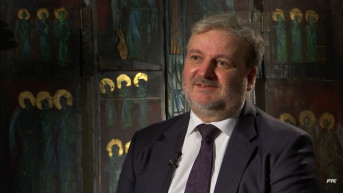
Writing for Kosovo Online: Dragan Bisenic, journalist
Albanian Prime Minister Edi Rama and Kosovo Prime Minister Albin Kurti are the dominant politicians of today's Albanian corps, but the world's attitude towards them, their political platforms, and political action, as well as their mutual relationship, reflect all the complexity of the current Albanian political milieu, its conceptual forms, different carriers and forces that stand behind them and approach the Albanian national idea and its finalization in a single Albanian state. In that, Rama and Kurti represent two poles of Albanian politics and two concepts of realizing the ideas of the Albanian national movement in the Balkans, which for this occasion we call the "Albanian world" as a designation for ethnic Albanian areas that reach several Balkan states. Earlier, among the Albanians in North Macedonia, the idea of a "natural Albania" was affirmed, which would include all the Balkan territories inhabited by the Albanians, and which originates from a document of the Albanian Academy of Sciences promoted in October 1998. In 2016, Rama rejected this idea. "We have no right to change the borders or to take a part of the territory from Greece, Serbia or Macedonia and thus create a 'natural Albania'," Rama said.
For the world, Edi Rama is a long-lived Prime Minister, a casual superstar of Balkan politics who confidently leads his country on the platform of Euro-Atlantic integration. Albania has been a member of NATO since 2009 and a candidate country for membership in the European Union since 2014. Rama does not reject the international community. "We don't decide. It's up to them to make decisions, and we have to respect them," the Albanian Prime Minister said.
Kurti collected a very colorful and wide spectrum of political qualifications, from "Albanian Seselj", "modern Trotskyist", "urban rebel", "chauvinist", "anarchist and anti-globalist under the guise of a radical Albanian nationalist", "crypto-communist", "Enverist", "Serb-hater", "Greater Albanian chauvinist", "anti-Islamic fundamentalist"... He says of himself, "One could say that I am a romantic person, but I am not a chauvinist". This enumeration would take us far. These are all qualifications that indicate suspicion toward him. Edi Rama, for example, has no such qualifications, although he comes from the very core of the nomenclature, since his father, Kristaq Rama, was the official sculptor of Enver Hoxha’s Albania.
But, according to his position as an ostracized personality, Kurti is actually more of a true "pro-Serb" or "Serb" because his outsider position, outside the mainstream that the already established Rama comfortably enjoys, is a typical Serbian position of a rejected and isolated nation for many decades.
Kosovo, not only is still far from the real possibility of asserting itself as a real state, but since the beginning of the war, the US and the EU have completely abandoned that plan, aware of its unfeasible nature, and since September last year, instead, they have been offering a surrogate regional statehood within Europe, which should be recognized by NATO and the EU. It only reached the "white Schengen list" in April of this year. Aware of this fact, Kurti at all costs, including conflicts with international factors, strives to increase the internal volume of Albanian statehood, to make Kosovo a "civil state" in which the Serbs will individually have all rights, collectively some cultural rights, but without any possible autonomy and the Community of Serb-majority Municipalities, which has been an unfulfilled obligation of Pristina from the Brussels Agreement for 10 years.
While the London "Economist" described Rama's triumph full-page last week with admiration, presenting the Albanian Prime Minister in conversation with his feet on the table, after returning from talks with the leaders of Champions League winners, Manchester City about the creation of a network of coaching academies in the Balkans. "He is imposing in a T-shirt, trousers, and shiny white sneakers. He is six feet seven inches tall, shaven-headed, with a trim white beard, mustache, and watchful, hideous eyes - you might not want to run into him in a dark alley at midnight. Fluent in many languages, he is clearly cosmopolitan, despite growing up in one of the world's most isolated, vicious, and paranoid countries, often described by today's Albanians as the 'North Korea of Europe' before the collapse of communism in 1991."
Western newspapers, on the other hand, are full of condemnations of Kurti's behavior, hidden or open threats of sanctions against Kurti personally, and Kosovo as well. International envoys, State Secretary Blinken speak negatively about him. The more the world loves Rama, the harsher his condemnations are in Kosovo, where Rama is exposed to the worst possible insults. And it seems that the most serious insult is connected with any positive attitude towards the Serbs so that Rama is declared a "pro-Serb", a "soldier of Vucic", all of which forced him to scathingly declare in the middle of Pristina that he is "more than a pro-Serb" and that he is "Vucic's brother".
Rama's supporters reject any kind of "unity" with Kurti's supporters and are not at all gentle in their response. They claim that Albania "supports Kosovo as a state of pro-Western citizens", in contrast to Kurti's supporters who are "some Taliban phalanxes, who seek to drive the West out of Kosovo and turn it into an ungovernable territory". They call Kurti's followers "a bunch of phalanxes who want to give up NATO, give up the US and EU membership, and support Albin Kurti, one leader in the history of Kosovo who made acts of violence against Albania". At the same time, they refuse to be against the party of Ibrahim Rugova, "the father of modern Kosovo, against the party of Hashim Thaci and other KLA leaders, who justified the international intervention in Kosovo". Kurti's "phalanxes" do not represent Kosovo, but a number of those in Kosovo who are "The scum of the Kosovo state, the most uneducated, the most ignorant and, above all, without any national consciousness, but are simply the soldiers of the evil populist, who seeks to cancel the history of Kosovo in order to create his own history using Kosovo."
Rama gained a notorious reputation in Kurti's movement and among his supporters by approving and actively participating in the "Open Balkan" project and accepting the provisions of the Brussels Agreement on the Community of Serb-majority Municipalities. For Rama, the "Open Balkan" is "not a Serbia's game", but an opportunity for "Kosovo to get out of the mess". "'Open Balkan'" is an offshoot of the Berlin Process for faster movement with the freedom of movement of people without waiting for us to gather once a year for another meeting. 'Open Balkan' does not take anything, but allows them to drag their donkey out of the mud. 'Open Balkan' belongs to Albanian farmers who are the biggest exporters in the region. 'Open Balkan' is for tourists who don't want to waste time. 'Open Balkan' is for workers who don't want to deal with endless paperwork. Where is the betrayal here? Will Serbia benefit? "Serbia, even with the Balkans closed, has suffocated the Kosovo market with goods," Rama said.
The relationship between Kurti and Rama is in many ways a historical replay of the relationship between Adem Demaci and Ibrahim Rugova. Demaci and Rugova are historical leaders of contemporary Kosovo Albanians. Demaci is a political prisoner in Yugoslavia with the longest tenure in Europe, and Rugova is a connoisseur of French post-structuralism and a cautious politician who, until Rambouillet, supported and slowed down the Albanian desire for an armed uprising. Both are holders of the highest European award for human rights - Andrei Sakharov. Rugova was recognizable by his silk scarf and was known for giving away stones to his visitors. It was, they say, a message of his character. At the same time "soft as silk and hard as stone", Rugova was the embodiment of predictability and stability in chronically restless and violent Kosovo.
Members of the Democratic League of Kosovo today are Kurti's harshest critics, but they are also the target of the harshest criticism. Ibrahim Rugova's former adviser, Muhamet Hamiti, criticized Albin Kurti's government for bad management of foreign policy. Hamiti said that since the beginning of the mandate, government representatives had stated that Kosovo's foreign policy would "start from zero", but that he had not expected that it would practically be "reduced to zero". The foreign policy of Albin Kurti's government is pointless and weak - concludes Hamiti.
There is a systematic fight on the ground against the legacy of Ibrahim Rugova because those from the rest of the political spectrum are considered insufficiently Albanian, they did not bleed their hands, they did not stand out in the fight against the Serbs, and they have no merit and therefore do not have the right to lead Kosovo.
Even posthumously, Adem Demaci was a frequent and harsh critic of Ibrahim Rugova. Speaking in 2013 at Pjeter Budi University, Demaci also mentioned Nelson Mandela, saying that he was a hero, not the former president of Kosovo, Ibrahim Rugova. "He was not a hero, he did not die for the people and he did not have the strength to proclaim the victims of Prekaz as heroes. The fact that he went to Italy and left his people, the meeting in Belgrade with the former president of Serbia, Slobodan Milosevic, where he called for an end to the war, showed that he was not a hero," Demaci said.
Kurti, however, is against everything that marks Rugova. He is his pure antipode. And not only today. Kurti was created as Rugova's negation back in 1998. Rugova, let's remember, then had a "parallel state" with numerous ministries, almost none of which had either a goal or a function, except for the Ministry of Education and Health. In September 1996, Rugova and Milosevic separately signed the Agreement on the Normalization of Teaching in Kosovo and Metohija, after the mediation of the Catholic Association of Saint’Egidio. That agreement was supposed to be a prelude to the later planned "comprehensive agreement" that would place Kosovo within the framework of the widest autonomy, almost independence. But the agreement was soon undermined.
The first serious political challenge that Rugova faced occurred in the fall of 1997, when the students of the parallel university, led by Albin Kurti, organized the first mass demonstrations in Pristina after 1989. Although the students, who demanded to return to the University building, shouted slogans against the Serbian regime, these demonstrations were largely a warning to Rugova that his non-violent methods no longer work and that new generations are losing patience. Even more than this, the demonstrations practically destroyed the agreement on education and prospects for some kind of diplomatic solution to the looming Kosovo drama. They practically meant a turn towards war and a change in the balance of power within the leadership of the Albanian national movement. The Belgrade daily "Nasa borba" then awarded him an award for tolerance, but he did not accept it.
Demaci became politically active in 1996, replacing Bajram Kosumi as the President of the Parliamentary Party of Kosovo. At that time, he proposed a confederation of states that would consist of Kosovo and Metohija, Montenegro, and Serbia (the so-called Balkania). His past as a political prisoner gave him credibility among Kosovo Albanians. He was also approached by a then-young student, Albin Kurti.
Two years later, he joined the Kosovo Liberation Army (KLA), as head of its political wing. In an interview with The New York Times in 1998, he refused to condemn the KLA's violence, stating that “the path of nonviolence has led nowhere. People living under that kind of repression have a right to resist.” In 1999, he resigned from the KLA after attending peace talks in France, criticizing the proposed agreement as not guaranteeing the independence of the Republic of Kosovo.
At that time, Adem Jashari and his friends were already pretending to be an army in the Drenica forests. Before the protest, the Democratic League of Kosovo called on students to stay at home, but the response was massive, and violence ensued; Rugova's political monopoly was seriously shaken. Later, the student leadership mostly ended up in the Kosovo Liberation Army, and Kurti has remained a fierce critic of the Democratic League of Kosovo to this day.
The year 1999 was the year of the final split between Rugova and Thaci and the great rise of the man they called the ‘Snake’ while he commanded the so-called Kosovo Liberation Army.
"I am the co-founder of the KLA. Since 1992, I have participated in actions in Drenica. I was one of the initial ideas in the war of liberation," Hashim Thaci claimed. But Thaci was already very involved in politics. He is an exponent of the "Drenica group". The political origin of the Kosovo Liberation Army was a small group of "Rnverists" political refugees who advocated the unification of Kosovo with Albania, represented by the People's Movement of Kosovo (LPK). In Rambouillet in 1999, at the peace conference in Kosovo, he allegedly asked, "What, should I be a professor of history in Malisevo".
Instead of a professorship, he was promoted to a new leader in Rambouillet. The Kosovo Albanians went to Rambouillet with one leader, that was Ibrahim Rugova, and they returned with another - that was Hashim Thaci.
Tomorrow: Opposition to the CSM taken over from Demaci
0 comments