
Running in circles for the Community of Serb-majority Municipalities
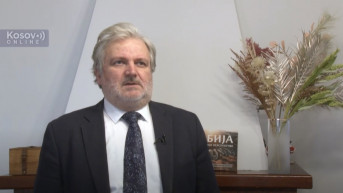
Written for Kosovo Online by Dragan Bisenic, a journalist
The Community of Serb-majority Municipalities, it seems, is becoming an elusive chimera that appears with more than a hundred faces and roles. It first appeared as a result of an agreement in Brussels 10 years ago. The mediator in the dialogue between Belgrade and Pristina, Miroslav Lajcak, announces that the agenda for today's meeting between President Aleksandar Vucic and Albin Kurti will be "the beginning of the process of creating the Community". At the "beginning of the process" the "draft of the CSM Statute" will be presented, which is "the first mandatory and important step", as the European representative described it.
It is still confusing that after 10 years since the moment when it was agreed, the Community of Serb-majority Municipalities is still at the beginning and is becoming an issue that still needs to be negotiated. In addition, the CSM methodically and seemingly planned moves from one contractual form to another. It was first part of the Brussels Agreement, and now it is part of the German plan, and then again part of the Ohrid Agreement. And it seems that its role is also implied in the future. All this is ugly and somewhat shameful for the European Union. Instead of the Community of Serb-majority Municipalities existing and functioning for several years, it still exists only on paper and at the "beginning of the process", in which "a draft of the Statute is presented", as the special representative says.
When it comes to the CSM, inconsistency seems to be an important feature of thinking about it, which was not avoided even by the EU's special envoy Miroslav Lajcak. When he started performing his mediating role, he said in the fall of 2020, "There will be no normalization of relations without the Community of Serb-majority Municipalities. Kosovo signed it, the Assembly ratified it. Kosovo should implement it. It is part of the negotiations". This seems to be the wording that corresponds to the state of affairs expected from EU representatives. But, the next year there will be a reversal, so Lajcak says, "The Community of Serb-majority Municipalities will be formed after the signing of the Comprehensive Agreement between Kosovo and Serbia".
Therefore, instead of the formation of the Community of Serb-majority Municipalities, at least in theory, being a condition for further negotiations, there is a twist, and the signing of the Comprehensive Agreement becomes a condition for the creation of the Community of Serb-majority Municipalities. The CSM, according to this idea, thus comes at the very end of the dialogue. Since it was there at the beginning, then, as it seems now, it serves as bait for the Serbian side to run in circles and not make any progress in its position. This idea may be quite attractive to Pristina and other direct and indirect actors of the talks, but it is far from the letter and spirit of the last agreements, not to mention the Brussels agreement of 10 years ago.
For example, has anyone ever heard of the Joint Council of Serbian Municipalities in Croatia? Probably no one, but it exists. It has a similar name and similar functions, it should operate under similar conditions and be a form that brings together municipalities where the Serbs live in eastern Croatia.
This body was created at the American proposal after the end of the war conflicts in Eastern Slavonia and is part of the Erdut Agreement, a document that confirmed the peaceful reintegration of areas controlled by the Serbs under the rule of Zagreb. Almost 30 years after the signing of this agreement, the best word to describe the Council is still looked for. This association was given many responsibilities and powers in all documents, but no mechanisms and instruments were given to implement it. Because of this, it is only a degree higher than an ordinary association of citizens, even though it was created by an international treaty.
The position of this Council, by all accounts, is a significant inspiration for Albin Kurti, who is asking to ignore the previous agreements, both Brussels ones from 2013 and 2015. The 2015 agreement specifies the instruments and so-called "executive powers" of this community.
The Brussels agreement, similar to Erdut one, served for the "peaceful reintegration" of the north of Kosovo. Kosovo Prime Minister, Albin Kurti, now wants to move forward along the same path. He requests that this community not have executive powers, arguing that he does not want something like Republika Srpska, which is a completely inadequate comparison since Kosovo can be compared to the Republika Srpska, not the Community of Serb-majority Municipalities.
"What we will not allow is the right to territorialization and the creation of anything that would look like Republika Srpska in Bosnia and Herzegovina. We will not allow a satellite parastate with a destructive essence that would undermine the statehood of Kosovo," Kurti said. If we add to this that after the elections, which, as Wolfgang Petrich says, were not "a result that can be used in a democratic state", a dangerous amalgam of force and illegitimacy will be created in majority Serbian municipalities, then the danger of derailing the dialogue is very high, and the idea of normalizing relations is quite remote.
Therefore, before today's meeting, Lajcak rightly summarized the ten-year course of the dialogue in the Slovak media in a credible manner and stated that Kosovo had not implemented the agreement from 2013 on the creation of the CSM, while Serbia, according to him, had dissolved parallel structures, as it had been agreed.
"The essence of that agreement was that Serbia, on the one hand, dissolves parallel structures in Kosovo, mainly the police and the judiciary, which would then become part of the legal system of Kosovo. And on the other hand, Kosovo should have created the CSM. The first part happened, but the second did not. I don't want to go back in time and evaluate why it was like that," Lajcak added.
If the European mediator does not want to engage in "why is it so" thinking, the Serbian side must, because this is, without a doubt, an important lesson about negotiation. Trusting the European Union, it made a key concession right at the beginning and withdrew "parallel institutions" from the north of Kosovo, expecting, naturally, that the other side would follow suit. But it didn't happen. That's why it will think first about all proposals before it "cuts" anything.
It was necessary to establish the CSM several years ago, to see that it can, and in what way, it can act and function, and only then to move on to the negotiation process. Then it would make sense because it would bind all parties. What can happen now, and which is perhaps the idea, is to repeat the outcome of the Brussels Agreement, in which the Serbian side makes a tangible concession, and receives nothing in return. More precisely, some kind of Community of Serb-majority Municipalities can be fictitiously created, but never, not even one day, start functioning, nor have any significance, because it will be disabled or contested by the Pristina authorities.
If, even after everything, there is still an idea to sign the Comprehensive Agreement first, and then to create the Community of Serb-majority Municipalities, then it is more expedient to stop the dialogue, because in the meantime it has become clear to the Serbian side that no one will "pay" it in these negotiations which it gives for free. Its representatives have said that many times themselves, so in that case it is appropriate to change the scenario of this dialogue as soon as possible and return it to where it was intended to be.
Therefore, the credibility and impartiality of the European Union are key dimensions of the current phase of the dialogue. The European Union has enough ways and space to ensure the effective implementation of the agreement on the Community of Serb-majority Municipalities. In the accepted Ohrid Annex, the continuation of European integration and the financial benefit from the donor conference are rewards for the willingness to agree and a cooperative attitude, but also the "direct consequences" that non-implementation could have and which are foreseen in item 11 of the appendix to the agreement.
Since the donor conference, which is being held in 150 days, is conditional on the implementation of all parts of the agreement, it is logical that the Comunity of Serb-majority Municipalities should be formed within that period. And not only to be formed but also to show that it is vital and ready to function.

0 comments