
THE WAR IN UKRAINE AND THE ISSUE OF KOSOVO Bisenic: New and different pressure on Serbia; Lepaja: Ukraine and Kosovo in a similar situation
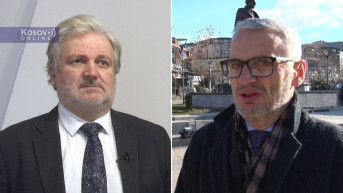
The Russian-Ukrainian conflict had created new circumstances and had been used as a basis for a new approach to solving the Kosovo issue, but the Kosovo issue had also influenced and still influences the character of the Ukrainian conflict, journalist and diplomat Dragan Bisenis said for Kosovo Online. On the occasion of one year since the beginning of the war in Ukraine and the consequences it has on the issue of Kosovo and the relations between Belgrade and Pristina, we spoke with Pristina analyst Fadil Lepaja.
Bisenic explains that the Ukrainian crisis is a "catalyst of new and different pressure on Serbia".
"Kosovo and Ukraine have become merged courts, one of which is currently doing everything that is expected. The Kosovo issue found itself between two approaches. One that seeks to legitimize it as a "special case" in international relations, looking back from the use of force in 1999 by NATO to exclude it from Serbia's jurisdiction, until the unilateral declaration of independence and recognition of the states that followed it. Others see it as a precedent to justify not only their military actions in Ukraine but also as a future model in international relations. It is believed, for example, that the Kosovo case can influence the fate of Ukraine, just as it is believed that the outcome of the Ukrainian conflict can determine the future of Kosovo. While on the one hand, at the UN General Assembly itself, the countries that are essential patrons of Kosovo's secession defend international law, and the territorial integrity of the sovereignty of Ukraine, on the other hand, those same countries, by default, exclude those same principles from consideration towards Serbia. In such circumstances, the Ukrainian crisis is a catalyst for a new and different pressure on Serbia, which is still imposing the threat of sanctions and isolation to resolve these contradictions by voluntarily agreeing to secession," Bisenic says.
Bisenic: Dual goals of the West
He adds that this specific pressure comes through the German proposal for the normalization of relations between Serbia and Pristina.
"Another peculiarity is that one European region, that is, a group of countries in it, is trying to impose itself as a factor that solves issues instead of the world organization - the United Nations. The international existence of today's Kosovo exists only based on UN Security Council Resolution 1244. Based on that, today, the Security Council discusses Kosovo every six months. Some Western countries are now trying to use the circumstances and the moment to "steal" this global issue, I would say, from the mandate of the UN Security Council and the jurisdiction of Russia and China in order to set it in line with their own goals," Bisenic pointed out.
According to him, those goals are twofold.
"The first is to obtain a belated historical verification of the NATO war and the attack on Serbia in 1999, and the second is to transfer the responsibility for everything that happened and ultimately for Kosovo's statehood to the voluntary decision of Serbia and break the Russian argument about a precedent or an American matrix for the events in Ukraine. On the one hand, Serbia's stance depends on which concept will prevail and based on that, what will be the logic of future relations in the world, but on the other hand, a reasonable understanding of the relation of strength and power in the modern world and the interests of Serbia," Bisenic says.
An analyst from Pristina, Fadil Lepaja, pointed out that after the Russian attack on Ukraine and the annexation of its territories, referring to the Russian minority there, the world was no longer the same. According to him, the logic of Russia and Serbia in dealing with Ukraine and Kosovo was the same.
"Invoking minorities and annexing territories, regrouping the population, evicting other communities, which means drawing borders by force, according to the ethnic principle. The Russians solve this with war, and fortunately, Serbia, despite the covert occupation of the north, still opted for negotiations, perhaps because of the difference in strength and also because of the position, i.e. geopolitics. It would be a real blessing if Serbia chose that path because of its European orientation and desire for good relations with its neighbors, in this case with Kosovo," Lepaja said.
Lepaja believes that the negotiations in Brussels are a message to Serbia, and indirectly to Russia, that "Europe means freedom, democracy and peace, not conquest, destruction and violent changes in the demographic structure". Regarding the growing pressure of the EU and other mediators in the Kosovo-Serbia dialogue, especially after the beginning of the conflict in Ukraine, he says that this pressure is aimed at preventing new conflicts in the Balkans.
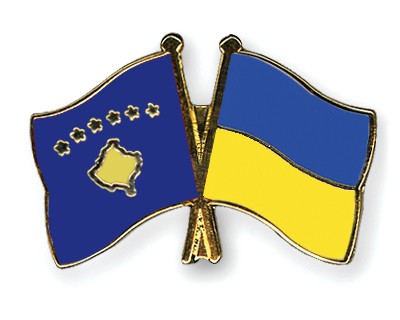
"The essential pressure aims to prevent the unsettled relations between Kosovo and Serbia from developing into a conflict that would turn the Balkan region into a conflict zone, where everyone would once again start fighting against each other, for the redrawing of borders. The goal of the West is not to defeat Serbia, but to give it a very significant role in the region and to make the region open and included in the EU. For that, the condition is to close all open issues, in accordance with European standards and principles," Lepaja emphasized.
He added that the negotiations between Kosovo and Serbia were the thread in the structure of the new Western Balkans.
Lepaja: The world is not the same anymore; I hope that applies to Serbia too
"Mutual recognition would open the path of the Western Balkans to Europe, and instead of suffering and destruction, everyone could achieve their goals in a free Europe," Lepaja said.
He reminded that the dialogue in its current form implied that Serbia did not directly recognize Kosovo, but that it treated it like any other independent state in the region, and that it did not hinder Kosovo in its development and its integration into international organizations.
As he added, Ukraine and Kosovo were in a similar situation.
"Kosovo is a case where in 1999 the international community liberated territories that were once occupied by Serbia and is now helping Ukraine to do the same. Of course, Kosovo was not liberated because it was once occupied, but because of the will of its citizens to live freely and independently, and abuse of organized power by Serbia to nullify and destroy that will by all means, including ethnic cleansing," Lepaja said.
Lepaja stated that Serbia's thinking that all "occupied territories" after the fall of the Ottoman Empire belonged to today's Serbia was unacceptable to the European community.
"Kosovo, like other territories, was occupied by the Kingdom of Serbia after the fall of the Ottoman Empire, referring to the fact that they had occupied those territories long before the Ottoman Empire, and thereby appropriated them forever, i.e. that everything that medieval Serbia occupied, according to that logic, belongs of today's Serbia. Of course, that is not the logic of today, nor of the European Union, and even more so it has been made clear that the process of creating new states on the territory of the former Yugoslavia will be based on the principle of unchanged borders of the federal units of the former Yugoslavia," Lepaja added.
He believes that it is Serbia that, through the normalization of relations with Kosovo, should show that it is ready to reorient itself towards Europe, and thus become an important source of prosperity for the entire Balkans.
"As I said at the beginning, the world is no longer the same after the attack on Ukraine, and I hope that Serbia is not the same, and will not remain the same, but that it will have a clear European orientation and commitment to good relations with its neighbors, and that by normalizing relations with its southern neighbor, to definitely open up this part of Europe where a developed and European Serbia becomes very important for the prosperity of the entire region," Lepaja concluded.
0 comments