
Two pictures of the Albanian world - Edi Rama and Albin Kurti (6): Enis Sulstarova, Kurti's Anthony Giddens

Writing for Kosovo Online: Dragan Bisenic, journalist
Edi Rama sees his role model in Tony Blair and his "third way". As Minister of Culture and Sports since 1998 in the government of Fatos Nano, Rama immediately became known for his extravagance in various ways, including his unique colorful style of dress. His innovative cultural projects, along with his unusual clothing and rebellious political style, helped him attract a lot of support. But he doesn't have his Anthony Giddens working out political goals and building ideological platforms. Unlike him, Kurti also has his own political technologist who is at the same time in the sociological role of Giddens and the Machiavellian form of Alastair Campbell. This is how we could describe the member of the "Tirana Group", Enis Sulstarova.
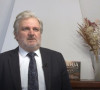
Enis Sulstarova, whom Kurti calls a "friend and professor", was born in 1978 in Tirana and completed his studies in sociology and political science and a master's degree in public administration at the Middle East Technical University in Ankara, where he also received his doctorate. In 2007, he was involved in the project of the Geneva DCAF on the topic "Border Police Reform in the Republic of Albania".
In her numerous works, Sulstarova deals with the concepts of "orientalism" and "occidentalism" among Albanians, the history of Albanian identity, and the idea of Albanian nationalism, as well as Albanian intellectual history. All this seems to have one purpose, which is to formulate the concept of creating and preserving a vital and sustainable Albanian nationalism. At the same time, Sulstarova has great reservations about unconditional "Westernization" and the accompanying rejection of the Ottoman and Turkish heritage in Albanian cultural history.
He points out that the Albanians in Albania, although they generally sympathized with the struggle of their ethnic relatives in Kosovo and Macedonia, did not actively support the idea of creating a single political entity during most of the 1990s and 2000s because they were occupied with internal issues. The nationalist ideology and myths created in the Albanian state during most of the 20th century had the greatest influence among the Albanians outside its borders. Three periods of national awakening, communism, and post-communism were important for the creation of the Albanian nation, state, and nationalism. Each of these periods was a break from the past and a new beginning for Albania and the Albanians, in the sense that old identities were broken and transformed into new ones.
Nationalists from the period of national awakening emphasized the territory as an important component of Albanian nationalism. Ethnic Albania is defined as the territory between the city of Gostivar in the northwest, the city of Mitrovica in the north, Shkupi and Bitola in the east, the Gulf of Arta in the south, and the Adriatic and Ionian seas in the west. These territories roughly corresponded to the outer administrative boundaries of four Ottoman vilayets: Shkoder, Kosovo, Bitola, and Ioannina. This is the reason why Albanian nationalists demanded the unification of four vilayets into one whole. The administrative borders of this unit could be transformed over time into political ones, which would make Albania first autonomous and later independent. Pashko Vasa, a prominent Albanian nationalist at the time, wrote that "it is very important that Albania be united into one vilayet, that it be given a simple, compact and strong administration, and that the local population participates in public administration."
Sulstarova, however, gives an incomplete picture of communist Albania, stressing that it did not "care" for the Albanians outside of Albania. This could not be said about Enver Hoxha, who had a strong awareness of the unity of all the Albanians, and he especially emphasized the position of the Albanians in Kosovo and did not ignore it at all. Despite his communism, even in its most dogmatic form, Enver Hoxha did not doubt the all-Albanian national idea and the realization of the program of uniting all the Albanians in the Balkans. As we recently announced, he was also making military plans to invade Yugoslavia in order to annex Kosovo to Albania.
In his works, Sulstarova especially criticizes the acknowledged greatest Albanian writer, Ismail Kadare. Starting from the fact that in Enver Hoxha's Albania, the task of literature was to act in the direction of creating a "new Albanian man" and to show how Albanians fought on the side of European civilization and progress, the European cliché about "barbaric others" was adopted. First, it was the Turks in accordance with the image of European Orientalism, and then in Kadare's novels, the Russians and the Chinese took their place, as the regime was disappointed in them. Kadare's point of view is interesting at the moment when the "Asianization" of Albania and the Balkan Peninsula begins. It is the Battle of Kosovo in 1389 that Kadare writes about as the defeat of the Christian coalition by the Ottomans: "Alas, the Balkans rose like Europe and fell asleep like Asia."
Sulstarova is a critic of neglecting the "oriental" history and tradition of the Albanians, especially the one related to the Ottoman period. Thus, he does not respect Albanian icons too much, and among them not even the most famous Albanian writer, winner of the Booker Prize, Ismail Kadare. In his book "Flight from the East", Sulstarova explains how Albanian nationalism from the early 19th century onwards had an "Islamophobic character", which is often reflected in Kadare's works. "Kadare's novels record major political changes in Albanian history," Suljstarova writes. "His Orientalism, and the way he extends his nationalist Islamophobia to all other forms of xenophobia, is incredible and worrying," he warns.
The writer and political analyst, Fatos Lubonja, wrote that "it has become normal for us to refer to Kadare, without noticing that he expresses racist attitudes in his books and not only towards the Chinese people". According to Lubonja, in his novels, Kadare constantly writes about the Albanian "race" and its conflicting relations with neighboring countries. In his 1990 book, "Invitation to the Writer’s Studio", Kadare compares the Albanian language to an elegant lady, and Serbian to a Balkan-Egyptian maid, Lubonja claims.
An anthropologist from Tirana, Armanda Kodra, also finds racist elements in Kadare's works. "Kadare's novels are characterized by a strong ethnocentric orientation, he has a fanatical attitude towards Albanian national purity, trying to prove that Albanians have nothing to do with their Balkan neighbors, nor with an oriental religion such as Islam," Kodra says.
"In one of his last books, he talks about the Albanian white race, about Albanian pure blood, and says that foreign invaders like the Turks brought their culture to Albania to corrupt its original autochthonous culture," Kodra adds. Historian Artan Puto even goes a step further. "Kadare is a monument to racist hatred in Albanian culture," he claims.
Kadare rejects all criticism, saying that those who accuse him of racism are misguided or have not read his works properly. He called Lubonja an "envious writer" and accused him of taking his words out of their original context. "I will not call this anti-Albanian pathology a better name than the plague," he adds.
Sulstarova indicates that the concept of "neo-Albanism" of the forgotten writer Branko Merxhani, which is being rehabilitated in modern times, should be seen today as both a national and "westernizing" trend, which, in addition to Merxhani and Vangjelo Koca, should also include Konica, intellectuals of the Catholic clergy, is owed to Turkish roots.
Sulstarova warns that Merxhani's "no-Albanism" was not a completely authentic system of thought, but largely borrowed from the ideology of "Turkism" of the Turkish thinker Ziya Gokalp (1876-1924). Gokalp devised an ideological system that would orient and guide the building of the Turkish nation and the modernization of Turkish society, a system that would influence the policies pursued by Ataturk. It seems that Merxhani had the same ambition - to make "neo-Albanism" an intellectual guide for King Zog and the Albanian youth.
Sulstarova affirmatively accepts Gokalp's position that "a nation with ideals never dies, because even when it weakens, it is renewed by the vital impulse that the ideal gives it" which is borrowed from Henri Bergson. The passion of life is embodied in great men or geniuses. These are the people who, with the power of inspiration from the national culture, turn into leaders in decisive moments, "A genius is a person who willingly turns his soul into a reflective surface of the nation's hidden and creative power." There are crises, but crises cannot continue without interruption. After the crisis passes, ideals do not disappear but are preserved through national symbols and the memory of heroic centuries. Vitality is essential in the project of "neo-Albanism" to create an Albanian nation in the absence of a state or nationalist tradition.
Merxhani calls the theory of evolution a source of fatalism, pessimism, and despair, and he calls on young people to take a "saving leap" and turn to Bergson's teachings as inspiration for their national creative work.
In an essay published in 2002, Sulstarova lamented that "neo-Albanism" remained an "abandoned model" of Albanian politicians and intellectuals who failed to create an "authentic mental movement" that would orient Albanian society towards democracy and EU integration.
On the occasion of the anniversary of Kosovo's "statehood", Sulstarova noted that Kosovo had made many compromises, mentioning the flag which he had called "cloth-like", as well as the anthem which he had called "without words". No more compromise than this could be asked of Kosovo.
Tomorrow: The coming clash of the romantic revolutionary and the innovative rebel



0 comments