
Two pictures of the Albanian world - Edi Rama and Albin Kurti (2): Opposition to the CSM taken over from Demaci
Writing for Kosovo Online: Dragan Bisenic, journalist
Only those who knew Adem Demaci can have a deeper understanding of Kurti's political position. Demaci is the role model of a leader Albin Kurti would like and how he is behaving now. Tough, ready to take risks, ready to be a victim, to go to prison if necessary and for as long as necessary, not to accept any mercy or pardon. Demaci served his sentence until the last day. Not only did he not ask for pardon, but he also asked to stay a day longer, if necessary. Kurti received a pardon, but he did not want to leave prison until, as Cedomir Jovanović testified, "they brought him out", demanding that he serve the entire sentence. Kurti, like Demaci, does not tolerate "Rugovism", i.e. a policy that relies unconditionally on an external factor and is not ready to risk anything. According to the testimony of the President of Serbia, Aleksandar Vucic, Kurti often mentions Demaci during meetings in Brussels. It is not without deep foundations.
Demaci was arrested three times. When he was arrested and sentenced for the third time, Demaci says then that he "became a victim". "You are not condemning me for having committed any offense, only for my political views. I am for Albania. Yugoslavia is unjustly clinging to Kosovo. By dividing the Albanian people into two parts, Yugoslavia is undermining its own chances for progress and building its socialism... I was a victim. But you don't get anywhere without victims. I accepted that role. On the other hand, I'm happy that Serbian colonialism chose me to break because I know very well that I'm indomitable. They made a martyr out of me."
When the crisis arose in the 90s, Demaci did not accept Rugova as a political leader. "Mr. Rugova and I have the same goal, but the difference is that he relies much more on external factors and is not ready to sacrifice anything. He is not ready to go into dangerous waters."
Kurti's opposition to the Community of Serb-majority Municipalities is organic and deeply ideological, but it is not his. The foundation was laid by Adem Demaci. On February 2, 2007, after several months of negotiations, the Finnish UN negotiator Martti Ahtisaari sent a document to Belgrade and Pristina, in which he laid the foundation for the future of Kosovo as a multi-ethnic society in which all communities could live safely.
Demaci admitted that the comprehensive proposal drawn up by the United Nations Special Envoy would free Kosovo from Serbian sovereignty, but also enable the sovereignty of the Serbian minority over the Albanian majority because two-thirds of the Serbian representatives in the Assembly of Kosovo could block any law. Demaci added that this proposal had made it possible for Serbia to interfere in Kosovo under the pretext of supporting the local Serbs. In Demaci's opinion, in the name of defending the Serbian minority, Serbia could take control of parts of Kosovo, turning it into the Palestine of the Western Balkans. That's the root of Kurti's resistance. He wants an Albanian federation or "Greater Albania", and there is no place in it for any other national subjectivity, except the Albanian one.
The Serbian community and its autonomy would be an insurmountable obstacle to a "Greater Albania". At this moment, the US does not want a "Greater Albania". They declared that Kosovo could not unite with any other country, but they also know that this will not be a real obstacle if the Albanians really want it with their politics. The only real tool that prevents a "Greater Albania" is an active and vital Serbian community in Kosovo.
During the ten years he spent in his second prison sentence, Demaci realized that he had been wrong to believe that Albanian national unification could be achieved with the help of one of the two great powers of the communist world, China and Russia.
In the beginning, he thought that the unification of the Albanian countries could be achieved with the help of the USSR, which at the time fiercely condemned Tito's Yugoslavia for "revisionism". He lost his confidence when he realized that Russia itself was oppressing many people within the USSR and completely retracted his opinion in 1968 after the USSR invaded Czechoslovakia.
He also placed his hopes on China, which launched anti-Yugoslav propaganda. But in prison for the second time, when he had enough time to read and keep up to date, he realized that he had misjudged both Russia and China. Now he began to think that a national community might not be the only solution because such a project would not gain strong support at the global level.
Nor does Kurti believe in sincere and decisive help from the outside. The MP of the Democratic League of Kosovo, Avdullah Hoti, published a video in which the Prime Minister of Kosovo Albin Kurti can be heard talking about the alliance with America. In this recording, Kurti can be heard saying that the alliance with America was shallow and narrow; he also said that the alliance with America was not an alliance for the future. Hoti said that because of this, relations with America had been severed. He further wrote that it was not accidental, but a part of Kurti's program.
Kurti was arrested in Kosovo in 2015 and 2017 because of tear gas in the Parliament, then because he did not respect the measure of house arrest. His movement, formed in 2005, gathers the disaffected from the middle and upper classes. They are dissatisfied with the policy towards the status of Kosovo, the international community, and privatization. Kurti is against the established protectorate over Kosovo. "I am not against the presence of the international community as such, but the character of that presence that rules Kosovo." Instead of being our partner, it is ruling over us," Kurti explains. The Self-Determination manifesto states that "UNMIK's administration in Kosovo is an undemocratic regime" and that "the indefinite duration of UNMIK's rule has become intolerable," because "its presence is the antithesis of our self-determination."
When he was arrested, because he declared that he did not recognize the institutions of UNMIK, Kurti did not accept the lawyer assigned to him ex officio. Similarly, during the court process in Serbia, he said that he did not recognize Serbian courts, and called himself a "war hostage".
Kurti summarized the program of the Albanian national movement and its attitude towards Serbia in a strong political manifesto of his organization, which was adopted during the formation of "Self-Determination". But, before that, let’s mention a few attitudes that define Kurti's political philosophy. The first is that someone “does not give freedom" and that "freedom is not given". This is the axiom of all revolutionary programs, which derive from it the organizational and ideological platform for the revolutionary struggle, since it is clear that freedom must be fought for if it is not already "given". Kurti, logically, continues that freedom "cannot be negotiated", but his platform is not individual freedom, but national freedom. Freedom is the "unimpeded development of possibilities", and "the people are that possibility", while "the self-determination of the people is the freedom of the individual". The Albanians have not been free for centuries, because the Serbian occupation followed the Ottoman one.
The manifesto further states: "Every government in Serbia was nationalist and chauvinistic because Serbia always controlled the occupied countries and oppressed the people who lived there. In addition, they always believed that Serbia was too small and that it had to become bigger. That was the paradigm of Serbian politics and its missions. They especially had the Albanians in their sights. Twenty-four different programs were drawn up and implemented for the expulsion of Albanians, assimilation, and colonization of their territories that were then inhabited by the Serbs. This expulsion was silent in peacetime when it was accomplished by discrimination, persecution, and repression, while during the war it was massive and fast, achieved through ethnic cleansing, massacres, and terror."
Starting with Nikola Pasic, Petar and Aleksandar Karadjordjevic, Milan Stojadinovic, Dragoljub-Draza Mihajlovic, Aleksandar Rankovic, and ending with Slobodan Milosevic - they all implemented these projects and programs.
Despite the fall of Milosevic, the government's reforms in Serbia were mostly superficial in nature. The self-determination of Kosovo paves the way for the democratization of the government in Belgrade. This can only be achieved through Kosovo's self-determination. The government in Serbia can only be democratic when the Kosovo problem is not left to the conscience of the rulers there. The independence of Kosovo from Serbia will also cause the emancipation of Serbia from Kosovo because it undermines chauvinistic projects, colonial thinking, and aggressive Serbian nationalism. Self-determination as definitive secession is also altruism. Self-determination normalizes centuries-old antagonisms between neighbors. That would stabilize the region. This is important for the inclusion of Kosovo in the EU because the European Union can only include democratic countries where its people decide their own destiny.
The problem of Kosovo cannot be solved by investing in the democratization of the Government in Belgrade. The problem will be solved not when the internal opinion in Serbia changes about Kosovo, but when Kosovo ceases to be the subject of this opinion. Projects that see the solution as part of the change of the Serbian political elite in Belgrade are destined to fail. When the former opposition criticized Milosevic for his policy towards Kosovo, the problem was not the violation of basic human rights, but the mismanagement of the war.
The independence of Kosovo from Serbia will also cause the emancipation of Serbia from Kosovo because it undermines chauvinistic projects, colonial thinking, and aggressive Serbian nationalism. Self-determination as definitive secession is also altruism.
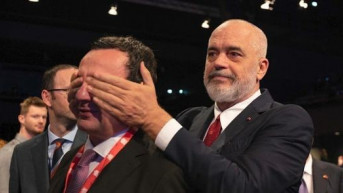
There was never any sympathy between Kurti and Edi Rama. Kurti organized protests against Edi Rama in 2018 because Rama took two ministers from Kosovo into the government who turned their backs on Kurti. He then created his own branch in Tirana, which plays a major role in the creation and implementation of Kurti's policies, and is better known as the "Tirana Group". Kurti then joined the opposition of former presidents Sali Berisha and Ilir Meta in 2021 with a plan to overthrow Rama. This group regularly organizes protests in Tirana against Rama, which it did last week, because of Rama's acceptance of the Community of Serb-majority Municipalities and sending its proposal for its statute to Paris and Berlin.
When he won the majority for the first time in the special elections in 2019, Kurti singled out the topics of the common market, common civil registry, companies, joint government committees for foreign affairs, as well as the connection of Djakovica and Shkodër for the meeting with Edi Rama. Then he specified his point of view on Albanian unification and reiterated that he is in favor of the national unification of Albanians within the federation, and by no means within the European Union.
"There can be no national unification of Albanians within the European Union," Kurti said in an interview with Kosovo Television (KTV), the first since the announcement of the election victory. "I cannot say that national unity is happening in the EU. There we join the Danes, Austrians, and Spaniards. Our alliance must happen here," Kurti said.
Kurti pointed out that national unification was the "historical interest of Albanians", and quoting the late former leader of the Macedonian Democratic Party of Albanians DPA, Arben Xhaferi, he said, "We do not choose the (Albanian) union, but it chooses us".
Kurti also referred to the thesis of Ukshin Hoti, who said that national unification was the same as unification within the EU and that this did not exclude each other, but he believed that "Kosovo and Albania should be integrated within the federation". He cited Germany as an example, with its federalism and decentralized institutions.
Kosovo President Hashim Thaci's idea of correcting the border with Serbia also included joining Kosovo to Albania, but when, as he said, "the country collapses". "I don't believe in the union through failure, but through success," Kurti underlines, and therefore, contrary to Thaci, believes that "Kosovo's success unites Albanians, not failure."
Tomorrow: Divination and Strategies for a "Greater Albania"
0 comments