
Weber's theory of bad intentions
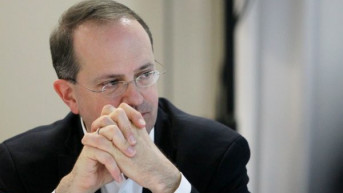
The fact that sociology professor Bodo Weber has been considered the most prominent German expert on the situation in the Balkans says a lot about why we are where we are today in terms of Kosovo, which is his favorite field of action - one step away from a new bloody conflict.
Namely, the country where esteemed Weber comes from has been making major moves here for a long time, both on stage and behind it. Those moves cause important consequences, at least in the last 30 years, and the professor, despite the obvious problem of proving the truth of his claims, still insists on the same theory about the causes of the conflict between Serbs and Albanians in Kosovo and what is the only desirable and possible outcome. In the center of the German sociologist's conclusions, of course, the Serbs are the exclusive and only culprits, and Serbia must be forced to accept Kosovo's statehood.
Every semi-informed Western intellectual knows how absurd the stereotype of "evil Serbs" is today, but Bodo Weber, although he is reputed to be an expert in the study of local conditions, still persistently bases his approach on this. This scientific method, therefore, is certainly not a good way to find a sustainable solution to a complex and dangerous dispute between two peoples, and that is why we can call his theses about Kosovo "the theory of bad intentions towards Serbs and Albanians".
Because, from what the Berlin expert says, it is clear that he openly does not stand Serbs, and misleads Albanians and manipulates their emotions. From a scientific point of view, both of these do not befit a serious researcher, while for the ethical criteria of this approach, any comment is superfluous.
I will take the right to argue with some of Weber's last statements, since the Berlin expert already gives himself the freedom to, from a safe distance, share very incendiary lessons with us here.
In the last interview with the Albanian Post, Weber says: "The West decided to help Kosovo gain independence as the only realistic option for resolving the conflict, due to the Serbian policy of 'Holy Kosovo' and the nationalist insistence that Kosovo remain part of Serbia after the collapse of the Yugoslav framework."
Aside from the undisguised malice when you mention "Holy Kosovo", but wait professor, wasn't it about "intervention with NATO bombs for humanitarian reasons"? I don't know what Osmani and Kurti will say to you that you skipped to mention "genocide". The "genocide" that the Pristina authorities still talk about every day, and after which almost 95 percent of the population in Kosovo is now Albanians, while 250,000 Serbs have "disappeared" since 1999.
And yes, you are right when you say that Kosovo is part of Serbia under the Yugoslav framework. The insistence of Belgrade and the Serbs in Kosovo that it remains so has nothing to do with the nationalist motives you are talking about. It is only about respecting international law. You remember, this is the respect for borders, which the representatives of your country so uncompromisingly defend in the case of Ukraine. After all, how dangerous precedents are in redrawing borders, we should ask the opinion of the Spanish, Romanians, Greeks, Turks, Italians, and even the Germans themselves. Let's stick to Europe here because there are too many examples around the world.
Regarding the Community of Serb-majority Municipalities in the same conversation, Bodo Weber claims: "The problem is that the EU, through two agreements, from 2013 and 2015, avoided defining the essence. To make matters worse, now there is 'another elephant in the living room', that is, the monoethnic mechanisms provided for in the agreement are contrary to the European Convention on Human Rights, that is, the principle of non-discrimination".
"Touching" is a Weber's concern for multi-ethnicity in the few remaining places in Kosovo where Serbs live. He just forgot to mention Pristina, Djakovica, Urosevac, Podujevo, Vucitrn, Pec... What kind of mono-ethnicity is there, according to what conventions? From Weber's words, however, we clearly recognize who gives Kurti guidelines for his views on the same issue. The same "argument" used by the Prime Minister of Kosovo, when he mocks the Brussels Agreement every day, indicates that Weber's Berlin Center for the Democratization of Politics watches day and night over the fate of Kosovo. Even when he tells the lie that the Brussels Agreement did not define the essence of the CSM. It's no wonder that elephants are starting to look like him from all that effort. What would a Serbian rock musician say, drums and zurnas are heard, they raised their trunks high...
Weber goes further in his scandalous glorification of the role of Albin Kurti, saying in the same interview that he "predictably became a victim of his dogmatic view of the world that imagines Kosovo Serbs as independent citizens." Such Kosovo Serbs, Weber explains, however, "do not exist and will not exist until we have a final agreement based on the recognition of Kosovo's independence from Serbia, which will enable Kosovo Serbs to become full members of Kosovo, the state and society, i.e. free citizens".
Here the question arises from which assumptions does Weber draw the conclusions that the Serbs in Kosovo want to become "full citizens of the state of Kosovo"? On the contrary, Serbs want to remain full-fledged and free citizens of the state of Serbia. Which Kurti persistently defends against them with force, and with the use of weapons. According to Weber's theory, Kurti's approach is justified. It is tragic, professor.
And, for the dogmatic approach of Kurti, you are right. It's just about the political dogmas of Lenin and Enver Hoxha, which the Self-Determination leader cherishes very carefully. The only thing I don't know is how it fits together with the "democratization of politics" and other Western values.
Weber also says that "the only real and sustainable solution is a final, comprehensive agreement that includes the formal recognition of Kosovo by Serbia." And he adds, "in order for that to happen, the EU and the US must arrive at a new, clearly defined political strategy towards Serbia and the Vucic regime".
Finally we come to the point. Weber, in the absence of better arguments for his theory, like his protégé Kurti, openly threatens. What could be defined by the new strategy towards Serbia and Vucic, we probably won't have to wait long for Weber or one of his colleagues from his center to tell us. Now they have openly pointed out where they see the problem and it is clear what and who is bothering them the most in implementing the outlined idea.
Bodo Weber's theory has so far not shown great scope, but he is Germanic persistent. A German proverb says: "He who is not smart enough at the beginning, the end will make him smart".
Written by: Milos Garic, an editor of the Kosovo online portal


comments