
Wolfer: Serbia has the capacity for a global role
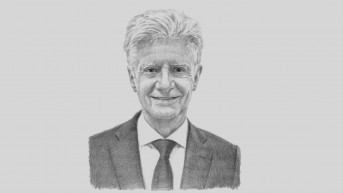
For Kosovo Online written by: Dragan Bisenic, a journalist
The outgoing president of the Czech Republic, Milos Zeman, said that Serbia could be among only a few countries that, thanks to their relatively neutral position, are able to mediate in peace negotiations to agree on an end to the war in Ukraine. Zeman listed the countries that have "neutral positions between both sides": China, Turkey, Serbia, Israel, Austria and announced that he had already discussed this with Austrian President Alexander Van der Bellen and Hungarian President Katalin Novak.
This idea was welcomed in Serbia with sympathy, but also with skepticism that Serbia could fulfill such a role. This idea, however, is not only proposed by Zeman, it was elaborated and presented to professional diplomatic circles at the end of last year. This was done by Austrian Ambassador Klaus Wolfer in his extensive analysis of Serbia's foreign policy position for the Global Intelligence Service - GIS, an organization founded by Prince Michael of Liechtenstein that provides forecasts of global trends and advice to governments and companies. Wolfer fully reaffirmed the non-aligned legacy of Serbia's foreign policy, giving it potentially great importance in ending the Ukrainian war. He notes that "Serbia is leaning towards Russia, and emphasizes the importance of preserving Ukraine's territorial sovereignty with reference to Serbia's position that it does not recognize Kosovo as an independent state" and concludes: "Therefore, it would not be absurd to imagine Serbia's role in the diplomatic process of ending Russia's war against Ukraine, perhaps in agreement with partners. Realistically, China and maybe India will most likely be the key interlocutors of the US and NATO when the time comes to reach a solution between Russia and Ukraine." Wolfer, who served as a diplomat in Belgrade, and during the 90s was in charge of Balkan issues in the Austrian Ministry of Foreign Affairs, was on a research mission in Belgrade last year to write his analysis, where he discussed this topic with numerous interlocutors.
He saw that Serbia, using the advantage of inheriting Belgrade as the capital city that is on the map of all the countries in the world, especially the countries of the "third world", identified itself most strongly with the former Yugoslavia and "therefore it is not surprising that Belgrade would play the card of the non-aligned, even though the Cold War is over".
In 2021, Serbia and Azerbaijan hosted a summit in Belgrade on the occasion of the 60th anniversary of the Non-Aligned Movement, inviting NATO member Turkey and Russia, the successor to the Soviet Union, to participate as guests. The slogan of building a multipolar world in 2021 was a clear message of opposition to the US. In addition to the ceremony and nostalgia of the 2021 summit, Serbia used the event to lobby against the universal recognition of Kosovo's independence.
The political development in the world regarding the conflict in Ukraine has re-affirmed the views of the politics of non-racialism.
The US and NATO have imposed unprecedented sanctions against Russia. But almost no country in the Global South has signed them. When the General Assembly voted to expel Russia from the Human Rights Council in early April, the majority was smaller. Ninety-three countries voted in favor, but 58 abstained and 24 voted against. Abstaining were Egypt, Ghana, India and Indonesia, which were leaders of the Non-Aligned Movement - countries that created their own transnational grouping rather than support the US or the Soviet Union during the Cold War. Brazil, Mexico, Nigeria, Pakistan and South Africa also abstained. China voted against.
Analysts looking at these responses see a revived non-aligned movement. "When you see a return to what looks a lot like Cold War politics, then it's only natural that people reach for the conceptual tools of the Cold War," Richard Gowan, director of the UN's International Crisis Group, told me. "It is a mirror of the doctrine 'NATO is back'."
Broadly speaking, there are three sets of reasons that help explain why countries seek a "neither Russia, nor NATO" approach.
The first relates to the economy and trade. Russia is a major exporter of energy, food and fertilizers, and many countries cannot afford to cut economic ties with Moscow. India also depends on Russia for arms sales.
Second, it is the strong suspicion of the USA and NATO. That skepticism also extends to sanctions. Latin American countries are sensitive to violations of sovereignty, and 28 of the 34 countries of the Organization of American States voted to condemn Russia in a UN General Assembly vote in March, but only the Bahamas signed the sanctions against Russia.
Former Ecuadorian Foreign Minister Guillaume Long says that many Latin Americans consider and think that sanctions are a tool of American hegemony and not a tool of global justice.
The third factor is the permanent solidarity with Russia, due to its anti-colonial position during the Cold War, when it was still a part of the Soviet Union.
South Africa's Deputy Minister of International Relations and Cooperation Alvin Botes emphasizes that "the role of the Non-Aligned Movement today is as relevant today as it was in 1961, because as long as you have a constellation of interests led by the great powers - sometimes completely unaware of the interests of the underdeveloped South - there is a need for the Non-Aligned Movement".
Wolfer states that Serbia is not a member of NATO, let alone the EU, but nevertheless, it is anchored in the European economic orbit. The relations between Belgrade and Beijing are cordial, but can Serbia muster the diplomatic strength and skills to deal with an issue of such magnitude, Wolfer wonders. He indicates that the choice of ambassadors for US-Serbian relations indicates that both are "heavyweights" in their respective categories. "President Joe Biden chose an experienced specialist for the Balkans, Christopher Hill, as his ambassador in Belgrade, while Serbian ambassador Marko Djuric is the confidant of his heavyweight boss in Washington," says the Austrian diplomat. From this, he concludes that it can be a support for Serbia's potential role in global diplomacy.
In this he sees three possible scenarios. The first is that in the event of a continuation of the war in Ukraine, Serbia will do its best to get through unscathed, relying on its dominant position in the Balkans, special ties with certain European countries and a wide global network, partially inherited from Yugoslavia, especially in non-Western countries.
If the Russian-Ukrainian war were to intensify or decisively turn in favor of one side, in that case the "hour of Serbia" and other non-aligned countries, especially China, could come. Then the personal relations of President Aleksandar Vucic could come into consideration, especially with actors in Moscow, Beijing, Ankara and New Delhi, and, admittedly, to a lesser extent, Washington and Europe, according to Wolfer.
Specifying that role, he states that "Serbia's significant role in such a scenario" presupposes constant and active foreign policy engagement of Belgrade and close relations with Ukraine and President Vladimir Zelensky. Serbian Foreign Minister Ivica Dacic, who is seen in the West as close to Moscow, at the same time has long-standing personal ties with many leaders on all continents, especially with Beijing and the states of the Non-Aligned Movement.
The third scenario, which Wolfer assessed as "less likely", the Nordic and Baltic hawks within the EU, acting in concert with Washington and London, could pressure Serbia to fully join the West. That would probably require dramatic steps by the EU and a change of leadership in Belgrade. Such a maneuver would require enormous effort and enormous material incentives for Serbia to be successful and sustainable.
Based on everything, Wolfer concludes that there is a place for Serbia's global role and that is why "Serbia should be kept in sight".

0 comments