
27 years since the Racak case
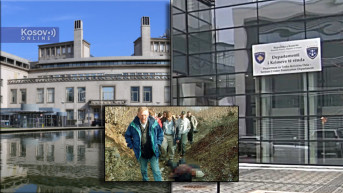
On this day 27 years ago, 45 Albanians lost their lives in the village of Racak near Urosevac. In the report of the OSCE Verification Commission, the event was characterized as a “massacre of civilians” and served as a pretext for the NATO bombing of the Federal Republic of Yugoslavia, which began on March 24, 1999. However, the Racak case remains one of the most controversial points in interpretations of the conflict in Kosovo.
According to the official position of Belgrade, on January 15, 1999, members of the Special Police Units carried out a legitimate counterterrorism operation aimed at the command center of the then 161st KLA Brigade “Agim Celej Coli”, that is, the “Sadik Shalja” battalion, which was responsible for the killing of three police officers earlier that month.
As stated, members of the OSCE Verification Mission, as well as journalistic teams from the Associated Press and Reuters, were present during the operation.
On the other hand, the Albanian side claims that a mass war crime against civilians was committed in Racak on January 15, 1999.
Supporting this claim was the report of the OSCE Verification Mission at the time, headed by William Walker, who immediately asserted that a war crime had been committed there.
Additional controversy, however, was caused by differing assessments from forensic experts. Although Finnish expert Helena Ranta stated that the autopsy results indicated that the victims had been executed, two years later a group of forensic experts analyzed all the documentation in a scientific publication released in Finland and reached an unequivocal conclusion that Ranta’s report had not been accurate.
For years, the government in Pristina has institutionally marked this event, and in 2023, it also allocated funds to finance a book by the former head of the OSCE Verification Mission, William Walker, who characterized Racak as a massacre.
At the beginning of 2023, Kosovo’s caretaker Prime Minister Albin Kurti announced that the Kosovo Special Prosecution had issued international arrest warrants for 18 persons of Serbian nationality over their alleged involvement in the events in Racak.
In November of the same year, the first hearing was held as part of the first trial in absentia for war crimes, and at the end of December 2024, Cedomir Aksic was sentenced to 15 years in prison.
At the end of last year, the Kosovo Special Prosecution filed indictments against 21 individuals for the criminal offense of “war crime against the civilian population” in the village of Racak, proposing that the trial be held in absentia.
Investigating judge Danica Marinkovic recently spoke to Kosovo Online about the indictment in the Racak case, assessing that it was a politically motivated process. She emphasized that the goal of such indictments was to intimidate the Serbian population in Kosovo and questioned the possibility of a fair trial.
According to her, numerous pieces of evidence found during the investigation indicate that Racak was a KLA stronghold.
“We found a ton of weapons, we found their headquarters, their notebooks, schedules, lists. Everything that was found as evidence at the scene during my on-site investigation indicates that Albanian terrorists from the villages of Racak, Borovo, Petrovo, and the surrounding area were present there,” Marinkovic said.
The Racak case was also one of the key points in the indictments before the Hague Tribunal against the then president of the FR Yugoslavia Slobodan Milosevic, FR Yugoslavia Deputy Prime Minister Nikola Sainovic, and Serbian President Milan Milutinovic, but in all three cases, the prosecutor dropped the charges during the proceedings.

0 comments