
Marinkovic: The indictment for a war crime in Racak is politically motivated to intimidate Serbs
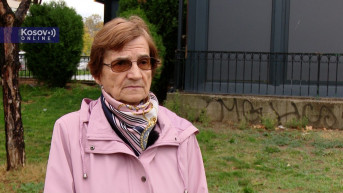
Danica Marinkovic, the investigating judge in the Racak case, stated that the indictment filed by the Special Prosecution in Pristina against 21 individuals for a war crime against the civilian population in Racak is politically motivated with the aim of intimidating the Serbian population in Kosovo. She stressed that the allegations are false and questioned the legitimacy of any potential court proceedings.
“This is a spectacle. They have nothing else, so now they are inventing things. Whom can they accuse of a war crime in Racak, when the truth is known—a truth that does not suit them and that they refuse to accept? They are creating various versions, various spectacles with indictments. They have the support of the West, of America and Europe,” Judge Marinkovic told Kosovo Online.
She emphasized that such indictments are politically motivated and intended to intimidate Serbs enough to make them leave Kosovo, noting that despite this, the Serbian people united ahead of the elections and secured a victory for the Serbian List in order to survive.
Marinkovic also questioned the legitimacy of any potential trial.
“They will find false witnesses. What evidence can they provide for Racak? They have none. We—the Serbian side—have evidence of what happened. As the investigating judge, I was on the ground and saw what happened. We found bodies, autopsies were performed, and it was established that they died from injuries caused by firearms,” she said.
Marinkovic stated that during the war, Racak was the largest stronghold of “Albanian terrorists,” that is, KLA fighters, and that the information contained in the indictment is false.
“Lies, lies, and lies. First, they claim that the (Yugoslav) army surrounded the village and shelled it, which is not true. In the operation on January 15, members of the Serbian police took part; the army did not participate at all, nor was the village shelled. I entered the village—no house was destroyed, nor were there any traces of shelling,” the judge said.
She also pointed out that the claims in the indictment that women and children were separated and expelled, while men were executed, are likewise untrue.
“Women, children, and civilians left the village, where only terrorists remained, guarding it, digging trenches, carrying out terrorist actions in the area, killing police officers and civilians—Albanians and Serbs alike. Everything stated is fabricated and not supported by a single piece of evidence,” she said.
She added that the indictment mentions 42 bodies, while during the investigation the remains of 40 persons were found who, according to her, were members of a “terrorist gang,” and that there were no civilians among them.
“We found a ton of weapons, their headquarters, their notebooks, schedules, and lists. Everything found as evidence on the scene during my on-site investigation indicates that Albanian terrorists from the villages of Racak, Borovo, Petrovo, and the surrounding area were present there,” Marinkovic said.
She noted that these fighters later called themselves the KLA, but that they constituted a hostile association engaged in the criminal offense of terrorism.
“It consisted of Albanians who were trained, armed to the teeth, and who carried out terrorist actions. It was a hostile association that killed police officers and civilians—Albanians and Serbs. Their goal was to expel the Serbian population through armed force and terrorist acts, separate part of Serbia’s territory, and create a separate state—the so-called Republic of Kosovo—which they would later annex to Albania. These are all hostile motives,” Marinkovic concluded.
The Kosovo Special Prosecution has filed an indictment, with a proposal for a trial in absentia, against 21 individuals for the criminal offense of “war crime against the civilian population” in the village of Racak.
In January 1999, 45 Albanians were killed in the village of Racak near Urosevac, an event that served as the pretext for the NATO bombing campaign that began later that year, on March 24, 1999.
At the time, the head of the OSCE verification mission, William Walker, immediately claimed that a war crime had been committed there, while Finnish expert Helena Ranta stated that autopsy results indicated that the victims had been executed. Two years later, however, in a scientific publication released in Finland, a group of forensic medicine experts analyzed all the documentation and reached the unequivocal conclusion that Ranta’s report had not been accurate.

0 comments