
ACDC analyses: Corruption and public distrust pose challenges for institutions in northern Kosovo
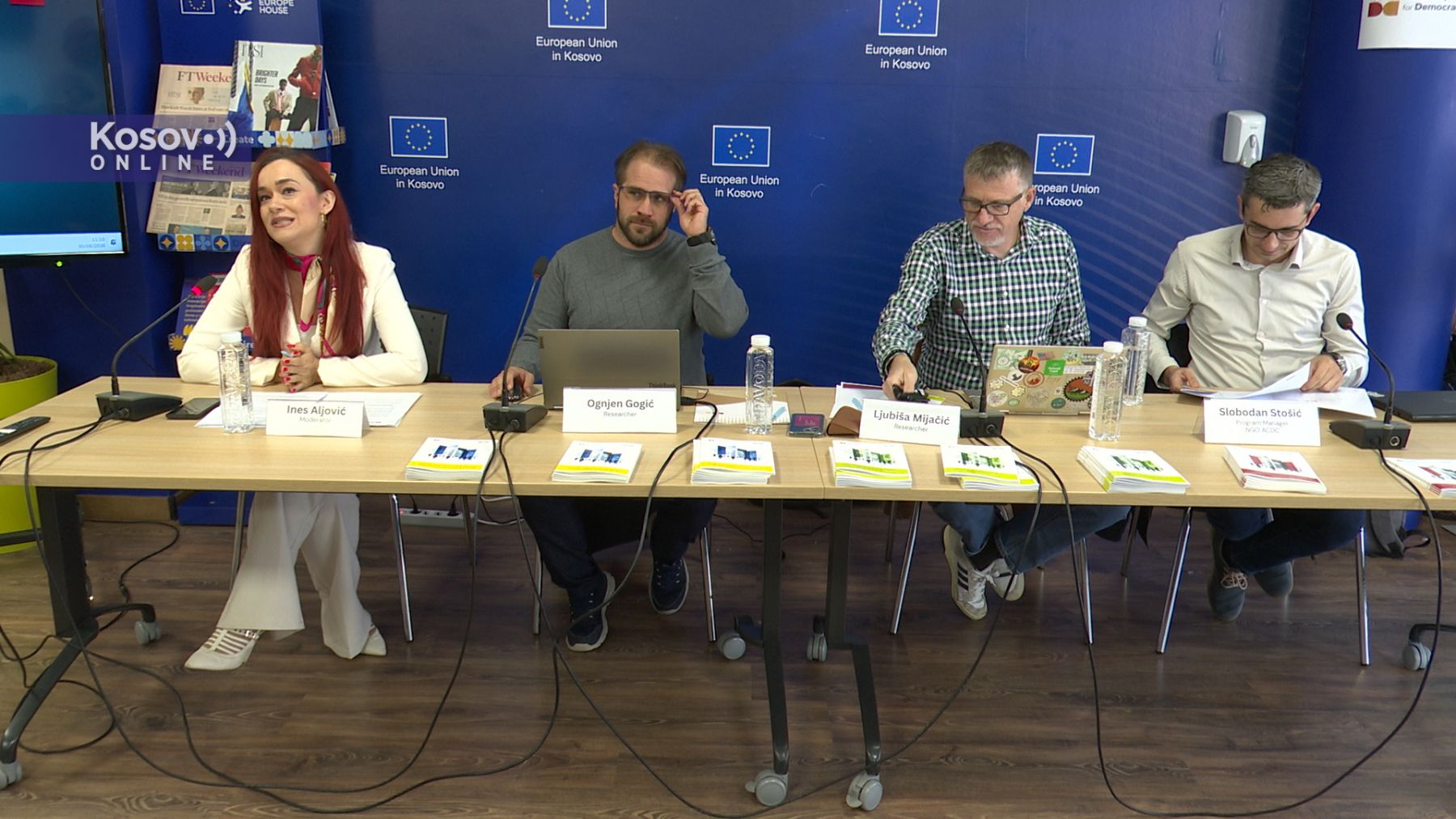
The Advocacy Center for Democratic Culture (ACDC) presented three analyses in North Mitrovica today addressing transparency, accountability and corruption in municipalities in northern Kosovo, as well as public trust in Kosovo Police and the issue of environmental corruption.
Political scientist Ognjen Gogic presented the analyses “Transparency, Accountability and Corruption Risks in Municipalities in Northern Kosovo” and “Integrity, Accountability and Trust in Kosovo Police in Northern Kosovo,” while researcher Ljubisa Mijacic presented the analysis “Prevention of Environmental Corruption in Northern Kosovo.”
The analyses are based on surveys conducted among citizens, and the discussion addressed
corruption as one of the problems citizens identify in the work of local institutions, environmental protection and the work of Kosovo Police.
Particular attention was devoted to public trust in institutions. As noted during the discussion, the
survey results indicate a high level of distrust, as well as problems concerning institutional transparency and the provision of information to citizens.
The discussion also addressed the functioning of local institutions in northern Kosovo following the assumption of office by Albanian mayors, as well as the challenges citizens face in the areas covered by the analyses.
The presentation was attended by citizens, representatives of EULEX and Kosovo Police, Deputy Ombudsperson Srdjan Sentic, ACDC members and other civil society representatives. It was emphasized that the purpose of the analyses was not to criticize institutions, but to provide a basis for recommendations and improvements in their work, with greater transparency and accountability toward citizens.
ACDC project manager Slobodan Stosic said that the project had been implemented with the support of BIRN.
“This project examined the impact of corruption in local governments, Kosovo Police and environmental protection. The project focused on northern Kosovo, specifically the four municipalities in the north—Zubin Potok, Leposavic, Zvecan and North Mitrovica. During the project, we engaged experts who conducted research and prepared analyses. I believe they arrived at some interesting recommendations and conclusions,” Stosic said.
Environmental resources expert Ljubisa Mijacic said that the aim of his analysis was to document citizens’ perceptions of the state of the environment, as well as to identify where responsibility lay and which authorities had jurisdiction for addressing those problems.
“Based on all of this, I proposed an integrated management system, or an integrated mechanism,not only for preventing corruption but also for addressing these issues and exchanging information in order to prevent environmental crime. Such a mechanism could be integrated into the system—into something that could one day become the Association of Serb-Majority Municipalities. It would be an integrated mechanism through which the four municipalities in northern Kosovo could pool their human and technical capacities. It would be transparent, based on open data and the sharing of human resources in order to address these problems,” Mijacic said.
He added that not all municipalities had equal staffing capacities, but such an arrangement could
create a mechanism resembling intermunicipal cooperation among Serb-majority municipalities.
Speaking about the research, Gogic said that it covered two areas: one concerned transparency,
integrity and corruption risks in local governments, while the other focused on integrity, accountability and transparency in police work.
“When it comes to the research on municipalities, it showed that citizens do not perceive the municipalities in northern Kosovo as sufficiently transparent. They do not believe they have
adequate access to documentation concerning municipal work, and they also have little confidence in their own ability to influence decision-making within their municipalities. As a result, they participate insufficiently in public consultations and other forms of direct citizen involvement in decision-making. The research also showed that there is a problem of discontinuity. These are local governments that were effectively established 12 or more years ago, but during that period they went through institutional disruptions—institutions were abandoned, mayors who lacked legitimacy were subsequently elected, and then Serbs returned to power in the four northern municipalities. Put simply, all of this affected the functioning of those municipalities,” Gogic said.
According to him, the municipalities in the north are now undergoing a process of consolidation or attempting to restore and re-establish municipal functions, but this requires time and resources.
“It is evident that these four municipalities are now trying to publish more information on their websites, including their new websites. Practices differ. Some municipalities, such as North Mitrovica, provide greater access to information on their official websites, while, for example, the Municipality of Leposavic has a website that is not sufficiently functional or up to date in Serbian. There is therefore still considerable work to be done to ensure that all information relevant to municipal operations is available online, and efforts are under way in that regard,” he said.
The research also showed that municipalities faced human-resource constraints and were unable
to respond adequately to all demands. Gogic said one recommendation would be for local
governments to consider pooling the capacities of the four municipalities.
“They could perhaps establish intermunicipal cooperation and support one another in carrying out these tasks. If there are not enough trained professionals for certain activities, such as tenders and public procurement, they could rely on shared resources, pool those resources and then try to improve these functions jointly,” he said.
Regarding the police, Gogic said the focus was on determining public perceptions of and trust in the police in light of allegations of unprofessional conduct by police officers.
“The findings naturally show a major gap. There is significant distrust of the police, which are not perceived as professional or impartial. On the other hand, the police themselves have developed mechanisms of internal and external control and oversight, both through internal disciplinary procedures and through the Kosovo Police Inspectorate. However, these mechanisms remain too abstract for citizens. Citizens still do not have sufficient confidence in, or knowledge of, how they can hold individual police officers accountable when necessary. Something else also emerged, however: there is a major gap that cannot be resolved through individual proceedings or isolated cases,” Gogic said, adding that trust in the police had still not been restored following the withdrawal of Serbs from the institution.
As an additional problem, he pointed out that a regional police commander had not been appointed and that the position remained vacant, with the deputy effectively performing those duties.
“In the meantime, the central authorities have relied on centrally controlled specialized police units, and new police infrastructure has been built. However, this has reinforced citizens’ perception that the police are not local—that they are not ‘their’ police, but rather an outside force. This has created an enormous divide and a level of distrust that cannot be overcome merely through individual proceedings in cases involving violations of particular rights,” Gogic concluded.
He said that efforts were needed not only to recruit new police officers from local communities and increase local representation, but also to return police command and administration to the local level in order to build public trust.







comments