
Alija: No one can be indicted or convicted on the basis of circumstantial or insufficiently clear evidence
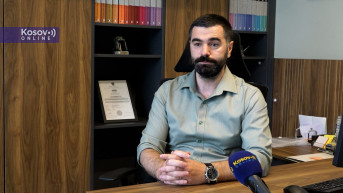
Amer Alija, a legal adviser with the Humanitarian Law Center, told Kosovo Online that, in light of the OSCE's report on war crimes trials, no one can be indicted or convicted on the basis of circumstantial or insufficiently clear evidence, stressing that individual criminal responsibility requires a precise determination of what a specific person actually did.
The OSCE published its report on war crimes proceedings a week ago, covering the period from 1 January 2019 to December 2025, corresponding to the period since the establishment of the Special Department of the Basic Court in Pristina.
"In its report, the OSCE presented several findings and recommendations addressed to the competent institutions. One of those recommendations is that indictments should be more precise with regard to the individual criminal responsibility of the accused. This is certainly one of the report's justified findings and recommendations, because individual criminal responsibility must be established on the basis of the specific acts of the accused. No one can be indicted or convicted on the basis of circumstantial or insufficiently clear evidence. Individual responsibility requires that it be established precisely what the particular person did. Naturally, the allegations contained in an indictment do not mean that the court will automatically accept them," Alija explained.
He also recalled that both the Supreme Court and the Court of Appeals have, in certain cases, overturned convictions precisely because the individual responsibility and the specific acts attributed to the accused had not been sufficiently substantiated.
"For that reason, the OSCE's recommendation is justified, and Kosovo's judiciary should take it into account by filing indictments only where there is direct evidence linking the accused to specific criminal offences," he said.
Commenting on why as many as 88 percent of proceedings resulted in convictions, Alija noted that the Law on Trials in Absentia entered into force three years ago.
"Since the law entered into force, 27 or 28 indictments have been issued in absentia, covering more than 130 members of the Serbian security forces. The possibility of filing indictments in absentia has certainly contributed to the increase in the number of persons charged with war crimes. In recent years, almost all indictments have been brought against members of the Serbian forces. If we compare the period covered by the OSCE report with the earlier period, when UNMIK and EULEX had jurisdiction, we can see that indictments were then brought against members of both sides of the conflict. Looking at the period since the end of the war in 1999, Kosovo's judiciary has in fact handed down more convictions against members of the Kosovo Liberation Army (KLA). The reason for this is that members of the Serbian military and police forces were not available to Kosovo's prosecution service, police, and other judicial authorities. Consequently, during that period there were more convictions of KLA members because the defendant's presence at trial was mandatory. Today, trials in absentia are possible, which has resulted in a higher number of indictments against members of the Serbian forces," Alija said.
He emphasized, however, that the Humanitarian Law Center does not support trials in absentia, because any convicted person who is subsequently arrested has the right to request a retrial and a new trial from the beginning.
Alija also noted that Serbia has likewise begun conducting trials and rendering judgments in absentia.
"If this trend continues, we will have justice only on paper, not genuine justice for the victims, because those convicted will not actually serve their sentences. Everything will remain at the level of formal judicial proceedings."
Asked about the number of unresolved war crimes cases involving Serbian victims, Alija said that everyone who committed war crimes, regardless of ethnicity, must be prosecuted, adding that only such an approach can enable the region to move forward.
"At the same time, we have approximately 10,000 innocent victims and civilians who were killed during the war or who are still listed as missing. If politicians or anyone else deny war crimes, that sends the wrong message, and under such circumstances it is difficult to speak about a future based on cooperation and reconciliation. Transitional justice is not limited to criminal trials. It also encompasses other mechanisms—reparations for victims of war regardless of their ethnic background, educating young people on the basis of accurate facts about past events, as well as other transitional justice mechanisms that must all be pursued equally and simultaneously," Amer Alija concluded.


0 comments