
Odalovic: Through indictments and trials of Serbs, Pristina seeks to portray terrorists as heroes and honorable police officers and soldiers as criminals
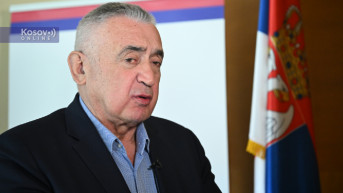
The head of the Serbian Government's Commission on Missing Persons, Veljko Odalovic, stated that through indictments, court proceedings, and convictions of Serbs, Pristina seeks to reinterpret what happened in Kosovo to its own advantage by portraying those who, as he says, were terrorists and committed crimes as "heroes" and justifying their actions, while depicting as criminals those who fought against terrorists who were killing soldiers and police officers.
"This is a continuation of intimidation, terror, and Albin Kurti's attempt to unsettle the remaining Serbs in Kosovo and Metohija as much as possible. With the arrest of five Serbs in connection with the Racak case, Pristina also wants to send a message to the displaced not to return. More than 20 indictments issued in absentia are causing concern among people who carried out their duties in Kosovo and Metohija in the most honorable and responsible manner. Those being targeted are mostly police officers and members of the military who were performing their official duties," Odalovic told RTS.
He recalled that there has never been a judgment regarding the Racak case and that both Racak and Dubrava were removed from the indictment against Slobodan Milosevic and the state, military, and political leadership of the Federal Republic of Yugoslavia in The Hague because there was no evidence.
"The Hague Prosecutor's Office dropped those cases, but Pristina needs them because it wants to validate Walker's account, to present it as a site of suffering and a grave crime against civilians, even though it was one of the KLA's formations, heavily armed, which carried out killings of police officers, and even Albanians who did not support them, in the Stimlje region. They sought to create the impression that they controlled that area. That formation operated throughout the region from its base in the village of Racak and was eliminated in an anti-terrorist operation. When such an operation ends and you find a heavy machine gun, a light machine gun, 36 assault rifles, weapons, and military equipment, and then claim that innocent civilians were killed, it sounds absurd and unconvincing," Odalovic said.
Asked why new indictments are now being filed and announced, Odalovic replied that there is certainly no new information, but rather a campaign to portray those who committed crimes as victims.
"When The Hague indicted Milosevic and the military and police leadership, it launched a campaign to gather evidence of crimes under the counts of the indictment. A decision was made to prosecute the top leadership, while the remaining cases were returned to those who were supposed to handle them. It is obvious that a large number of cases were returned to Pristina, which is now selecting those that suit its interests. Had there been any evidence, The Hague would have prosecuted them, because it was certainly not sympathetic toward Serbia and the Serbs. This is a new campaign. They are now selecting one case after another because they want to rewrite those events, for the sake of history and the future, to claim that this was not a terrorist formation committing crimes but peaceful villagers who were victims. They want to turn them into something they were not," Odalovic said.
Commenting on the announced indictment over the "attack on the Jashari family" in Donje Prekaze, he said that through indictments, court proceedings, and convictions of Serbs, Pristina seeks to reinterpret the events in Kosovo to its own advantage by portraying those who, in his words, were terrorists and committed crimes as "heroes" and justifying their actions, while depicting as criminals those who fought against terrorists who were killing soldiers and police officers.
He recalled that a state of war was declared only after the start of the NATO bombing in 1999, whereas all previous actions had been operations carried out by regular security forces.
"I would remind you that only a few kilometers from Donje Prekaze lies Gornje Prekaze, where five police officers were killed in 1981. That tells you what kind of region it was and who lived there," Odalovic stressed.
He also said that he had personally taken foreign diplomats and journalists to the site, that nothing had been concealed, and that there were no negative reactions.
"I welcomed them at Slatina Airport, two full buses of them. We reached the site via Gazivode and Rozaje because we could not use the regular road, which was blocked by a terrorist group. There we were met by a police representative who answered questions and provided all the information. They were able to see everything. We received no negative comments. All the recovered bodies were taken to the Institute and then handed over to the committee in the village that organized the funeral. Everything was transparent and visible. The police repeatedly called on (Jashari) to surrender and allow civilians to leave," Odalovic said.
The biggest problem now, he pointed out, is that the Kosovo police can knock on the door of anyone who was in Kosovo at that time and arrest them.
He also stressed that it is unacceptable that international institutions are not reacting.
"We have EULEX monitoring the work of Pristina's judicial authorities, while the head of UNMIK remains silent. We have NATO reducing its troop presence and announcing withdrawals. It is obvious that everything these international institutions are doing at this moment is helping Albin Kurti. No one is talking about stopping this," Odalovic said.
He added that summonses arriving "through who knows what channels" are part of an extremely dangerous campaign.
Regarding Pristina's requests to conduct searches in Batajnica and other locations, he said that Belgrade is also seeking searches related to crimes committed against Serbs, but that no one is addressing those requests because, for Pristina, that is not an issue.
In a Kosovo Online analysis, interlocutors pointed out that the timing of the announcement of a trial in absentia over Racak, along with the arrests of Serbs, was not chosen by chance, as verdicts in the case against former KLA leaders before the Specialist Chambers in The Hague are expected by July 20. They also argued that these moves send a message both to the international community and to the Serbs in Kosovo.


0 comments