
American visits, Kosovo and NATO: The Euro-Atlantic fate of the Western Balkans
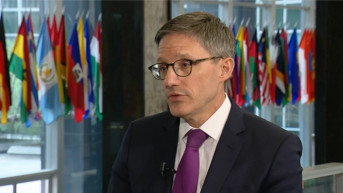
Today, when NATO is again becoming an important factor in European life, many ideas about how the North Atlantic Treaty Organization could be used to solve the agony of efforts to make Kosovo a recognized international state have come to life, RTS reports.
Prime Minister of Kosovo Albin Kurti recently announced the submission of the application for membership in NATO.
"We applied for membership in the Council of Europe on May 12, in the European Union on December 15, and we are preparing to apply for membership in NATO," Kurti said. The "Euro-Atlantic fate" of Kosovo and Serbia is spoken most clearly and most often by the latest overseas visitor to Pristina and Belgrade, Derek Chollet.
Some numerous observers and experts say that Kosovo is a "NATO country", not only because NATO created it, but also because it should serve NATO's goals.
Today, when NATO is once again becoming an important factor in European life, many ideas have come to life about how, with the help of NATO, the agony of trying to make Kosovo a recognized international state could be resolved. The president of the temporary bodies of the Kosovo administration, Albin Kurti, in an interview with the "Voice of America" on January 5, announced the imminent submission of the application for membership in NATO. "We applied for membership in the Council of Europe on May 12, in the European Union on December 15, and we are preparing to apply for membership in NATO," Kurti said.
The most recent overseas visitor to Pristina and Belgrade, Derek Chollet, speaks most clearly and most often about the "Euro-Atlantic fate" of Kosovo and Serbia. He continuously referred to it on several occasions, the last time before his arrival on January 11 and 12 in Pristina and Belgrade.
Also speaking to the "Voice of America" about the tensions and incidents in Kosovo, Chollet said that such a situation "doesn't bring us closer to realizing the Euro-Atlantic aspirations of both countries, which their leaders say they want to do." We want to focus on that and not on these distractions," the US official said.
Chollet requested that the parties focused on the EU's proposal on the normalization of relations between Belgrade and Pristina, "which would be rooted in mutual recognition" since it was the way for them to achieve "their destiny", and Chollet called it the "Euro-Atlantic fate". This is probably the strongest expression and the most direct conviction that any politician coming to the Balkans has spoken about the future of Belgrade and Pristina. Euro-Atlantic integrations, i.e. NATO, as a fatum, are standing at the end of the road.
Apostrophizing the "Euro-Atlantic aspirations" of Belgrade and Pristina "as their leaders say", Derek Chollet knows what he is talking about. He was a close associate of Richard Holbrooke, the late American diplomat, and energetic American envoy - Milosevic's fighting partner in the talks. Holbrooke was also one of the American diplomats who had a decisive role in creating and implementing the concept of expanding NATO to the east.
Since he had a decisive role in the creation and conclusion of the Dayton Agreement for Bosnia and Herzegovina, but no less a key role in the bombing of Serbia in 1999, Holbrook's legacy in Serbia remained controversial and contradictory. While the majority of the Serbs can accept the results of the Dayton negotiations, hardly anyone will come to terms with the bombing of Serbia. Therefore, it is likely that Chollet knows what a difficult legacy he faces in trying to achieve solutions that his former authoritarian boss could not achieve.
From the Baltic to the Black and Adriatic Sea
However, the circumstances in which the "Euro-Atlantic fate" of Serbia and Kosovo are now being discussed are different than they have ever been. For the first time since its existence, NATO is directly involved in a war with Russia, although it is not directly at war with it. American President Biden and NATO officials have repeated countless times in the past year since the start of the Russian-Ukrainian conflict that they did not want a war with Russia.
Again, Russia sees it differently. The secretary of the Russian Security Council, one of the most important people in the current crisis, Nikolai Patrushev, claims:
"The events in Ukraine are not a conflict between Moscow and Kyiv, this is a military confrontation between NATO, primarily the US and England, with Russia." Fearing direct contact, NATO instructors force Ukrainian young men to certain death. With the help of a special military operation, Russia is liberating its regions from occupation and must put an end to the bloody experiment of the West to destroy the fraternal Ukrainian people."
NATO, for its part, is already announcing a drastically stronger and larger presence in all countries along the corridor from the Baltic to the Black Sea, including in our neighboring countries, Romania and Bulgaria.
American diplomats, for example, are happy to point out in private conversations that other countries of Eastern Europe, and even the former Yugoslavia, achieved all their foreign policy goals by joining the "Euro-Atlantic integrations", thus setting an example of how should also behave.
Albania and Kosovo in the scenario of the breakup of Yugoslavia
The root of the current American attitude towards Albania, Kosovo, and the Albanian question, in general, goes back to the beginning of the seventies of the last century when scenarios for the future of Yugoslavia after Tito were developed in American intelligence and military circles. But even before that, it was clear that Kosovo and Albania have special importance for the US and NATO.
The former head of the Security Directorate of the Yugoslav People’s Army from 1963 to 1973, General Ivan Miskovic Brk, today at the age of 102, told me that he considered his greatest counterintelligence success to be "the penetration of the American embassy". In that action carried out in 1964, "documents that helped us a lot to understand the real American plans towards Yugoslavia" had been "extracted", and "they related to the weakest point of Yugoslavia - Kosovo", General Miskovic said. "They contained many details that spoke about the theory of 'creeping advance' in Kosovo, turning Kosovo into an American systematic interest, the creation of a republic, and finally - separation from Yugoslavia, which eventually happened. This was enough for us to see what the intentions of the Americans are towards Kosovo", General Miskovic said.
In the scenario of the breakup of Yugoslavia, which actually happened in the nineties, Kosovo was not seen as an independent factor, but together with Albania.
Kosovo, however, would not only move towards independence, but towards the creation of a "Greater Albania", according to this scenario: "If Kosovo tries to secede from Yugoslavia, then its most likely goal will not be independence but, despite the disparity of internal systems, unification with Albania. Although Tirana might have strong reservations about such a union in a period of crisis, fearing that it might undermine its orthodox communist system and make Albania more vulnerable to Soviet attack, it could not easily reject the formation of a Greater Albania. Even if it still enjoys the political support of the People's Republic of China (PRC), that enlarged state could go through the experience of Yugoslavia in 1949 and seek Western support and assistance. Under these circumstances, if the Albanians gave some kind of promise that they would be prepared to resist Soviet intervention, the US government might consider providing political support and even limited military aid to 'Greater Albania'. It could, in any case, treat the Soviet threat to Greater Albania as an incentive to coordinate diplomatic and political measures with China that are directed against Moscow", it was specified in the analysis of this scenario of the breakup of Yugoslavia.
One of the personalities who dealt with this issue was Joseph Kruzel. The former American intelligence officer in Vietnam, after a short academic career, became the assistant secretary of defense for Europe and NATO. In that role, he created the "Partnership for Peace" policy, which recommended him to be Clinton's envoy to Bosnia. He died in a car accident on Igman in August 1995, along with two other high-ranking American diplomats - Robert Fraser and Nelson Drew.
Back in the mid-1980s, Kruzel noticed the special importance and possible growing role of Albania. "In any east-west confrontation, Albania can be expected to fight any attacker; the only possibility for an exception would be if some block offered Albania support in the occupation of the Kosovo region of Yugoslavia, inhabited mostly by ethnic Albanians, in exchange for the creation of bases and other assistance," Kruzel wrote, citing the example of Italy from World War II and its behavior towards Kosovo. Kruzel took that model and suggested that Albania would support "some military alliance" in exchange for the "occupation of Kosovo". In addition to this, he promoted the idea that "external intervention is inevitable" in the event of a civil war in Yugoslavia, which indeed happened.
NATO shortcut
Here, therefore, we are talking about Albania, not Kosovo. In this sense, the political goal of Albin Kurti - the unification of Kosovo and Albania - although publicly rejected, is completely compatible not only with Joseph Kruzel's assumptions but also with the processes that are actually developing in Albania and Kosovo.
However, Kosovo is facing a large wave of non-acceptance in the international community, almost identical to the one that followed in 2008 after a huge number of quick recognitions of self-proclaimed independence. The series of crises and wars in the world have meanwhile opened up the possibility of endless splitting of states so that many regions of the world and numerous states no longer even want to hear about declared or self-proclaimed independence.
All the champions of Kosovo's independence, led by the US, today swear by the UN Charter and the preservation of the territorial integrity of the states. These are not at all favorable trends for Kosovo. Serbia, which far more than all other former Yugoslav states has preserved relations with the largest number of "Third World" countries, today obtains the withdrawal of Kosovo's recognitions without particular difficulty and relatively easily.
All this encourages thinking that the Serbian-Albanian dialogue coordinated by the EU is not a suitable form for creating security guarantees for Kosovo because it is an issue that cannot be resolved in an agreement with Serbia as long as Serbia does not want to recognize Kosovo.
Kosovo's entry into NATO would be a "shortcut" to ensure that the alliance's security guarantees become automatic and in that case, there is no need for Serbia to recognize Kosovo.
A small solution
Faced with a growing barrier in the UN, those who strive to shape Kosovo as a real state at any cost have opted for the so-called "small solution", i.e. recognition within the European Union, which at first glance seems more attainable than any other option, since "only" 5 EU countries and 4 NATO countries have not recognized Kosovo. The idea is to bypass the obstacles of those countries and the blockade of Serbia, and Kosovo achieves its statehood through NATO.
This approach was met with American reservations, so the American embassy in Pristina pointed out the unreality of such expectations at the beginning of April last year. The embassy welcomed Kosovo's aspirations for NATO membership, but stressed that "membership applications are complex and require a long-term and thoughtful approach." From April to today, however, many things have changed, and the main source of those changes is the events on the Ukrainian battlefield. NATO, and especially Germany, are strongly involved in the creation of the Kosovo Army, but they are reluctant to talk about it since the Kosovo Security Forces should not have a military and operational role.
Edward Joseph, an expert from the Washington "Woodrow Wilson Center", who was recently called out by President Vucic with not-so-kind words, is one of the leading American protagonists of the "small solution" policy and the promotion of Kosovo's independence within Europe and through NATO.
Edward Joseph presented a series of his ideas in his extensive analysis "Exit from the Balkan nightmare" published on May 14, 2021, where the novelty is represented by ideas on how to confirm Kosovo's independence outside the United Nations, in the European Union and NATO. In order for this to be possible, it is necessary to first change the attitude of the five EU countries that did not recognize Kosovo.
"Membership in NATO and the EU is much more important for Kosovo than membership in the UN, which is not a prerequisite for joining the Alliance or the Union. If Kosovo were to be given an independent path to international representation, the Russian and Chinese vetoes in the Security Council would be practically meaningless. Instead of intransigence and high demands, Serbia would find a way to a dignified, stabilizing settlement with Kosovo, negotiated under the auspices of the EU with active American involvement,” Joseph wrote.
He was joined by a slightly less advanced German expert, Klaus Klevig, who suggested that, if Kosovo were to join NATO, it would thereby receive a guarantee of security towards Serbia, and under that condition, "it is no longer so necessary for Serbia to officially recognize Kosovo."
Agreement on joint defense
Joseph said that Belgrade shared "common values and character" with China and Russia, while at the same time "enjoying the privileges of the EU and the West", so he proposed to prevent the "aggression" that was being waged on both sides by "other means". In the case of Serbia, it was a campaign for the non-recognition of Kosovo, and in the case of the Kosovo Albanians, it was the promotion of the unification of Kosovo and Albania.
Joseph proposed two new principles, one for the EU and the other for NATO, through which Kosovo would be enabled to join international organizations, except for the UN, that is, through the EU and NATO, "improve its bilateral relations around the world". Under those conditions, the five EU countries that had not recognized Kosovo would not be obliged to recognize it, and neither would Serbia.
In addition to this, Joseph also proposes an Agreement on the joint defense of the US and Kosovo, similar to the one that exists between the US and South Korea, which could be the real meaning of writing this complicated, and it seems practically impossible proposal. "Such a pact would provide a quantum leap in the security and status of Kosovo, beyond the current protection provided by KFOR," Joseph said, emphasizing that "it would be a reason for deep thinking in Belgrade because it would mean the end of the regime's strategy of weakening Kosovo.
Russian and Chinese support for Serbia, including increased military support, would be of negligible benefit since Pristina is a US ally. "The US, including Congress, already strongly supports the development of Kosovo's nascent military." American troops are still deployed at Camp Bondsteel, the outfitted American base in the country."
One of the ways towards this is the inclusion of members of the Kosovo Security Forces in peacekeeping missions. For now, the USA and Great Britain are trying to make it happen.
"Kosovo peacekeeping missions"
Back in 2008, immediately after the self-proclamation of Kosovo's independence, the German Minister of Defense at the time Franz Josef Jung (from the CDU), announced German assistance to Kosovo in creating its own army. At the same time, in the unofficial talks in Berlin, it was not disputed that according to Ahtisaari's plan, Kosovo should not actually have an army. "That's why we don't talk about it," commanders in the German Bundeswehr said unofficially, the German daily "Frankfurter Allgemeine Zeitung" reported.
"In the construction of the Kosovo army, along with the Americans and Germans, Great Britain and Turkey stand out," the German newspaper wrote. Back in August 2019, the commander of the Kosovo Security Forces, Rrahman Rama, announced that by 2021, the Kosovo army would be on a military mission together with the American army for the first time, in Iraq or Afghanistan.
In June 2021, the Assembly of Kosovo approved that members of the Kosovo Security Forces went on international missions with the Iowa National Guard. Such a decision was welcomed by the American Embassy in Kosovo, saying that Kosovo was ready for joint responsibility for global peace. The decision that the Kosovo Security Forces could participate in international military missions within the National Guard of the US state of Iowa had been considered by officials as an exceptional opportunity to strengthen the international subjectivity of Kosovo and the security forces, which last year had received a mandate to transform into the Kosovo Army.
The first contingent of soldiers was scheduled to travel to the US in March, and it was announced that the Kosovo Security Forces had been invited to join missions in the Middle East, Southeast Africa, or South Asia. The options mentioned at the time were Iraq or Kuwait.
In September of last year, Kosovo and Great Britain signed an agreement on the participation of Kosovo peacekeeping forces as part of British forces in the Malvinas Islands, which Argentina considered occupied by Great Britain. The agreement between the Provisional Institutions of Self-Government in Pristina and the British government foresees the attachment of members of the Kosovo Security Forces to the British infantry company of the armed forces on the Malvinas Islands. This is why the Ministry of Foreign Affairs of Serbia protested, stressing that this arrangement was in complete contradiction to United Nations Security Council Resolution 1244, as well as relevant resolutions of the UN General Assembly regarding the peaceful settlement of the Malvina Islands dispute.
A special case
The EU states are requested not to hinder the progress in the negotiations on the membership of the EU and other international organizations to an entity that was not a state and that some of them did not recognize as a state, that is, to treat it as if it had been a state, even though they did not have to formally confirm this.
In this way, fundamental discrimination of states would be introduced at the expense of parastate entities, that is, conditionally, one region, of which there are dozens in Europe. What such a "special case" as a precedent would mean for the future of Europe is hard to imagine. But Kosovo without statehood, say in EU membership, would be reduced to the rank of a governorate or a protectorate because it would always have to be indirectly represented outside Europe, and maybe even in Europe.
That is certainly not a solution that would satisfy Pristina. There is no compelling reason to suggest that Spain, Cyprus, Slovakia, Romania, and ultimately not Greece, will agree to such conscious duplicity, as they could expect the same in relation to them in matters of importance to them.
While it seems that the Ukrainian unraveling is still far away, an unpleasant alternative for the West is to allow the Western Balkans, as a strategically important region, to look to the East as much as to the West, which believes that this is how the Kremlin's plans are still being realized in the very backyard of Europe. That is why the coming months will be full of intense efforts to close that gap.
0 comments