
Analysts: Kosovo lacks strong U.S. support, Vučić–Rubio meeting an “alarm” for Pristina
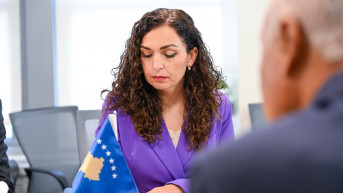
Kosovo’s presence at the 80th session of the UN General Assembly has been described by analysts as “pale,” with no official high-level meetings. They note that President Vjosa Osmani and Foreign Minister in a caretaker mandate Donika Gervalla “are meeting diplomats only in the hallways,” Kosova Press reports.
After caretaker Prime Minister Albin Kurti also traveled to New York, observers point out that the fact institutions have not yet been formed—leaving him without full legitimacy—sends a negative signal. At the same time, they describe as concerning the official meeting between Serbia’s President Aleksandar Vučić and U.S. Secretary of State Marco Rubio.
Kosova Press sent questions to the President’s office on whether Osmani would hold official meetings with other senior U.S. officials, but no reply was received.
Professor of International Relations Dritero Arifi argues that, given the absence of meetings with high-level U.S. representatives, it can be said that Kosovo does not enjoy strong American support.
According to him, this makes Kosovo officials’ encounters “pale and informal.”
“There are two reasons why our foreign policy appears pale at this UN session. First, because two major wars are ongoing that consume energy and pose significant security risks—the wars in Ukraine and Gaza. Second, Kosovo clearly does not have strong U.S. support. Without American backing, Osmani’s and Gervalla’s meetings are extremely pale, not to say ridiculous. We are in 2025, and we are still meeting in the hallways—like before and after the war. However, after the declaration of independence, the approach changed, and now it looks as if we’ve gone back to the pre-independence period—meetings in hallways with lower-ranking officials. Their influence on changing foreign policy under this government or its governing mentality is zero,” Arifi explained.
Professor of International Relations Afrim Hoti sees Kosovo’s main shortcoming on the international stage—and during high-level meetings in the UNGA week—in the fact that new institutions in Pristina have not yet been formed.
According to him, Kosovo has shown it still lacks the political maturity required to establish its own institutions.
“At this moment, we can only speak of losses. It is absolutely meaningless to try to frame anything positive. After all, elections have already been held in the U.S. and power has shifted between parties, while we, unfortunately, have not even managed to constitute our Assembly. This is undoubtedly perceived as a negative development, both for Kosovo’s political and legal image internationally. Kosovo has demonstrated it lacks the maturity needed to establish its own institutions,” Hoti said.
Commenting on the official meeting between Serbian President Aleksandar Vucic and U.S. Secretary of State Marco Rubio, Arifi stated that this should serve as a wake-up call for Kosovo’s government and president.
“At the moment when Serbia successfully holds a meeting with the number one figure in the U.S. State Department, that should be an alarm for all citizens of Kosovo, and especially for the government and the president. They should be asking themselves—where did we go wrong?” Arifi emphasized.
0 comments