
State Department official: Kurti crossed the “red line” by attempting to block the Serb Lista
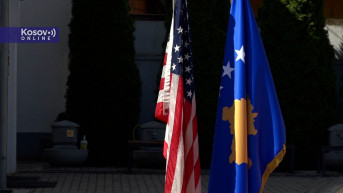
The action of Kosovo’s caretaker Prime Minister Albin Kurti, which for the U.S. “crossed the red line” and led to the decision to suspend the planned strategic dialogue, was, among other things, “an attempt to prevent Serb List from participating in the elections,” a senior official of the U.S. State Department told Koha.
“One thing I would particularly emphasize, which concerned us the most, were the concrete efforts to prevent the citizens of Kosovo, in this case Kosovo Serbs, from choosing their representatives, both in the broader sense and in leadership positions in institutions. There is a series of actions in the broader sense, related to the north, which we consider would be destabilizing and about which we expressed concern. But I think the main thing we want to emphasize are actions that would deprive the citizens of Kosovo of the right to choose their representatives,” said the U.S. official in an interview with Koha.
Speaking about how the U.S. sees the way forward in addressing issues related to the integration of Serbs into Kosovo’s institutions, he said that he hopes the Brussels-led process will deliver results, but that another effort would also be necessary.
“I am also speaking about a parallel process, where the Kosovo government talks with its citizens and involves them in plans, whether they arise from dialogue, or whether they arise from dialogue between Kosovo and its citizens,” he said.
He also stated that Serbia’s parallel structures need to be integrated into Kosovo’s institutions, but in a way that ensures a long-term and sustainable solution.
Regarding the constitutional uncertainty, namely the vote for the Deputy Speaker of the Kosovo Assembly, this senior official said that it is necessary to ensure representation of Serbs in this position and that a solution must be found to achieve this goal, whether institutional or political.
He confirmed that the U.S. presence in KFOR is essential for American interests in peace and stability in the Western Balkans but did not exclude the expansion of measures in other areas if the current or future government continues with the same actions as before.
This official reiterated that U.S. measures have nothing to do “with the people of Kosovo or the state of Kosovo” and said that the doors of cooperation with the U.S. are wide open if Albin Kurti undertakes concrete actions.
He added that the U.S. did not take lightly the decision to suspend the planned strategic dialogue and hopes that there will soon be a change of course.
Although U.S. officials consistently criticized the Kosovo government for unilateral actions regarding “parallel structures and the abolition of the dinar,” Washington did not take action until September 12 of this year, unlike the European Union, which imposed sanctions on Kosovo in 2023, Koha recalls.
The U.S. decision, according to the State Department official, was also made after “Kurti’s attempt to block Serb List from participating in the elections.”
“One thing I would particularly emphasize, which concerned us the most, were the concrete efforts to prevent the citizens of Kosovo, in this case Kosovo Serbs, from choosing their representatives, both in the broader sense and in leadership positions in institutions. There is a series of actions in the broader sense, related to the north, which we consider would be destabilizing and about which we expressed concern. But I think the main thing we want to emphasize are actions that would deprive the citizens of Kosovo of the right to choose their representatives,” he said.
He added that “a series of conversations with Kurti privately and diplomatically, as we always do in connection with troubling actions,” were held regarding these actions.
“We were also clear that there would be consequences if this continued. And at a certain point we felt that we could no longer wait and that we had to protect our interests,” he said.
The U.S. official reiterated that the decision to suspend the planned strategic dialogue has nothing to do with the U.S. relationship with the people of Kosovo or with “Kosovo as a state,” but rather “the point we are trying to emphasize is that Kosovo Serbs are citizens of that country and should be part of its political, social, and economic life.”
He said that over the years there have been a series of actions aimed at obstructing their participation.
“So, I think we are speaking specifically about the political process and that we must move forward. What we have insisted on is that no one on this side questions that the parallel institutions must ultimately be integrated into the Kosovo system,” he stated.
But, he noted, the important thing is how this will be done.
Integration, he said, can only happen “in a way that brings stability, with full cooperation and full coordination with the affected population.”
Asked how this could happen with the largest Serbian party in Kosovo, Serb List, supported by the Serbian government, and Belgrade “which acts against the integration of Serbs into Kosovo’s institutions,” he said that the Kosovo government must show the will.
“The essence of what I want to say in terms of our focus is that if we have a scenario in which the government in Pristina is ready to engage in full dialogue with its citizens about the way forward, and then there is a stalemate on the other side, then our focus will be on them. I don’t think we are in that situation at the moment,” the official said.
Asked about the fact that some of the measures the government has taken so far regarding Serbia’s parallel structures have not caused tensions, the U.S. official said they may look like achievements but are not sustainable.
“It is clear that you can do something that is satisfying in the short term, legally and emotionally, to put things under control, but it is not sustainable in the long term if you do not have the consent of the affected population,” he said.
The U.S. official said he somewhat understands the frustration over the slow pace of the dialogue between Kosovo and Serbia, which the U.S. supports and hopes will deliver results, but “what we certainly do not support are Kurti’s unilateral steps to do this in a destabilizing way, because it is simply not sustainable.”
Asked whether the specific measures the U.S. demands from Kurti are a return to the dialogue process and implementation of the Ohrid Agreement, which Serbia formally rejected, he said that U.S. officials had spoken with Europeans and support progress in that process.
However, he said, the U.S. sees the need for direct communication between the Government of Kosovo and the Serbian community in Kosovo.
“I am also speaking about a parallel process, where the Government of Kosovo talks with its citizens and involves them in plans, whether they come from dialogue or from dialogue between Kosovo and its citizens. There is a two-step process here. The first is re-engagement through dialogue with the EU in order to continue normalization with Serbia. But the main point is that there must be engagement with Kosovo Serbs for the future,” he said.
In that context, he said, the upcoming elections could offer that opportunity.
“We hope that Kosovo Serbs will choose their representatives. This offers an opportunity after the elections for the Government of Kosovo—whoever is in power—to open a dialogue on how to properly implement integration: in a sustainable way, which respects the rights of people and fully integrates them into the political, social, and economic life of the country,” he said.
The U.S. official mentioned Kurti’s recent address in the Serbian language, in which he referred to engagement with Serbs after the elections—as a “positive step,” but emphasized that “concrete actions are needed.”
On the constitutional uncertainties regarding the election of a Deputy Speaker from the Serbian community, since there is still no Constitutional Court ruling, the State Department official stated that the position belongs to Kosovo Serbs and that institutions must find a solution.
“Politics is messy, and now you have some problems. Kosovo has strong and vital institutions, and it is up to them to find the way forward. Kosovo Serbs have the right to be in the leadership of the Assembly. They should have the right to choose their representatives to leadership positions. That is something we would like to see preserved, through any solution, whether institutional or political,” he said.
Asked whether the harsh statements of Kosovo President Vjosa Osmani regarding the issue of electing a Deputy Speaker influenced the decision to suspend, he said that the U.S. statement on this matter was clear, that the decision refers only to the Government and the caretaker Prime Minister.
Although the planned strategic dialogue has been suspended, Kosovo continues cooperation with the U.S. in various fields—defense, trade, education, and through the MCC—but according to the U.S. official, “if there are further destabilizing steps that create divisions within the country, we can take other steps to protect our interests.”
“It is truly regrettable that we were forced to take this step. We want to be able to reverse it, but that can only happen on the basis of concrete actions,” he said.
He added that it is the choice of every Kosovo government, and currently of caretaker Prime Minister Albin Kurti, who “has wide-open doors to return to the spirit of cooperation that has defined the relationship.”
“He can have the strongest possible relationship with the United States, deepen that partnership even further, and help Kosovo become an example of stability in the region and a prosperous country. Or he can take unilateral and destabilizing steps that create divisions within the country and instability in the region, but he cannot have both. So, we hope to see a change of course soon. We hope to bring this relationship back on track, but that is a choice he must make,” the U.S. official stated clearly.
Asked whether there will be any shift in the U.S. presence in KFOR, he replied that “the fundamental interest of the United States in the Western Balkans is the maintenance of peace and stability, and we will take all steps we deem necessary to preserve it.”
0 comments