
Analysts: Political instability and lack of EU commitment have led to a stalemate in the dialogue
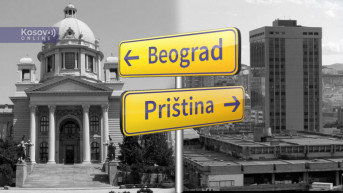
The dialogue between Belgrade and Pristina did not make progress during 2025, experts say, due to internal political developments in Kosovo and Serbia, as well as a lack of stronger commitment by the European Union.
On the other hand, chief negotiators Besnik Bislimi and Petar Petkovic met twice in Brussels during 2025, but without reaching agreement on concrete steps toward implementing the Brussels Basic Agreement and the Ohrid Annex reached between the parties in 2023.
Former chief Kosovo negotiator in the dialogue, Avni Arifi, told Kosova Press that Sorensen and Kaja Kallas failed to distinguish themselves when it comes to the dialogue.
“When you do not have a government, there is no legitimacy for anyone to participate in the dialogue, which is why there was no dialogue. The main problem I have is that Kosovo is blamed for the lack of dialogue. That is, the reason there was no dialogue is that Kosovo was unable to form institutions. These meetings that did take place were social meetings, meant to keep Sorensen’s spirit alive during his mandate, to talk with the parties about what they think and what their vision is. Yes, completely, that is, insignificant meetings. Sorensen and Kaja Kallas did not prove themselves in the dialogue. That is, this was prevented by our internal developments,” he said.
GLPS researcher Arbresha Loxha says that the European Union must carefully analyze Serbia’s behavior in order to achieve progress in the dialogue.
She points to Serbia’s approach and lobbying against Kosovo’s membership in international organizations, as well as the attack in Banjska, as violations of the Ohrid Agreement.
“We see no progress in terms of new steps within the framework of the dialogue between Kosovo and Serbia due to the fact that we did not have a government with a full mandate, but rather a caretaker government. On the other hand, political turmoil in Serbia has been continuous and has not allowed the Serbian government to focus on processes such as the dialogue. I believe that even the EU, for these two main reasons, did not make any efforts to achieve something concrete in terms of the dialogue. What is important to do in terms of the dialogue between Kosovo and Serbia is to achieve full implementation of past agreements. Also, there must be full disclosure and the bringing to justice of all those responsible for the terrorist attack in Banjska. The Ohrid Agreement was initially violated by Serbia’s lobbying against Kosovo’s membership in international organizations, and then by the terrorist attack in Banjska,” she stressed.
Caretaker Prime Minister Albin Kurti says that in order for the dialogue to continue, the agreements must be implemented.
“In order to continue the dialogue, we must implement the agreements. But in order to continue the dialogue, of course, Milan Radoicic, the main terrorist who killed our police sergeant, the hero of Kosovo, Afrim Bunjaku, must be handed over to Kosovo’s security authorities, since there is a 160-page indictment by the Special Prosecutor’s Office, along with 44 accomplices, who wanted to start a large-scale conflict in Banjska and Zvecan. They failed. They also failed with the subsequent blowing up of the Ibar–Lepenac canal, for which there is also an indictment, and they will fail every time. In addition, the European good-neighborly agreement, based on the Brussels Basic Agreement and the Ohrid Implementation Annex, cannot move forward as long as Milan Radoicic, as we speak today, is closer to President Vucic than even his close security detail,” Kurti stated.
During the mandate of Kurti’s government, Kosovo and Serbia held a series of meetings at the level of leaders and chief negotiators, but the parties did not agree on the implementation of the agreements.
Part of this agreement is the establishment of the Community of Serb Municipalities, but the Government of Kosovo has not yet taken any steps to implement it.
Despite requests from the international community for the EU draft to be sent to the Constitutional Court, the government in Pristina announced that the draft is an “unofficial” document and, as such, will not be sent to the Constitutional Court.


0 comments