
Andric Rakic: If the EU or the US don’t remind Pristina of the promise regarding the barricades, it will feel free to violate it
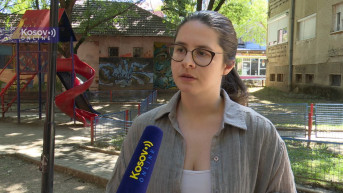
Milica Andric Rakic, program manager at the NGO New Social Initiative, told Kosovo Online that the 2022 guarantees from the European Union and the United States that Serbs who participated in the barricades would not be prosecuted were not formal guarantees, but that at the time there was enough trust in the international community's ability to implement even a verbal promise.
"It was a joint statement by the European Union and the US, in which they, in one sentence, welcomed the fact that the Kosovo authorities had told them there were no arrest lists for Serbs involved in peaceful protests, i.e., the barricades. Much has changed since then, and there is no longer the same kind of cooperation between the government in Pristina and the international community. The government in Pristina now feels comfortable enough to break former commitments, especially when those were not strictly formalized, so today it appears that they are no longer valid—unless the international community, specifically the EU or the US, seriously reminds the Kosovo government of the promise that was made at the time," said Andric Rakic.
She added that perhaps there should have been insistence on a more formal way of giving guarantees—through a signed document—and that, in the meantime, there has been a change of administrations both in the EU and the US, which may make it difficult to remind the new officials of how it all came about.
According to her, countries generally uphold the formal commitments of previous administrations, but in this particular case, there was no formal obligation—only a statement.
"Unfortunately, for the people who were at the barricades, this was not a formal guarantee from the US and does not formally bind the new administration. I believe there are other diplomatic mechanisms that could move things forward or stabilize the situation, but the issue is that neither the EU nor the US are currently willing to invest more resources or diplomatic effort, and for several years now, it has been clear that the amount of diplomatic pressure they are willing to exert on the Kosovo and Serbia issue is insufficient," said Andric Rakic.
When asked what Serbia could do to protect the Serbs who were at the barricades and have been indicted, she said that Serbia could only resort to asymmetric approaches and take measures against Kosovo, similar to those that Pristina has taken toward Belgrade, such as certain trade barriers or reciprocal measures.
"The problem for Serbia, however, is that with every measure it could introduce against Kosovo—especially regarding transit or trade—it would inevitably punish the Serbian community in Kosovo as well. In that sense, Kosovo has between 50,000 and 100,000 hostages—i.e., Serbs in Kosovo—who would suffer just as much as the Kosovo administration under the measures Serbia might impose. But for now, that is the only way Serbia can respond. The other is to persuade the European Union and the US to act in its place, but so far, Serbia has not been able to convince them to take a firmer stance toward the Kosovo authorities," Andric Rakic concluded.


0 comments