
Andric Rakic: What kind of democracy can we talk about in Kosovo when it is unthinkable that Serbs live in Pristina?
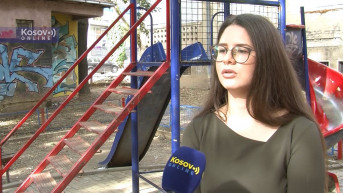
Kosovo Prime Minister Albin Kurti does not miss the opportunity to brag about the degree of the rule of law and the protection of minorities, but, according to Milica Andric Rakic from the New Social Initiative, there is a long list of things that deny and call into question the quality and sustainability of democracy in Kosovo.
Andric Rakic for Kosovo Online states that the failures of democracy in Kosovo are numerous - from violations of the constitution and the Brussels Agreement, through security pressures on Serbs in the north and difficult return of the displaced, to an unconstitutional referendum to replace the mayor. She points out that the conditions for a true multi-ethnic society have not been created in Kosovo and notes that this has also been recognized in European Union reports.
"There are many things that call into question democracy in Kosovo, and it is not only the attitude towards the Serbs. In the last two and a half years, this has been very pronounced, because the Serbian community has effectively been excluded from political life in Kosovo. There we have examples of appointing people who would should represent, i.e. the Kosovo government claims to represent, the Serbian community at the central level, such as the Minister for Communities and the Return of Nenad Rasic and his deputy, but they were not selected in accordance with Article 95 of the Constitution of Kosovo," Andric Rakic states.
She reminds that that article of the Kosovo constitution is one of the mechanisms for sharing power, which stipulates that people who represent communities, but come from outside the assembly, must be approved by the MPs.
"So, first, their appointment did not respect the mechanism of power sharing with the communities, and while it can be claimed that they are legal representatives of the Government of Kosovo, they are not representatives of the Serbian community within that government and should not present themselves as such. Because, if they claim that if they are, then they violated the Kosovo constitution and one of the mechanisms for the protection of the Serbian community.
As a prime example of the phallic nature of democracy in Kosovo, she cites the situation with the people's initiative, that is, the local referendum, the petition for the removal of the mayor in the north in order to bring about new elections in four municipalities.
"Essentially, that local referendum cannot be implemented, and it is revealed that nowhere in Kosovo citizens can actually replace the mayor because there is no law on referendum. There is no key legislative infrastructure that would enable the practice of local democracy. These are just a few examples. In general, and this can also be found in EU reports, the conditions for a real participatory multi-ethnic society have not been created in Kosovo. We are still very segregated along ethnic lines and it is still difficult for certain communities, especially the Serbian and Roma, to participate meaningfully in the decision-making processes", Andric Rakic points out.
She adds that these are just some of the shortcomings that are creating more and more problems for all communities, especially the Serbian one, especially in the last two and a half years because they have been pushed out of political life and have fewer and fewer contacts. This affects the increase in misunderstanding and the multiplication of problems that are not solve.
She especially emphasizes the security pressure on the Serbs in the north through the presence of special units. She points out that this is what has been burdening citizens since February 2022, when the bases of special police units began to be built, long before the Serbs left the institutions. She notes that at the time, non-governmental organizations and individuals warned that this was not in accordance with the Kosovo constitution or the provisions of the Brussels Agreement, which refers to the formation of the North region within the police directorates. In those documents, it is prescribed, and this, she says, is generally the practice of democratic societies, that in ethnically mixed environments, police units that reflect the ethnic structure of those communities must perform police work.
"The special units of the Kosovo Police, even before the departure of the Serbs from the institutions, as far as I am aware, had only one Serb member in a formation numbering around 700 policemen. So, specifically, the special units have never had a unit in their composition that would be suitable, at least according to the constitution and the Brussels Agreement, to carry out actions in the north. Moreover, here we are not only talking about this moment when they are permanently deployed in the north, but also about all the previous years and about every crisis we have had. And those crises in 2019 and 2021 included, in one way or another, special units and some arrest action," reminds Andric Rakic.
Andric Rakic sees this fact as the biggest security problem, especially in the north of Kosovo, along with the ubiquitous problem of the return of displaced Serbs.
"That is currently the most serious problem in the north, in the south it is certainly the safety of returnees. This is something that traumatizes the Serbian community in Kosovo again and again, the fact that the social conditions cannot be met for it to be acceptable for them to return to certain areas, and where it is acceptable, the return is usually not sustainable. It is about the return of old people, exclusively in rural areas. Apart from Dragica Gasic, we have no returnees in urban areas. For some reason, it is unimaginable that there are Serbs in Pristina, these are all things that show a serious democratic deficit, and how difficult it is for the Albanian community to integrate the Serbian community. Because if you don't have a cultural exchange between Serbs and Albanians in the main urban centers, such as Pristina, it's really hard to imagine that social cohesion can be easily achieved. As long as Serbs live in rural areas or in North Mitrovica, which is the only essential urban area, it will be very difficult to really talk about a real cohesive and democratic society," concluded Andric Rakic.
0 comments