
Antic: Deep-rooted friendship between Serbia and North Macedonia, focus on economy and education
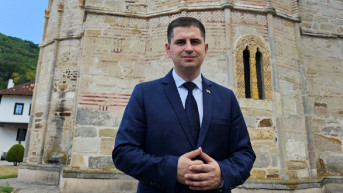
Professor at the Faculty of Philosophy in Nis and historian Dejan Antic stated that the relationship between Serbia and North Macedonia is characterized by a deeply rooted friendship and shared roots of the two nations, and that the economy and education are two key directions for future cooperation. He emphasizes that it is encouraging that the majority of Orthodox citizens of North Macedonia do not support the recognition of Kosovo.
A year ago, in the Prohor Pcnjski Monastery, the presidents of Serbia and North Macedonia, Aleksandar Vucic and Gordana Siljanovska Davkova, held their first official meeting, where they agreed to strengthen relations between the two countries.
Antic highlights that this meeting was "a political act of exceptional importance" with the key message that the two countries should "orient themselves toward the future."
"It was a political act of great significance, not only for improving bilateral relations but also as evidence of the deeply rooted friendship and shared roots of the two nations. This meeting confirmed the intention for Belgrade and Skopje to look to the future, which includes continued economic cooperation and joint efforts to ensure regional stability," Antic told Kosovo Online.
Kosovo – the most complex issue
He points out that the most sensitive issue between the two countries is North Macedonia's recognition of Kosovo.
"That topic undoubtedly remains the most sensitive and complex issue within the overall bilateral relations. Serbia has not, and never will, give up on Kosovo and Metohija, the cradle of its statehood, identity, and spirituality," Antic emphasizes.
He adds that it is encouraging that the majority of Orthodox citizens of North Macedonia do not support the recognition.
"It is encouraging that most Orthodox citizens of North Macedonia disagree with their state’s official position, which is largely the result of foreign policy pressures and influences, and that they still see Kosovo and Metohija as an integral part of Serbia. That stance of the people remains a significant basis for preserving the deep historical and spiritual ties between the Serbian and Macedonian peoples," the historian says.
Shared heritage
Cooperation between Serbia and North Macedonia was most visible in the past year following the tragedy in Kocani, where 62 young people lost their lives and more than 200 were injured.
"Serbia provided all necessary assistance to the injured citizens of North Macedonia. That brotherly gesture was not isolated but was followed by new agreements on mutual aid in crisis situations and coordination between health institutions," Antic observes.
He adds that, in addition to healthcare, Belgrade and Skopje intensified cooperation in infrastructure, especially in improving the road and rail networks connecting the two countries, as well as enhancing the functioning of the integrated border crossing Presevo–Tabanovce.
"That cooperation continued in the field of culture and preservation of shared heritage. Let me remind you that in April this year, a Macedonian Cultural Center was opened in Belgrade, and a Serbian Cultural Center is expected to open on the Vardar River soon," Antic specifies.
In the current geopolitical circumstances, the historian believes that the economy and education should be the key areas of cooperation between Serbia and North Macedonia.
"Although trade is growing, there is a need to more strongly stimulate investments, joint projects in energy, and support for small and medium-sized enterprises. Emphasis should also be placed on digitalization, where there is room for partnership," Antic says.
He adds that, in the education sector, work should be done to better connect and network the Serbian and Macedonian education systems.
"It is necessary to institutionalize the exchange of students and young researchers because these are young people raised in the same Slavic and Orthodox culture and tradition, and our new generations should be the bearers of long-term friendship and cooperation. Joint school and university programs and scholarships would be a strong step in that direction," Antic is convinced.
European integration
When asked how much the two countries can support each other in European integration, the historian says: "Only someone who has a brother has someone to rely on when times get tough."
"Serbia and Macedonia are here, side by side. They must count on each other at a time when certain EU member states are setting conditions that often have nothing to do with reforms, but rather with geopolitical calculations, territorial and assimilationist aspirations, and pressures. In such an environment, brotherly states have no greater support than one another. Serbia and North Macedonia have no closer partner in the Balkans – historically, culturally, by kinship, or emotionally," Antic says.
He explains that the two countries and their peoples are united by a shared past marked by the struggle for freedom, suffering, and solidarity.
"But also a shared vision of the future in which sovereignty, national identity, and stability will be preserved. Instead of submitting to the dictates of the powerful, Belgrade and Skopje must be each other’s support in dialogue with Europe, and in defending legitimate national interests, economic cooperation, and regional collaboration. Serbian-Macedonian friendship is political capital. It is our strategic advantage and a prerequisite for a dignified place on the world political stage," Antic concluded.


0 comments