
Azeski: Economic growth in North Macedonia in 2025 highly uncertain, regional cooperation is key
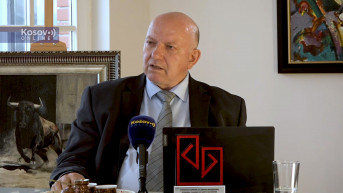
The President of the Chamber of Commerce of North Macedonia, Branko Azeski, stated to Kosovo Online that the country’s economic growth in 2025 is highly uncertain. He emphasized that political tensions in the region hinder development and stressed the need for stronger regional integration to ensure economic progress in the Balkans.
The European Commission's report projects that North Macedonia’s GDP growth in 2025 will be 3.5%, but Azeski warns that numerous factors complicate accurate economic forecasts.
“I believe the risks are too high to precisely determine the growth rate, as Europe is currently facing unprecedented challenges, including the expanding war in Ukraine, which looms over all of us like an umbrella and creates enormous uncertainty,” Azeski stated.
He highlighted the decade-long inflationary pressures exacerbated by crises impacting the region. While optimistic about North Macedonia’s potential for economic growth, he stressed that the projected figures remain highly uncertain.
“We will do everything within the country to reach a consensus on this issue and, through budget restructuring, increase investment activity and the inflow of fresh capital to local enterprises. We aim to accelerate the stalled decentralization process, which could boost investment activities and exports,” Azeski said.
Azeski commented on last year’s increases in wages and inflation, noting that this situation demands careful budget management by the Ministry of Finance, the National Bank, and the Government.
Speaking about citizens’ purchasing power, he pointed out the “incredible rise in food prices,” which severely impacts both businesses and the standard of living.
“The general conclusion is that we are witnessing an extraordinary rise in food prices, bordering on irrationality in a market economy. What will be the impact? A negative one, for both businesses and the standard of living,” he stated.
The President of the Chamber underscored the critical role of regional cooperation for the Balkans’ economic progress.
“There is no alternative, we now understand this. If we don’t lift the region and establish serious trade, we are finished. Our region consists mostly of small countries achieving modest results. Those who should serve as the driving force, the locomotive of this development, are constantly in serious trouble, and that is why we cannot move forward,” Azeski explained.
He also criticized the ongoing political tensions in the region, which, he says, dominate and obstruct progress.
“We need to focus on regional development and create a driving force from the strongest economy in the Balkans to lead the way, which is something we currently lack. Instead, we continue to argue among ourselves. Everything should be dedicated to implementation and the realization of agreements because, without this, there is no alternative,” Azeski concluded.



0 comments