
Antonijevic: The most significant issue for the survival of the Serbian community in Kosovo is the CSM
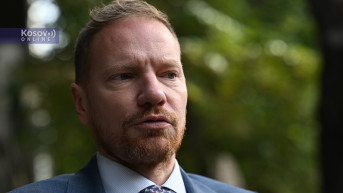
First and foremost, for the survival of the Serbian community in Kosovo, the most significant issue is the Community of Serb-majority Municipalities, functional and real autonomy in municipalities predominantly inhabited by the Serbian population, legal expert Milan Antonijevic assessed in an authored text for the Bulletin of the Working Group for Chapter 35 of the National Convention on the European Union, emphasizing that the obligation to establish the CSM had been accepted by the Kosovo Government within the framework of the Brussels Agreement in 2013, but had not been implemented to this day.
Antonijevic points out that the CSM enables autonomy in areas that guarantee the lasting survival and presence of the Serbs in Kosovo, with improvements primarily in the security, but also in the economic perspective in the north.
He notes that it is a fact that Serbia, together with everyone in the international community, from the European Union to the USA, insists on drafting and adopting the statute of the CSM, which should define the substantive autonomy of municipalities with a Serb-majority population.
"When speaking about economic growth, besides the budgets from Belgrade and Pristina, I primarily rely on the Growth Plan for the Western Balkans as a good instrument for economic progress, but I also rely on the funds provided by the Ohrid Agreement. Another issue I want to raise in this internal dialogue is: how to stop the silent exodus from Kosovo that is happening within the Serbian community. This can only be done through further proactive policies by Serbia, negotiations, and concrete results that will improve the position of the Serbian community in Kosovo, along with economic and any other support from the international community, which increasingly sees Pristina as someone who, through provocations and unilateral moves, wants to make everyday life more difficult," Antonijevic states.
He adds that the issue of the return of the dinar as the official means of payment or, less likely, the introduction of the euro as the means of payment in Serbia, until the local elections in the north, the return of the Serbs to the police forces, and many other steps that will show that the volatile area is calming down, demilitarizing, rather than arming.
"Legal security, especially property, along with the implementation of the Constitutional Court's decision to return the land to the Decani Monastery and other examples of respecting rights, must not be overlooked, and we must constantly remind ourselves of that. Necessary investments in infrastructure, education, culture, media, and all those things that make life fulfilling, alongside the decriminalization of society, are tasks of that process," he notes.
Antonijevic emphasizes that decentralization is more important and processes that will encourage the initiation of cooperation between the Albanian and Serbian communities, in the common interest, primarily economic, but also security-wise.
"Much has been written about Kosovo, many personal stories and testimonies about crimes on all sides, not to mention the villages and places where humanity has disappeared, you have everything in the Kosovo Memory Book. To restore humanity, we must advocate for justice, which is currently being pursued in The Hague, where leaders of the KLA are being tried, as others of different nationalities were once tried," he notes.
He adds that nationality does not change anything in crimes; a criminal is a criminal, and that is the only nationality they have, hoping that this will be completely clear, especially to the young generation.
Victims, he adds, on the other hand, have names and even nationality because it was decisive when the crimes were committed in the 1990s and later, at the beginning of the 2000s.
The third and final question that Antonijevic raised is whether there is a possibility for the full name of Kosovo and Metohija to return to the negotiating framework between Belgrade and Pristina, knowing that this alone can give dignity to everything happening in Brussels, from the perspective of the Serbian community that persists in Kosovo despite all challenges.
"I know that geographically, this term does not correspond to the part of Kosovo where the Serbian community lives today; it is not my intention to draw ethnic boundaries here. Instead, I am talking about an investment in the future, in a region that one day, if there is wisdom, intelligence, and dedication to values, can enter the same state community, the European Union," he concluded.

comments