
European integration of the region in the interest of all Europe; Macut: Berlin Process should be transformed
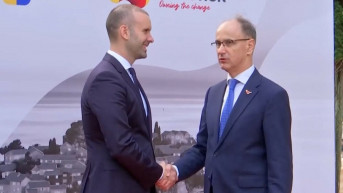
The Western Balkans is not alone on its European path, and through the Berlin Process and cooperation with European partners, everyone in the region can work together to achieve their goals, German Chancellor Friedrich Merz said following the conclusion of the Leaders’ Summit held within the framework of the initiative. Serbian Prime Minister Djuro Macut said that Serbia had been recognized as one of the key factors in the region and its strongest economic component.
“At this year’s summit, discussions focused on the further integration of Serbia, or rather the entire region, and Serbia is one of the key factors in that process, as the summit participants themselves recognized, concluding that Serbia is the strongest economic component here and that a great deal depends on it,” Macut said following the gathering.
He stressed that Serbia’s future was perfectly clear—European integration—and that, alongside regional integration, better prospects could be expected for citizens and for everything that had long been awaited in the EU accession process.
He said that today’s meeting had also revealed a considerable diversity of views and that political issues had featured prominently, which, he noted, was not the best way forward.
“Constantly bringing up the political agenda is not the best way forward. Rather, integration into the EU, primarily in economic, infrastructure, transport and energy terms, is certainly the key message and should remain the message for the period ahead,” Macut said.
In this regard, he said, Chancellor Merz had conveyed a positive message, as he had done last year in London at the previous summit, when he spoke about the need for each country to demonstrate initiative, while also stressing that the format itself needed to change.
“I later mentioned in my conversation with him that we should reformulate this, and Serbia’s position will be that all these processes, which are endless and to some extent exhausting—the meetings between EU and Western Balkan countries—should be transformed into a single joint panel that could symbolically be called the Berlin Process in the Western Balkans, given that today’s summit brings together the largest number of participating countries that are friends of the region, as well as all the institutions involved in shaping this area as part of modern Europe. I think we will work on this in the coming period,” Macut added following the summit.
Merz: Countries of the region are not alone on their European path
German Chancellor Friedrich Merz warned that the Western Balkans continued to face political blockages that required determination and courage to overcome.
“If we want to be honest, we are facing blockages and we need greater courage to overcome them, to end the deadlock in Bosnia and Herzegovina and reach an agreement between Pristina and Belgrade,” Merz said.
He stressed that the countries of the region were not alone on their European path, but were working together toward achieving their goals through the Berlin Process and cooperation with European partners.
Austria today took over the chairmanship of the Berlin Process from Montenegro, with Austrian Chancellor Christian Stocker saying that Vienna’s priorities would be reconciliation, youth and regional cooperation.
Stocker said it was a great honor for Austria to chair the Berlin Process again in 2027, stressing that Vienna remained a reliable partner of the Western Balkans and a strong advocate of the region’s European integration.
He said that the Berlin Process had proved successful because it had brought the Western Balkans closer to the European Union, strengthened regional cooperation and demonstrated that European integration could deliver tangible benefits to citizens even before full membership.
He noted that younger generations needed a clear European perspective and that Austria would therefore seek to encourage greater connectivity among them and help overcome historical divisions.
“The region must strengthen its ties, both internally and with the European Union. One cannot happen without the other. There can be no common future without reflecting on the past and building trust among societies. This requires political courage, patience and concrete action,” Stocker said at a joint press conference with Montenegrin Prime Minister Milojko Spajic and German Chancellor Friedrich Merz following the summit.
Noting that Austria was setting ambitious goals, he stressed that the key steps had to come from the candidate countries themselves and that Vienna was ready to work with all partners to make the coming year a successful one for the region.
Stocker said that citizens of the Western Balkans needed to experience tangible benefits from European integration even before full membership, and that integrating the region into the EU Single Market should be one of the priorities, alongside eliminating additional roaming charges and joining the Single Euro Payments Area (SEPA).
“It is high time for the Western Balkans to finally become part of the roaming zone. There is no explanation for why the six Western Balkan countries should be at a disadvantage compared with Ukraine or Moldova. More than 500,000 people in Austria have roots and family ties in the Western Balkans. Communication for them must become easier and cheaper,” Stocker stressed.
He also sent a specific message regarding bilateral disputes, emphasizing that they must not become an obstacle to European integration.
Speaking about Montenegro’s European integration, Stocker expressed support for Prime Minister Milojko Spajic, saying that the country was on the verge of a historic achievement. He thanked Spajic for the invitation and for organizing the summit, adding that Austria was counting on the cooperation of all partners during its chairmanship of the Berlin Process.
Spajic: European integration of Western Balkans in the interest of all Europe
Montenegrin Prime Minister Milojko Spajic thanked summit participants for their cooperation during Montenegro’s chairmanship of the Berlin Process, one of the most important initiatives for regional cooperation and the European perspective of the Western Balkans.
Spajic said that the Berlin Process had demonstrated how the countries of the region, despite their differences and outstanding issues, could identify common interests and build a European future through dialogue and tangible results.
He stressed that the European integration of the Western Balkans was not merely a strategic objective of the region, but a common interest of Europe as a whole.
Speaking about relations with Germany and Austria, Spajic stressed that Montenegro regarded both countries as important partners, not only in European integration but also in developing economic and bilateral relations.
Congratulating Austria and Chancellor Stocker on assuming the chairmanship, Spajic thanked Germany and Chancellor Merz for their continued support for the region’s European perspective.


comments