
Arnaudov: Significant messages from the Non-Aligned Movement as major powers also redefine foreign policy goals in line with their interests
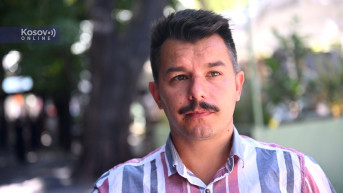
Research associate at the Institute of International Politics and Economics in Belgrade Mitko Arnaudov assesses that holding a commemorative gathering marking 65 years since the First Summit of the Non-Aligned Movement in Belgrade was a practical demonstration of Serbia's smart power. The messages conveyed, he says, are significant because major powers are also redefining their foreign policy positioning in accordance with their national interests.
As Arnaudov explains, soft power lies in the fact that Serbia had already cultivated good relations with the member states of the Non-Aligned Movement, while now, through the exercise of smart power, that is, effective diplomacy, it has demonstrated that Belgrade remains involved in developments in international politics, despite Serbia not having the capacity or size that Yugoslavia once had, and despite the fact that the world previously functioned differently and was divided along different lines.
"This is precisely where we find Serbia's advantage in the current momentum of multilateralism, when there are many more centers of power than we traditionally know or recognize in the classical sense, and this is precisely where small states such as Serbia, with effective and strong foreign policy and diplomacy, can advance their foreign policy goals and successfully position themselves internationally, thereby ensuring, preserving and advancing their national interests and making them sustainable. From this perspective, the messages being sent from Belgrade following the commemorative gathering of the Non-Aligned Movement are significant because major powers are also redefining their foreign policy positioning in accordance with their national interests," Arnaudov says.
He points out that national interests are a permanent category as such because they ensure the sustainability of a state and its society, while foreign policy goals can be a highly changeable category and can be redefined depending on the circumstances at a given point in time.
Speaking about how the messages heard at the gathering in Belgrade will affect the positions of the movement's member states on the issue of Kosovo, our interlocutor says that the Kosovo and Metohija issue is not an authentic problem of Serbia.
"Under the Constitution of the Republic of Serbia, Kosovo and Metohija is part of Serbia's territorial integrity. But it is a problem for the international community, especially for that part of it that agreed to accept Pristina's projections and its statehood ambitions. In this context, the messages heard in Belgrade are significant because it is clear to the countries that recognize Kosovo, through numerous messages both before and after this commemorative gathering, that there are increasingly vocal messages warning that certain unilateral principles that violate international law are undermining the entire international infrastructure," Arnaudov notes.
In the current momentum of multilateralism, he adds, solutions that run counter to the rules and principles of international law cannot ensure long-term stability and sustainability.
"When circumstances in one part of the world are neither stable nor sustainable, that is not in the interest of the major powers or their foreign policy goals. In the context of our province of Kosovo and Metohija, an open and unresolved issue that runs contrary to international principles and standards projects instability across the region in the long term, which I believe is not in the interest of either side, nor of any of the poles of power in international relations," he assesses.
As for the influence of the Non-Aligned Movement in the world today, Arnaudov says it has been significantly diminished because the influence of the United Nations as an organization has also been significantly diminished.
"The order envisioned with the establishment of the UN has lost its original meaning. The states that established it, and that are still members of the UN Security Council as the organization's most powerful executive body, often violate in their foreign policy actions the very principles they themselves established. In this context, we must emphasize that, formally and legally, the role and influence of the Non-Aligned Movement have been diminished, but that does not mean this is something that should be abandoned. On the contrary, strengthening the bodies and organizations within the entire UN framework will also contribute to strengthening the Non-Aligned Movement, and at a later stage to restoring the entire infrastructure of the UN organization, whose influence has been diminished in terms of its power, influence and ability to implement decisions precisely because of misguided foreign policy decisions driven by the self-interest of the states that founded the UN," our interlocutor concludes.


0 comments