
Arsovski: The Open Balkan will experience a renaissance; instead of symbolic gestures, the implementation of agreements is needed

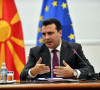
Analyst and communication expert from North Macedonia, Petar Arsovski, says for Kosovo Online that the Open Balkan initiative is currently in a kind of hibernation but will experience a renaissance because the region's accession to the European Union is on a slow track. However, as he points out, for this initiative to revive, there must be a genuine implementation of the agreements reached on the ground.
"The European Union has paid a little more attention to the Berlin Process because all six countries in the region are a part of it. However, as the EU slows down the accession process due to its internal dilemmas and debates, as well as dilemmas in the candidate countries in the Balkans, I think that process will revive and experience a renaissance. This regional initiative, with a common market, both as an economic and political initiative, is good because it increases the EU's interest in the Western Balkans. To revive, symbolic gestures such as a wine fair or joint meetings of leaders are not enough; it must experience genuine implementation on the ground when it comes to borders, document recognition, free movement of people, ideas, and capital", Arsovski says.
Although numerous agreements have been signed within the Open Balkan Initiative, Arsovski believes that signed documents and their implementation on the ground in the Balkans are often two different things.
"We have documents guaranteeing free passage at borders, yet at the borders, you have two points where you must stop and provide documents. We have signed agreements for recognizing diplomas, certificates, and qualifications, yet in different countries, this is subject to various certifications. So, there is some difference between what is on paper and what happens on the ground. One of the good initiatives that has worked is abolishing roaming charges for the Western Balkans, so initiatives that citizens immediately feel and that have been implemented are worth more than signed agreements on paper. It is important for this initiative to remain alive, for countries to have the political will to implement it, and to dedicate themselves to implementation so that citizens have confidence in the process. Favorable times are coming for this because accession to the EU will be, conditionally speaking, on a slow track due to internal problems in the EU, not only because of the failure to implement reforms and align external policies with the EU, so the Open Balkan will be doubly significant in the next period", Arsovski says.
Speaking about whether another country in the region will join the Open Balkan, Arsovski says that discussions should be held with everyone.
"Montenegro and Bosnia should certainly be part of this initiative. Montenegro said at the last meeting that it is interested in joining. The larger the initiative, the better for us; the EU will pay attention to this region the larger we are, and the more fragmented and smaller we are, their interest in joining and negotiating some quick package is smaller. Montenegro is first on the list, and then Bosnia", our interlocutor says.
Regarding Albania and the possibility of it leaving the Open Balkan, Arsovski says that it is "a cannibalization between the Berlin Process and the Open Balkan."
"If the international community pressures all countries to choose, then the Open Balkan will not get its essence. If the EU insists that two regional processes cannot coexist, then it is possible that Albania decides that the Open Balkan is dead for them and turns to the Berlin Process, but I think that is not wise. I think it is wise to have as many regional initiatives as possible and that, in the end, the Open Balkan and the Berlin Process may even merge into a joint initiative that would enable the unification of the region before integration into the EU", Arsovski concludes.


0 comments