
Baraliu: Kosovo has the most advanced laws but is the poorest country in Europe

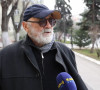
Seventeen years after declaring independence, Kosovo has been successful domestically, according to Mazllum Baraliu, a university professor from Pristina. He believes that Kosovo's institutions have advanced democracy and enacted some of the most progressive laws, thanks to support from the international community and the European Union.
He also says that Kosovo has proven to be a stabilizing factor in the Balkans, rather than a source of instability.
"What is lacking and what every government should focus on more is economic development and social stability. In recent years, particularly in 2015, there was a significant emigration of young people from Kosovo, across all nationalities and communities, due to economic hardships. This is a negative trend that needs to be addressed through better policies, which should be the priority of the next government. Right now, we are the poorest country in Europe, and the shortage of human resources is our biggest drawback. This is a key factor influencing economic development, and in the long run, Kosovo will need to address this in order to reduce its lag behind other European and global economies," Baraliu stated.
With the evolving geopolitical landscape, he believes Kosovo will face increasing challenges.
"I think things will become more difficult because politicians in Kosovo, Serbia, and across the Balkans tend to believe we are important players, when in reality we are not, in the broader context of global geopolitics unfolding around us. We are not a factor either as the Balkans collectively or as individual countries. We are small nations with small economies and little global impact. That is why we must align ourselves with certain global trends and maintain good relations with one another as neighbors. Otherwise, as underdeveloped nations, we risk being easy prey for larger powers. We must be careful and strategic in our diplomacy and foreign policy, especially Kosovo and Serbia," Baraliu concluded.


0 comments