
Baraliu: The new Government of Serbia will pursue a radical policy towards the Kosovo issue
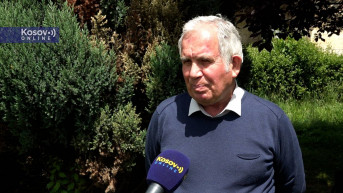
Mazllum Baraliu, a professor of Constitutional Law at the University of Pristina, believes that the new government of Serbia will pursue a radical policy towards the Kosovo issue.
"The new prime minister has already announced that they will have a strict policy towards Kosovo, oriented towards Russia rather than the West, and that's the radicalization that I believe should not be pursued to that extent. In the government, there are also exponents of the so-called Serbian world, and this will not contribute to Serbia's integration towards the West, which is necessary for Serbia from both economic and social perspectives and for every citizen," Baraliu says to Kosovo Online.
He thinks that the government's policy in Belgrade will be a continuation of the policy advocated by the President of Serbia, Aleksandar Vucic, with, as he says, "perhaps a bit more radicalization."
"The most important positions are entrusted to people close to Vucic, who were previously sanctioned by certain countries as individuals who were in some way part of incriminating actions and also radical. Reverting to radicalization means going back to the Radical Party, Seselj, and that tradition, which probably won't sound very good to the West. Vucic needs to be cautious because this can have certain consequences for Serbia and, what worries me more, for the citizens of Serbia," Baraliu says.
He adds that Serbia is trying to pursue a measured and neutral policy towards Russia and China, similar to what Josip Broz Tito led during the Non-Aligned Movement, but that the West is now too sensitive to such moves, especially after Ukraine.
"One should be cautious when pursuing such three-way policies, especially when they are opposed to each other. Russians, Chinese, and Europeans have opposing policies, so Serbia needs to be careful because it cannot behave neutrally for a long time without consequences from the West," Baraliu believes.


0 comments