
Becirovic: Migrations and abolition of visa regime pose a security threat
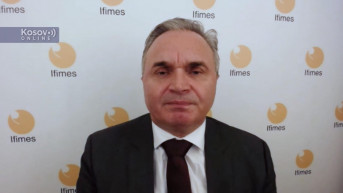
Zijad Becirovic, the Director of the IFIMES Institute, stated to Kosovo Online that migrations and the abolition of the visa regime, in any case, presented a security challenge, and in certain situations, they could even pose a security threat.
He believes that migrations occur within the context of global chaos due to ongoing global wars and conflicts worldwide.
"One of them is the war in Ukraine, especially the situation between Israel and Palestine, or the conflict between Hamas and Israel, which raises a new question about the increase in security threats for Europe. Regarding Kosovo itself, we must know that in the structure of Albanians, when they were formed, religion did not play an important role. Above all, ethnic belonging and affiliation to the Albanian people were crucial. However, religion now plays an increasing role among Albanians, relating to the principle of cultural defense. Whenever you have a conflict between two entities, in this case in Kosovo between Serbs and Albanians, the identity of both strengthens," Becirovic emphasized.
He added that Kosovo was simultaneously a space for imposing and attempting to infiltrate various ideologies, confirming a recent State Department report stating that citizens of Kosovo were an easy target for recruiting various violent extremist groups.
"It is not surprising at all for the reason that we know Albania has accepted Iranian Mujahideen. There is a base located near Tirana. Now, Edi Rama has signed a new agreement with Italy, and Albania will accept around 40,000 migrants from Italy, who will be accommodated in Albania. All of this increases risks, especially when there is a visa-free regime. Kosovo, as a space, is not attractive for migrants; it can only be a transit route. However, you never know in global currents with many actors who can exploit whom for different purposes," Becirovic said.
Our interlocutor emphasized that the rise of extremism and radicalism would continue as a consequence of globalization and global conflicts.
"It is a significant challenge for the security sector, which must find appropriate responses to it. First and foremost, local authorities must address this issue, exercise control, and collaborate. I fear that this is lacking when it comes to Kosovo, and I can say the same for the Western Balkans region. These threats are not only directed at one group; it is a global threat, and a global response and cooperation are needed for a global threat," Becirovic concluded.



0 comments