
Milutinovic: Visa liberalization for Kosovo as a "carrot" instead of candidate status
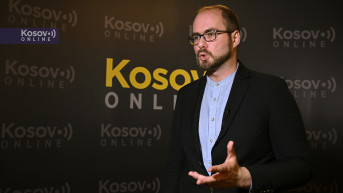
Researcher from the Institute for European Studies, Petar Milutinovic, says that the latest report from the European Commission on Kosovo, where it was rated the lowest in the region due to a significant "minus" for not fulfilling obligations in the dialogue with Belgrade, objectively reflects the situation, and Pristina authorities should take that into account if they want progress towards the EU.
Milutinovic emphasizes for Kosovo Online that the report clearly shows that Kosovo has not achieved what it should have done regarding the normalization of relations with Belgrade.
"That would mean that the implementation of the agreements from Brussels and Ohrid earlier this year should have started. We see that the Pristina authorities are not interested in that, but, unfortunately, they prefer to declaratively fulfill the form, and that the essence is not the main issue," he notes.
Asked whether this confirms the thesis that Kosovo Prime Minister Albin Kurti is causing numerous political and security crises in the north to cover up failures in key areas of reforms, Milutinovic states that "he is a skilled politician who wants to gain the trust of his voters because it seems that the end of his political career is approaching, so he is very interested in making very radical moves."
"They are not in the spirit of regional cooperation and good neighborly relations. This is also an important imperative for this entire region, which is geopolitically oriented toward EU accession. It is of paramount importance to form the Community of Serb Municipalities; the US insists on that, and now it is up to Albin Kurti and his Self-Determination to finally meet with the Serb List, to bring Serbs back to institutions, both legislative and judicial, security, and then to meet Belgrade in forming the CSM, with elections in the four municipalities in the north," our interlocutor points out.
Representatives of the Kosovo Government claim that Kosovo unfairly fared the worst in the EC assessment in the region, pointing out the illogicality that Bosnia and Herzegovina not only received candidate status but also a recommendation to start negotiations, while all of this was lacking in Kosovo's case. Kosovo's Deputy Prime Minister, Besnik Bislimi, even says that Kosovo does not need to be recognized by five EU member states to get candidate status.
"Bislimi is not correct. It is necessary for there to be agreement among all 27 EU member states when it comes to enlargement. Bosnia and Herzegovina received candidate status last year at the European Council, which gathers heads of state and government. For now, Kosovo has received visa liberalization, which will take effect on January 1, as a kind of 'carrot' before obtaining candidate status. Of course, this depends on the five EU member states that have not recognized Kosovo. Spain, Romania, Greece, Cyprus, and Slovakia would need to take a stance in the European Council that Kosovo should receive candidate status. Until that happens, Kosovo should be satisfied with visa liberalization," he emphasizes.
He notes that the EC report on Kosovo shows "limited progress" in six areas, which are now divided into clusters according to the new, revised enlargement methodology agreed upon by the Pristina authorities.
"In all of these domains, including the internal market and external relations, Kosovo has made some limited progress, which is a relatively low, poor rating. When we look at the EC report on Serbia, it notes limited to some progress, which is a better rating and a better indicator of progress," Milutinovic notes for Kosovo Online.
Regarding Kosovo, he points out that there is still some room for progress in many areas, especially in reforming democratic institutions, combating crime and terrorism, and judicial reform.
"This is a prerequisite for all conditions of the entire accession process and based on which the progress of the entire society is further measured. In other words, the statehood that exists there means that we cannot say that there is a state in the true sense of the word, but rather a form of contested statehood functions. There is a special political system, with legislative, executive, and judicial power de facto, and that is something that allows Kosovo to base its sovereignty which also exists according to the Stabilization and Association Agreement from April 2016. This agreement is completely different from ours; it envisages a political dialogue that should be conducted between EU member states and Kosovo, as well as recommendations for reforms," Milutinovic says.

0 comments