
Becirovic: Without recommendations from allies, Kosovo wouldn't venture into introducing military service
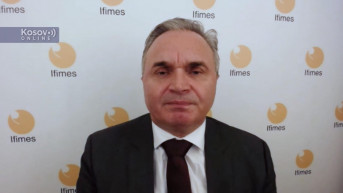
Zijad Becirovic, Director of the IFIMES Institute in Ljubljana, believes that without the votes of representatives of the Serbian community in the Kosovo Assembly, Pristina should not be allowed to introduce mandatory military service, and also without the support of countries that provide the most assistance in terms of training and equipment supply to the Kosovo Security Forces.
Becirovic emphasizes that the topic of introducing military service, like many other issues that have fueled the regional and internal scene, has been used as part of a campaign. He adds that it is realistic for early parliamentary elections to be held in Kosovo this year, when the Kosovo Prime Minister assesses it should be done.
"However, there is a problem here. Serbs entered Kosovo institutions with the promise that they would be allowed to vote in referendums and elections held in Serbia and that these would also take place on the territory of Kosovo, which is why they entered Kosovo institutions. If Serbian representatives boycott these elections, Kosovo institutions cannot be constituted. All these events, starting from license plates, various types of blockades, non-compliance with the CEFTA, are very dangerous for the upcoming electoral process, regardless of when it takes place, and there is a high probability that it will be held this year," Becirovic states.
He points out that the votes of representatives of the Serbian community, two-thirds of the ten deputies, would be necessary for the possible formation of the army.
"Through this electoral engineering, the intention is to select Serbian representatives who, in the final version, would vote for it, or not have two-thirds to block it. Many events on the political scene are related to these ten deputies, who come from the Serbian community and are a kind of fuse, preventing any arrangements without their votes. The struggle and great pressure are primarily to eliminate the Serb List, the influence of Belgrade, President of Serbia Aleksandar Vucic, and to find some kind of compliant Serbs who would vote for everything in Kosovo institutions," Becirovic says.
The military balance in the region or one part of the region was established by the military annex of the Dayton Agreement, where the exact number of personnel that individual states can have was determined, Becirovic explains.
"Given that Serbia signed the Dayton Agreement in 1995 and there was no dispute about Kosovo and to whom it belongs at that time, they consider it in certain circles in Pristina that they should appear as successors and that they should somehow be involved in solving the situation in Bosnia and Herzegovina. I don't think that's realistic. It is realistic for the key international factor, the United States, to establish a balance that will not threaten anyone. But whenever we talk about Kosovo, the role of the United States is exaggerated, and perhaps Germany plays a greater role. It should be warned about all possible consequences to official Berlin if there were some enormous disturbance in the balance of military forces in the Kosovo region," he explains.
Becirovic emphasizes that Kosovo would not venture into introducing mandatory military service without recommendations from allied countries.
"Kosovo certainly would not embark on introducing mandatory military service without the recommendations and advice of certain allied countries because it brings a series of consequences, some of which are financial. Moreover, for a certain period, there has been no tradition of people undergoing mandatory military service, as it used to be in the former Yugoslavia. It was done out of persuasion, and this is a trend present worldwide, especially since Germany decided to allocate 100 billion euros for the military and armament, which was a signal to initiate such activities. Particularly because Germany and the United Kingdom are the main sponsors of Kosovo's policy in Europe. On the other side of the Atlantic, in the United States, they present it as Kosovo taking responsibility for security and defense, while, in reality, there is a threat they portray as coming from Serbia. All these activities regarding the possibility of introducing mandatory military service should be understood in this context.
He adds that even before the liberalization of the visa regime, a large number of Kosovo citizens left, and now a new wave of emigration is expected, raising questions about how mandatory military service will be implemented.
"How would it be simple and practical to carry out when half of the population is outside Kosovo? This opens up a series of questions, and here the issue of security and defense comes in, and for security in Kosovo, KFOR forces are responsible, which is an important international moment. I think that the issue of introducing mandatory military service can be a subject of dialogue between Belgrade and Pristina on the normalization of relations. However, this is a very important moment if it comes to its realization, and discussions, agreements, and finding appropriate solutions are necessary," Becirovic concluded.



0 comments