
Berisha: The issue of Albanians in Presevo, Bujanovac, and Medvedja is being misused; we will not allow Kurti’s political influence
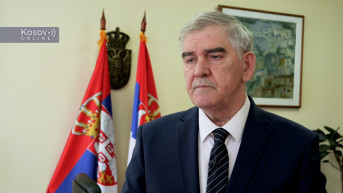
Minister for Human and Minority Rights and Social Dialogue in the Government of Serbia, Demo Berisha, speaking about the recent visit of US congressmen, assessed that the issue of the rights of Albanians in Presevo, Bujanovac, and Medvedja is once again being raised, while attempts are also being made to link that issue with the rights of Serbs in Kosovo.
“This is currently connected with ongoing processes and developments, as well as future political trends. Above all, it concerns the influence of the Albanian diaspora living in the United States, which we had the opportunity to hear about from Mr. Keith Self and his associates during discussions at the Government of the Republic of Serbia. The aim of such initiatives is to create a rift and a breakdown in relations between Belgrade and Pristina, or between Belgrade and Tirana, which is an extremely important political issue at this moment,” Berisha said.
The minister stressed that all issues concerning the position of Albanians in the municipalities of Presevo, Bujanovac, and Medvedja cannot be compared with the issue of Serbs in Kosovo, simply because Albanians in those municipalities are not endangered.
“This is a political issue that is being misused with the aim of creating a narrative of symmetry and equating the situations. At a time when elections are being held in Kosovo for the third time and have failed to resolve the political crisis, there is an attempt, through linking these issues, to impose the conclusion that the situations are the same. When I speak about the position of Albanians in Serbia, I point out that, as Minister for Human and Minority Rights, I am familiar with this issue, and that itself is proof that Albanians are not discriminated against in the Republic of Serbia. Furthermore, the fact that Shaip Kamberi is a member of the Serbian Parliament, as well as the existence of the Department of Albanian Language at the Faculty of Philology in Belgrade, established in 1964, are additional indicators. There are also Albanian mayors in Bujanovac and Presevo, and the fact that textbooks from Albania are used in schools, all of which supports this conclusion,” Berisha said.
He further stated that Serbia will not allow the political influence of Albin Kurti, which, he emphasized, is currently very present.
“This is also reflected in the position of Ragmi Mustafa, who is simultaneously an adviser to Albin Kurti, a municipal assembly member in Bujanovac, a representative of a political party, and a candidate in the upcoming elections. This demonstrates how strong Kurti’s political influence is in the region, not only in Presevo and Bujanovac, but also in North Macedonia, where his political structure operates under a different name. All of this represents interconnected political processes aimed at destabilizing and weakening Serbia, while also politically linking Kosovo and Albania. This could also be heard in the statements of Albania’s Minister of Foreign Affairs, who, during a visit to Pristina, said that ‘whoever touches Kosovo, touches Albania,’” Berisha explained.
The Serbian government minister said that when he had the opportunity to speak with Keith Self and his team, he pointed this out, to which the congressman replied that the issue concerns a political, not a legal, question of the alleged endangerment of Albanians in Presevo, Bujanovac, and Medvedja.
“I do not expect such a report to appear in the State Department. On the contrary, after the meetings he held in Belgrade, he visited the National Council of the Albanian National Community in Bujanovac, and meetings were also held in Presevo, interestingly enough, in a restaurant rather than in official institutions. That speaks to the political messages being sent. He clearly stated that his proposals and Bill 64/11, which he presented to the State Department, are actually an idea originating from the Albanian diaspora in the United States. All of this should be viewed in a broader context. The statements of Ragmi Mustafa and the events of 1991 in Kosovo further point to the continuity of certain political narratives,” Berisha believes.
He assessed that these are interconnected and highly dangerous political processes, and that the objective being promoted is to side with the structures in Pristina rather than to take a neutral approach to addressing problems.

0 comments