
Besiri: Belgrade and Pristina often engage in disputes over discriminatory decisions
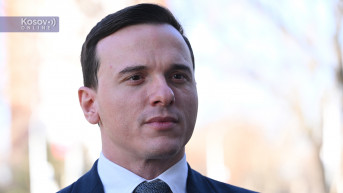
Belgrade and Pristina often engage in disputes over discriminatory decisions that target a specific nation, Naim Leo Besiri, the Executive Director of the Institute for European Affairs says, adding that the adoption of the Draft Law on Citizenship of Kosovo, and especially the amendments to the Law on Property Rights in Kosovo, can still be a kind of economic incentive.
At the end of last year, Kosovo adopted the Draft Law on Citizenship, which Kosovo's Prime Minister Albin Kurti stated that it "particularly facilitates the acquisition of documents for individuals with permanent residence permits in exceptional circumstances, including Albanians from Presevo, Medvedja, and Bujanovac who have been living in Kosovo for many years", and a few days ago, the Kosovo Government approved amendments to the Law on the Property Rights of foreign citizens in Kosovo, enabling the Albanians living in these three municipalities in Serbia to acquire property rights in Kosovo.
"A law that defines frameworks in a way that grants certain rights to citizens of another country of a specific nationality can be considered discriminatory. However, here it seems that the authorities in Belgrade and Pristina often engage in disputes precisely over discriminatory decisions that will target a specific nation, namely, the one with a national prefix that is less favored by that government," Besiri said for Kosovo Online.
According to his words, in recent years, there has been a passivity regarding the residence of the Albanians in Presevo, Bujanovac, and Medvedja—more than 16,000 Albanians living in other countries, but citizens of Serbia. He states that the Ministry of Internal Affairs discriminated against them by discriminatorily applying the law to prevent them from exercising their right to vote.
"This is one of the ways the Serbian Government discriminates against the Albanians living in Serbia, prompting a response of another form of nationalism from Pristina. They adopt laws that grant certain rights to Albanians, with the explanation that they want to enable the Albanians from Serbia to live better considering that discriminatory decisions hinder that," he notes.
According to his words, the realization of property rights for citizens of Serbia of Albanian origin in Kosovo can be a kind of economic incentive, considering that a significant portion of the diaspora living worldwide sends substantial money to their families to survive, or those with more funds may choose to invest.
He points out that the message from the Kosovo Government to these Albanians may be not to invest that money in Serbia but rather in Kosovo.
"It makes sense to some extent, given that the Albanians in Serbia couldn't study in their own language for decades, and a college in Bujanovac was established only a few years ago. Most people pursued education in Kosovo. This policy seems to align with previous ones, such as last year in June when Kosovo allowed the Albanians from Bujanovac, Presevo, and Medvedja, who had obtained a legal degree, to take the bar exam in Kosovo and thus practice law in Kosovo," he adds.
On one hand, he notes, it seems like nationalistic bickering between Belgrade and Pristina, but on the other hand, it might be considered that these policies, even though they sound discriminatory, could allow certain individuals to settle in Kosovo if they desire to no longer live in Serbia.
He reminds that Serbia has a law allowing its citizens to have dual citizenship, stating that around five percent, or 300,000 citizens, have dual citizenship.
In that sense, he states that policies of the Kosovo Government that facilitate easier acquisition of citizenship should be completely normal.
"However, when it is politicized in a context where the Kosovo Government simultaneously asks Brussels to exclude passports issued by the Coordination Directorate from visa liberalization, that is certainly something that does not contribute to reconciliation. There is no problem with citizens of Kosovo having dual citizenship and both Kosovo and Serbian passports; it would provide double the opportunities. Whether they will make use of them is another question, but there is a greater possibility that you will be able to find a job, and travel more, and that is certainly in line with what has been happening in recent years, which is the policy of the Open Balkan Initiative," Besiri stated.
As he adds, for now, it seems to be a good initiative, although many may not like that it comes from President Aleksandar Vucic and Prime Minister Edi Rama.
However, he emphasizes that the Open Balkan Initiative has taken some concrete steps, from abolishing roaming charges, thawing the economy, and transport of goods, to the fact that there will indeed be a need for labor migration in Serbia and other countries in the region, given the increasing emigration.
According to his words, Serbia is also facing significant migrations, with an annual exodus of between 30,000 and 60,000 people.
"Similarly, in Kosovo, where there is a possibility that migration may increase with visa liberalization, but it is clear that both Belgrade and Pristina must do much more to retain their citizens because all indications suggest that if this continues, we will disappear. Kosovo is in a slightly better position because the natural population growth is somewhat higher than in Serbia, but economic conditions, corruption, and organized crime are some of the stumbling blocks for people to find happiness there," Besiri concluded.



0 comments