
Bisenic: Kosovo at the door of the Council of Europe - a precedent with tragic consequences
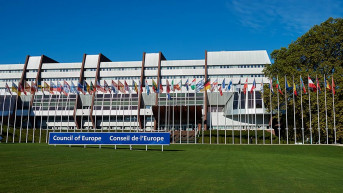
What it would look like if the Council of Europe, the first institution in world history, decided to tear apart a sovereign state, its member - Serbia, and at the same time never called anyone to respect the territorial integrity of others, including tragic Ukraine, it would be soon watched in a live broadcast, journalist Dragan Bisenic said on the occasion of tomorrow's extraordinary session of the Committee of Ministers of the Council of Europe for the admission of Kosovo to that organization.
In his author's text for Tanjug, Bisenic states that it is clear that Kosovo is not a state, that it will not be a state soon, and that the only form of its existence today is the UN Security Council Resolution 1244.
"The Council of Europe is an organization that swears by law, justice, and European values, so it will be fascinating to read and present to the public the opinion of respected European lawyers on this precedent. Not only that, although the dialogue on the Franco-German proposal is still ongoing, for the Council of Europe, it is already a finished matter. In the draft decision that should be before the ambassadors in the Committee of Ministers of the Council of Europe and for which their support is requested, it is practically emphasized that it was implemented with the consent of Serbia, since it called on to the agreements from Brussels of February 27 and Ohrid, of February 18, which state that Serbia "will not oppose Kosovo's membership in international organizations," Bisenic writes.
He points out that one year ago, on May 12, Kosovo applied for membership in the Council of Europe, and consideration of this application was mentioned several times but was never taken into account.
"Things have been changing since the first talks about the German proposal of "two Germanys" for Serbia and Kosovo. Initially, the acceptance of Kosovo's application was supposed to be on the agenda of the regular session of the Committee of Ministers of the Council of Europe, on Tuesday, April 18. After protests from Belgrade, since that session was supposed to mark two decades since the admission of Serbia (then Serbia and Montenegro) to the Council of Europe, this proposal was postponed until Monday, April 24, when an urgent, extraordinary meeting of the Committee of Ministers was held at the ambassadorial level. The reason for such a timetable regarding Kosovo's application for membership is to fit into the work of the Parliamentary Assembly of the Council of Europe, whose session begins tomorrow, so the plan is to push the entire procedure as quickly as possible, so that the issue will be before the deputies, who then decide whether to send the request to the next step to the Council of Europe Committee of Ministers at ministerial level, which is meeting in Reykjavík on May 16 and 17. At the same time, it is planned to hold the Council of Europe Summit, which should be attended by the heads of government or states of the member states of the Council of Europe," Bisenic believes.
He points out that a two-thirds majority of the 46 member states is required for Kosovo's admission to the Council of Europe, provided that European states are willing to violate the basic norms of international law since Russia has left this organization, while 12 member states do not recognize Kosovo.
"A new meeting between Aleksandar Vucic and Albin Kurti in Brussels is planned for May 2. According to everything that preceded this meeting, including this Kosovo application, it can be assumed that the Community of Serb-majority Municipalities will be discussed again and that a more tangible promise could have been extracted from the Prime Minister of Kosovo that some step in the creation of this Community will be taken after all. In diplomatic circles, it is heard that Kurti allegedly promised to start the creation of the CSM if Kosovo entered the Council of Europe, i.e. if his application was accepted and if visa liberalization for Kosovo was approved. The third request is Kosovo's entry into the NATO Partnership for Peace program. There is also enough time for that because the NATO Summit is being held on July 11 and 12 in Vilnius. It is explained to Serbia that it was nothing special and that it would help the Serbian minority in Kosovo. Thus, it is announced that the condition for admission to the Council of Europe would be to return 24 hectares of land to Visoki Decani and to restore the church of St. Nicholas in Prizren," Bisenic writes and continues.
"The diplomatic action, the results of which we see today, began almost exactly one year ago, when German Chancellor Olaf Scholz received the President of Serbia, Aleksandar Vucic, and the Prime Minister of Kosovo, Albin Kurti, in Berlin on May 3. Kurti then announced that "he asked Chancellor Scholz that Germany pushes forward visa liberalization for Kosovo". “The two steps we will take are the application for membership in the Council of Europe and the NATO Partnership for Peace, where we count on the support of Germany," Kurti said in Berlin at a joint conference with Scholz.
At the press conference of the German Chancellor and the President of Serbia, the question was raised whether Serbia would leave the Council of Europe if Kosovo became a member. The German chancellor, one would say, reckons with that possibility, since he answered, "We want Serbia to remain in the Council of Europe, for all of us to be together in the European Union."
The President of Serbia pointed to the respect of the Brussels and Washington agreements, and he said, that for Serbia it was important "that everything that is signed be put into practice", and in case of non-compliance, Serbia would act "in accordance with its national interests".
"It is obvious that the German chancellor accepted all three of Kurti's demands, and that is why Germany appears as the main protagonist and promoter of Kosovo's state status in the Euro-Atlantic international organizations. Bearing in mind the new circumstances that arose with the expulsion of Russia from Europe and the stigmatization of everything that may resemble to "Russian", space has been created for a further "accomplished act" policy, which this time is led by the European Union towards Serbia since only Russia was able to maintain a balance in the European relationship towards Kosovo within the European framework. It is difficult to say today what the meaning of the Council is of Europe when the state of affairs is such that it wants Kosovo in, and Russia out, but it can be assumed that such an attitude towards Russia will be a European reality in at least the next 15-20 years," Bisenic emphasizes.
In the end, he states that what is happening today with Ukraine, unfortunately for everyone, is an adequate context for considering Kosovo's admission to the Council of Europe. What will it look like if the Council of Europe, the first institution in world history that will decide to tear apart a sovereign state, its member - Serbia, and at the same time to ever call anyone to respect the territorial integrity of others, including the tragic Ukraine, looks like it will be soon watched live.


comments