
The elections in the north and "pushing" Kosovo into the Council of Europe are being done in spite of Serbia; the Serbs should just calmly ignore the provocation
Visa liberalization for Kosovo, elections in four municipalities in the north despite the non-participation of the Serbs, and finally, the meeting of the Committee of Ministers of the Council of Europe (CoE) scheduled for Monday on Kosovo's membership in that organization, all this in just a few days is no coincidence, but deliberate pressure on Serbia from Pristina and the western part of the international community in order to achieve the goal of recognizing Kosovo's independence, according to Kosovo Online's interlocutors.
Those familiar with these events, point out that the Serbian side, therefore, has one more reason to dignifiedly and quietly ignore tomorrow's election process in the north and consistently implement the decision on non-participation.
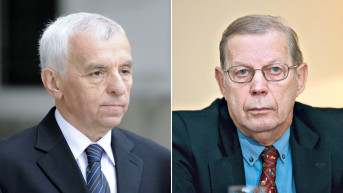
Former Serbian ambassador to the OSCE, Milovan Bozinovic, and diplomat Zoran Milivojevic, warn that any harsh resistance and reaction to the illegitimate holding of elections in Kosovo could provoke a response from Pristina, which would discredit the Serbs and the state of Serbia before the international community.
Kosovo's request for admission to the Council of Europe, as Kosovo Online wrote on Friday, would be on the agenda of the extraordinary session of the Committee of Ministers scheduled for Monday, April 24, while elections were held in North Mitovica, Zvecan, Leposavic, and Zubin Potok the day before. for mayors, without candidates from among the Serbs.
Former ambassador, Milovan Bozinovic, assesses that the elections in four municipalities in the north of Kosovo are a kind of additional pressure on the Serbian side and will set back the process of dialogue between Belgrade and Pristina at the moment when, as he assesses, it was promising.
"The fact that the elections are likely to be held is a heavy blow to the entire process that has been building for a long time to lead to some results, among other things, through the two agreements in Brussels and Ohrid, which promised a more stable and certain way of long negotiations. However, such a vote which is pure political fiction and only a kind of political spite will greatly undermine certain achievements in the dialogue that have been agreed so far. It will set the dialogue process back, now that it has finally been promising," Bozinovic said.
Bozinovic believes that the elections are a very serious political provocation for Serbia and the Serbs in Kosovo and that those who directed them, and there is every chance, he adds, that the Prime Minister of Kosovo, Albin Kurti, is not the director of all this - they probably have some calculation of their own why they are doing it.
He concludes that Serbia should not react to such a provocation and that only a categorically negative opinion can be made about it.
When it comes to the session on starting the process for Kosovo's admission to the Council of Europe, which is scheduled for Monday, Bozinovic says that there is a possibility that it coincided by chance that it will be held the day after the elections in the north of Kosovo.
"The admission of Kosovo is something that was expected in a way, it is decided by a majority of votes, the majority exists for the decision to be admitted. This will be another sign of support for this kind of Kosovo - let me say Kurti's Kosovo. First, visas were promised, now the admission to the Council of Europe is put on the table," Bozinovic said.
According to his opinion, the Serbian side cannot see it any other way than as the international community's support for the Kosovo government to continue with this policy.
Bozinovic expressed his concern about what Kosovo's policy would lead to, considering that "Serbia, which is the protector of its citizens in its autonomous province, cannot participate in that game, nor can it just observe".
The Council of Europe has its own timetable for when a topic is discussed, explains Bozinovic, pointing out that probably Kosovo's membership in that organization has been on the agenda for some time.
If the meeting of the Committee of Ministers of the Council of Europe is accidentally scheduled for Monday, the day after the elections, the former ambassador to the OSCE estimates that this case will only make the situation in Kosovo more difficult and that if it is the intention, then it is another provocation in a series.
"With the fact that I don't see that those who are directing all of this will go away because there is no progress in Kosovo without a constructive agreement, at least regarding the basic principles, the Serbian side and the Serbian state. This is all now in spite of Serbia, which has shown a lot of patience and it's been open for a long time to talk in a constructive and productive way. This sets the whole situation back," he explained.
He says that the meeting of the Council of Europe ministers can be seen as a political signal for Serbia, out of which, he adds, has been many so far from the majority of member countries, especially those around Germany.
"It is more than just a signal that certain structures within Europe are not satisfied with this, many things were known in advance. This time, the most striking is a harsh treatment that leads to blackmail, and perhaps retaliation at the end of the day. Such very serious qualifications and words that they rarely use, now they finally make sense," Bozinovic said.
When asked what, considering all the circumstances, the reaction of the Serbs should be to the elections and the entire situation related to the current events in Kosovo, the diplomat says that they should ignore the elections with dignity in order to protect their position and defend themselves from possible condemnations. and attacks by Pristina.
"My message for the Serbs regarding elections in Kosovo, if we take everything into account, is that it should be ignored with dignity. If they were to express themselves about it now through provocations and riots, it would not be in their favor, because perhaps this is exactly the intention of Kurti's authorities - to be able to say, look now, these Serbs are destructive. The Serbs have no reason, should not, and must not have anything to do with that parade, which is politically very legible, very transparent, and basically, that parade has a weak reach because the Serbs in Kosovo will not change their minds and will not accept the Albanian municipality presidents," Bozinovic says.
It is all a "theatrical performance" that is harmful and unconvincing, he assesses and points out that the Serbs should ignore such actions of the Pristina authorities and wait for what will happen in Brussels on May 2, when many things could be clarified.
Recalling the recent shooting of the Serbs and arrests without a convincing reason, Bozinovic warns that the situation in Kosovo is “electrified” and is constantly worsening and that the Serbs have many reasons to be worried and dissatisfied.
"The key to getting out of this whole situation lies in persistence and patience. The Serbs must now work in agreement with the state of Serbia, because it is their trust, and wait for the big powers to see what they will do with the problem. The way they are going, they will not solve it, they will only deepen," Bozinovic concluded.
Diplomat Zoran Milivojevic believes that the West is using all mechanisms and implementing a planned scenario with the aim of resolving the Kosovo issue in a short period of time in accordance with their interests at the moment.
"All that has been happening in recent days, starting with the support for those elections which have absolutely no legitimacy and which do not lead in any way to the process of normalization and calming the situation in Kosovo and Metohija, through the visa liberalization that was approved this week, to the decision that follows on Monday to start the process of Pristina's accession to the Council of Europe, constitutes a unique mosaic and an attempt to forcefully and using all mechanisms and political means to confirm Kosovo's statehood and resolve the Kosovo issue in a way that contradicts both international law and the norms of a civilized and democratic society, and in opposition to the interests of the Serbs," Milivojevic said.
According to Milivojevic, the West is sending three clear messages: that it is unique in realizing the strategic goals that began with the bombing in 1999; that there is no interest in respecting the Serbs, its interests, and its centuries-old and historical position, and that it risks even security and stability in these areas where the Serbs have lived and cherished their cultural heritage and roots for centuries.
Such behavior, he assesses, violates the concept of solving the Kosovo issue by democratic means, but, he adds, it sends a message and warning to the entire region.
"The elections and admission of the entity of Kosovo into an organization that only recognizes member states, beyond all standards and statutes, are part of a mosaic and framework whose interest is to impose a solution that is contrary to the interests of Serbia and the possibility that the Serbs in those areas lead a peaceful life in the following period," Milivojevic says.
When asked if the meeting of the Committee of Ministers of the Council of Europe had been deliberately timed to be the day after the elections, he said that it had been about specific deadlines and that last week this issue had not passed, because there had been some kind of resistance, not only from Serbia but all those who thought rationally in Europe.
He explains that pressure was exerted by Germany, but also by a group of countries, on Iceland, which is the chairman, to put the issue of Kosovo on the agenda, adding that it was somehow forced because next week is also the meeting of the Parliamentary Assembly of the Council of Europe.
"Monday is the only possibility and the last day when the issue of Kosovo's membership in the Council of Europe can be put into the procedure. All decisions on the issue of Kosovo are placed in one month with the aim of realizing and accelerating everything, and I would not separate that from what we have already heard about the European plan and the pressure on Serbia to accept it, in order to solve it all this year while the administrations in Washington and Brussels are in operation, to nail down everything by the end of the year, which can be seen from the visa liberalization that starts on January 1, 2024, and that everything should be placed in one context and implemented during the world presidency until the beginning of the pre-election of Spain, which has reservations about Kosovo and does not recognize it," Milivojevic pointed out.
When it comes to the elections in Kosovo and what kind of reaction could be expected from the Serbs regarding the elections, he says that the Serbs should implement the decision of non-participation to the end, but at the limits of quiet and clear resistance.
He says that the key element of the resistance of the Serbs is to remain consistent with the national interest and to implement the decision on non-participation in a way that does not give the possibility of discrediting both the Serbs and the state of Serbia through provocations.
"What is crucial for Serbia is to remain in a unique position of quiet and clear resistance. Serbia will certainly not accept the results of the elections, no matter how they are and how they are held. The Serbs should be united in giving a dignified but clear and decisive way to make it known that it ignores those elections and their results already at the start and that it does not provide the possibility for anyone to abuse that Serbian position through provocation and enable Serbia to be discredited," Miilivojevic says.
It was extremely important that whatever the scenario was, in case the Serbian side was united and determined in its position, it could not take root and produce long-term consequences that would be detrimental to the Serbs, the diplomat concluded.

comments