
Bjelos: Constant crises in Kosovo and Bosnia and Herzegovina are a threat, but increased NATO presence in the Balkans has a broader geopolitical context
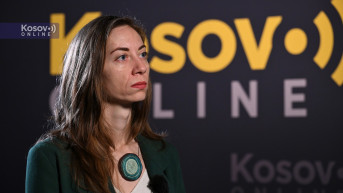
Maja Bjelos, a senior researcher at the Belgrade Center for Security Policy, assesses that the announcement of increased NATO presence in the Western Balkans should not be viewed solely through the lens of ongoing tensions, especially in Kosovo or Bosnia and Herzegovina, but also in the broader geopolitical context of strengthening the Alliance in confronting Russia, Iran, and China.
Bjelos explains for Kosovo Online that the reasons for the increase in NATO forces in the Western Balkans should be sought in the recent statement of NATO's Supreme Allied Commander for Europe, Christopher Cavoli, who said that some things happening in Europe were not good for American interests.
"In response, NATO has taken two actions. One is the increase in troops and what they called they must be 'heavier,' in terms of weaponry and arms procurement. NATO is currently in the process of acquiring this weaponry and equipment from allied states. The other thing is the linking or intertwining of the EUFOR Althea mission in Bosnia and Herzegovina and KFOR through the dual role of Cavoli's deputy, French General Hubert Cottereau, the Deputy Chief of Staff at NATO's headquarters in Mons, who said that based on intelligence, they had information about possible destabilization in the Balkans," Bjelos says.
She emphasizes that the increase in NATO forces should still be seen in a broader context and an attempt by this Alliance to enhance and strengthen its existing bases in Europe, as well as in the Middle East and the Indo-Pacific, to counter countries they highlight as the main threat to their security: Russia, Iran, and China.
"It has already been announced that the NATO base in Romania will be the largest in Europe and will replace the one in Germany. We also see that the US is trying to increase its presence in the Middle East and the Indo-Pacific through strengthening capacities, storage, and forces in Australia. When we consider this broader context, we can say that the threats directed towards NATO and the US are Russia, Iran, and potentially China, and NATO, as well as its member states, are preparing for a broader escalation of violence with Russia, Iran, and China," Bjelos says.
When asked if this means that an escalation of conflict would benefit Moscow the most, the BCSP researcher says that is only partially true.
"Russia is seen as a destructive force, meaning someone who could potentially cause conflict, but if we think about conflicts, and we've had experiences of wars in the former Yugoslavia, wars mostly benefit war profiteers whose faces we still see today. And whoever they are, whether they are politicians, individuals, certain tycoons, or specific states – wars mostly benefit the minority. The majority loses. They lose lives, economic standards, time, they leave not only this country's area but all former republics. We have seen that wars bring us isolation and that we are further away from some goal of a better, higher-quality life and life within the framework of the European Union," Bjelos points out.
She reminds that the possibility of new conflicts in the Western Balkans has been intensively discussed since 2021, sparked by the institutional crisis in Bosnia and Herzegovina and the then attempts to create a third entity besides the Federation of Bosnia and Herzegovina and Republika Srpska.
"There was more talk back then that there would be war in the Balkans. However, it didn't happen. After Russia's attack on Ukraine, many labeled Russia as a destabilizing factor in the Balkans and said that Russia would try to export that conflict, meaning that the conflict from Ukraine would spill over to the Western Balkans. However, that didn't happen either. But there is concern about the security situation in the Balkans, especially considering the ongoing crises in Kosovo and the lack of dialogue, which is evident. Since 2018, we have been witnessing constant crises that worry both the residents of Kosovo and the international community," Bjelos emphasizes.
She points out that no matter how much talk there is about the possibility of new conflicts, the population of the former Yugoslav countries still does not want new wars.
"In the former Yugoslavia area, we have long been witnessing a kind of low-intensity conflict crisis because some incidents constantly occur, especially in Kosovo, which many believe are controlled by elites that provoke them. However, we have seen situations where certain incidents can spiral out of control and surpass their frameworks," Bjelos believes.
She explains this fact with increased nationalist rhetoric, which is also the option winning elections in the region.
"Citizens very well notice that they live in a world where an information war is constantly waged, where constant hatred and divisions are encouraged. Nationalism is not only present in our countries but is strong enough and a political option for which citizens vote today. And not only in Serbia but also in Kosovo, Albania, Croatia, and Bosnia and Herzegovina. If that's the option, then we can expect that such tension in the Balkans will persist," Bjelos concludes.



0 comments