
Bogdanovic: Some people don’t like the growing closeness between Serbia and North Macedonia
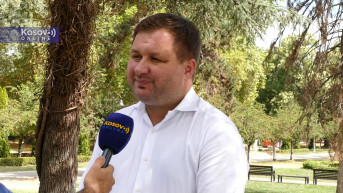
Sasa Bogdanovic, former mayor of the Centar municipality in Skopje, stated that despite the fact that “some may not like it,” bilateral relations between Serbia and North Macedonia are on an upward trajectory in all areas, and that the Kocani tragedy demonstrated strong solidarity and connection between the two nations.
“Maybe some people are uncomfortable with Serbia and Macedonia having good relations. You can see that from certain statements. I’m deeply disappointed in opposition politicians who label any rapprochement with Serbia and the Serbian people as part of a so-called ‘Serbian World,’ even though North Macedonia has no problems with Serbia, unlike with Bulgaria, which is blocking its EU accession,” Bogdanovic told Kosovo Online.
Last August, Serbian President Aleksandar Vucic and North Macedonian President Gordana Siljanovska Davkova held their first official working meeting at the Prohor Pcinjski Monastery, during which they agreed to strengthen cooperation in all areas.
Bogdanovic says that a year later, it is clear that negative rhetoric has not hindered the growing closeness and cooperation between the two countries.
“I don’t believe anyone can disrupt this friendship, and I would even say brotherhood, between our two peoples, and now between our institutions as well,” Bogdanovic asserted.
He emphasized that the results of this cooperation are increasingly visible.
“We can observe that relations between North Macedonia and Serbia are becoming closer and stronger. It’s clear that Serbia approaches Macedonia with principled policy and that, unlike with other neighboring countries, there are no open issues,” Bogdanovic noted.
He sees progress in all areas of cooperation: economic, infrastructure, cultural, and sports.
“Of course, there are still some things that need to be finalized,” he added.
He emphasizes that significant progress has already been made in terms of integrated functioning of border crossings, and that with the expansion of Serbia’s border checkpoints, the issue of delays will be resolved, not only due to the increasing number of tourists from both countries, but also to facilitate smoother trade and goods exchange.
“We are also seeing growing interest from Serbian companies entering the Macedonian market. I hope that this cooperation will continue to grow, and that the Open Balkan initiative and its mechanisms will keep delivering results,” Bogdanovic said.
The tragedy in Kocani in March this year, when a fire in a nightclub claimed 62 young lives and injured over 200 people, was a moment that revealed true solidarity between Serbia and North Macedonia, Bogdanovic stressed.
“That great tragedy in Kocani showed that Serbia is always there, always ready to help as one of North Macedonia’s closest nations. Serbia accepted possibly the largest number of patients in need of urgent care at that time. And we see that the support continues in various ways, we are getting closer and closer to one another,” Bogdanovic said.
He noted that cultural exchange has significantly improved, and highlighted the excellent cooperation between the two churches as another positive example.
He is confident that the two countries can further deepen cooperation in almost every area, and that this is also visible on the political level, particularly among ruling parties.
“Just a few days ago, there was a meeting between two sister parties, VMRO-DPMNE and Serbian Progressive Party. The party leaders, Kristijan Mickoski and Milos Vucevic, once again confirmed that their cooperation is growing, just like in the fields of economy, culture, tourism, and infrastructure,” Bogdanovic observed.
Regarding differing positions on the issue of Kosovo, Bogdanovic described North Macedonia’s recognition of Kosovo as a step taken against its closest people.
“When it comes to North Macedonia’s recognition of Kosovo, I believe that was a step, unfortunately, taken against the closest and most brotherly nation to Macedonia, the Serbian people,” Bogdanovic concluded.


0 comments