
Bozinovic: It would be good to point out to the CoE members once again that the admission of Kosovo would be contrary to the rules of that organization
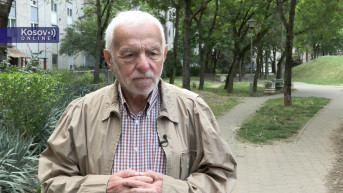
Retired diplomat Milovan Bozinovic commented on the "mobilization" of Serbian diplomacy ahead of the vote in the Parliamentary Assembly of the Council of Europe regarding Kosovo's membership application and the distribution of a non-paper to the Council of Europe members outlining Serbia's stance on this issue. He says it would be good to discuss this again and remind countries primarily that Kosovo's admission would not be in line with the rules and procedures of the Council of Europe, constituting a violation of rules.
"If we lived in a world, and I think we have exited that world, where rules are respected, this would not be possible or conceivable, but the world is changing, and political reasons prevail over the law, and that is one of the truths you have to live with," Bozinovic said.
He adds that a non-paper is a classic instrument of diplomatic communication containing the sender's perspective and citing facts that are considered relevant.
"I fear that the impact of such a document will be quite limited because if there is something specific to the situation regarding the Council of Europe, it is that all states that have confirmed they will support Kosovo essentially know these facts. We are not in a position to reveal something in the non-paper that these states do not already know. So we will not bring anything significantly new that would change their stance. This is something every diplomacy should do, but I would say it falls more into the realm of routine, which is not strong enough at the end of this situation," Bozinovic assessed.
He also notes that he believes Serbian diplomats have already discussed this topic many times with their counterparts in various ministries of justice or foreign affairs in member states, and that our arguments have already been presented.
Regarding Kosovo's potential admission to the Council of Europe, Bozinovic says that one advantage for those who suffer the most in Kosovo, i.e., members of the Serbian community, would be the opportunity to address a neutral court if they have something to complain about.
"Let's be realistic, there are slim chances that you will get anything in a court in Gnjilane or Prizren if you are a Serb reporting violations of your rights. However, if we follow the echoes in the press, these advantages that will arise for all citizens of Kosovo are primarily seen as an opportunity for the Kosovo authorities to initiate a wave of lawsuits for unresolved or unpunished crimes against Serbs from 20 or more years ago. Legal experts who assess what will happen afterward are more concerned that we will face a flood of lawsuits from the Kosovo side. This cannot automatically lead to Serbia being accused of genocide, which is also being discussed, because Kosovo as a territory accepted in the Council of Europe will not have that right, but it can lead to the accumulation of new evidence and judgments based on which another state has the right to sue us," Bozinovic said.
In international law, as he adds, it is allowed for a third country, in this case, everyone is pointing to Albania, to say, 'now that the Strasbourg court has proven and gathered so much, we believe that a genocide lawsuit makes sense.' Bozinovic notes that these are all hypotheses but must be considered as an option.



0 comments